WINSEN WATER QUALITY MONITORING SOLUTIONS

Industrial Pure Water & RO Water Conductivity Monitoring

Monitor low-conductivity water in industrial pure water and reverse osmosis systems. Winsen conductivity sensors provide measurement options for water purification equipment, process monitoring and OEM system integration.

Low-Range Conductivity Pure Water & RO Systems Analog & RS485 Options
APPLICATION OVERVIEW

Conductivity Monitoring for Industrial Pure Water Systems

Reverse osmosis (RO) and industrial pure water systems are designed to reduce dissolved ionic substances in water. Electrical conductivity provides an indirect indication of the concentration of ionic substances in the measured water.

Monitoring conductivity at selected points in the treatment and distribution process helps operators observe water quality trends, compare process stages and identify changes that may require further investigation.

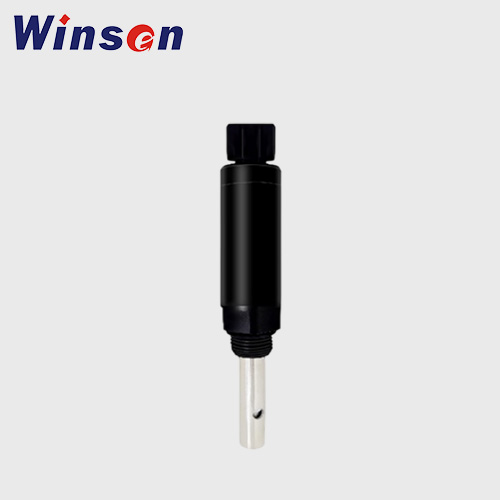
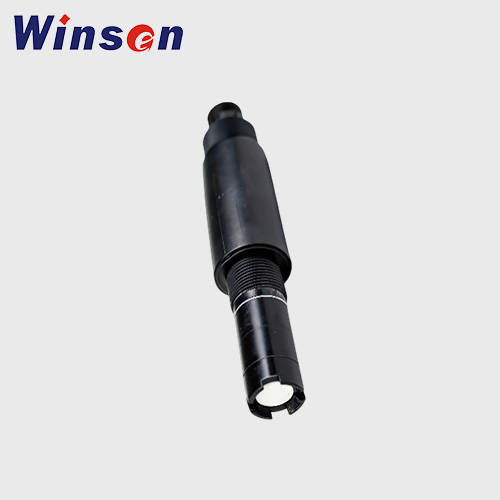
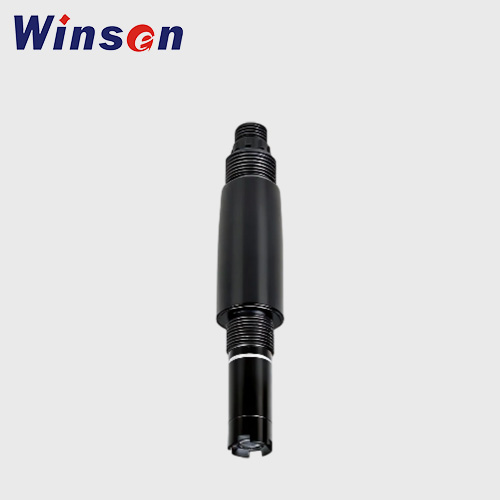
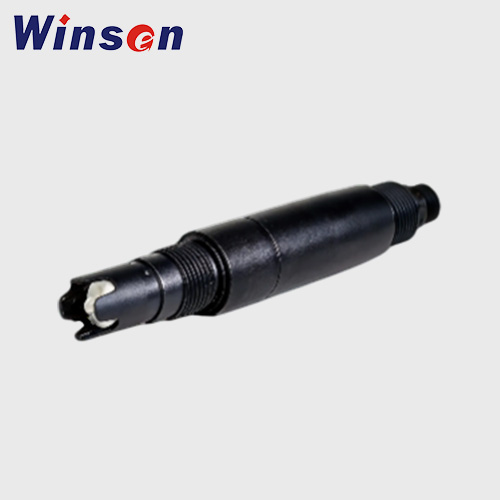
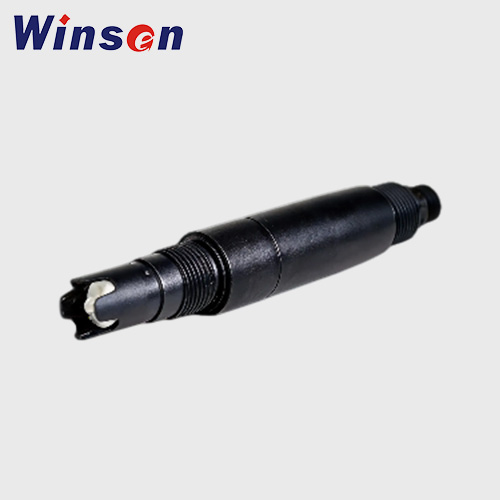
Winsen's ZW-C102 conductivity sensor is specifically listed for monitoring pure water and RO water quality equipment. The ZW-C1021 offers additional measurement range and RS485 output options for applications where its specifications match the system requirements.

01
RO Permeate Monitoring Observe conductivity after the reverse osmosis treatment stage.
02
Pure Water Production Monitor conductivity at selected purified water outlets.
03
Storage & Distribution Track conductivity changes in storage and distribution systems.
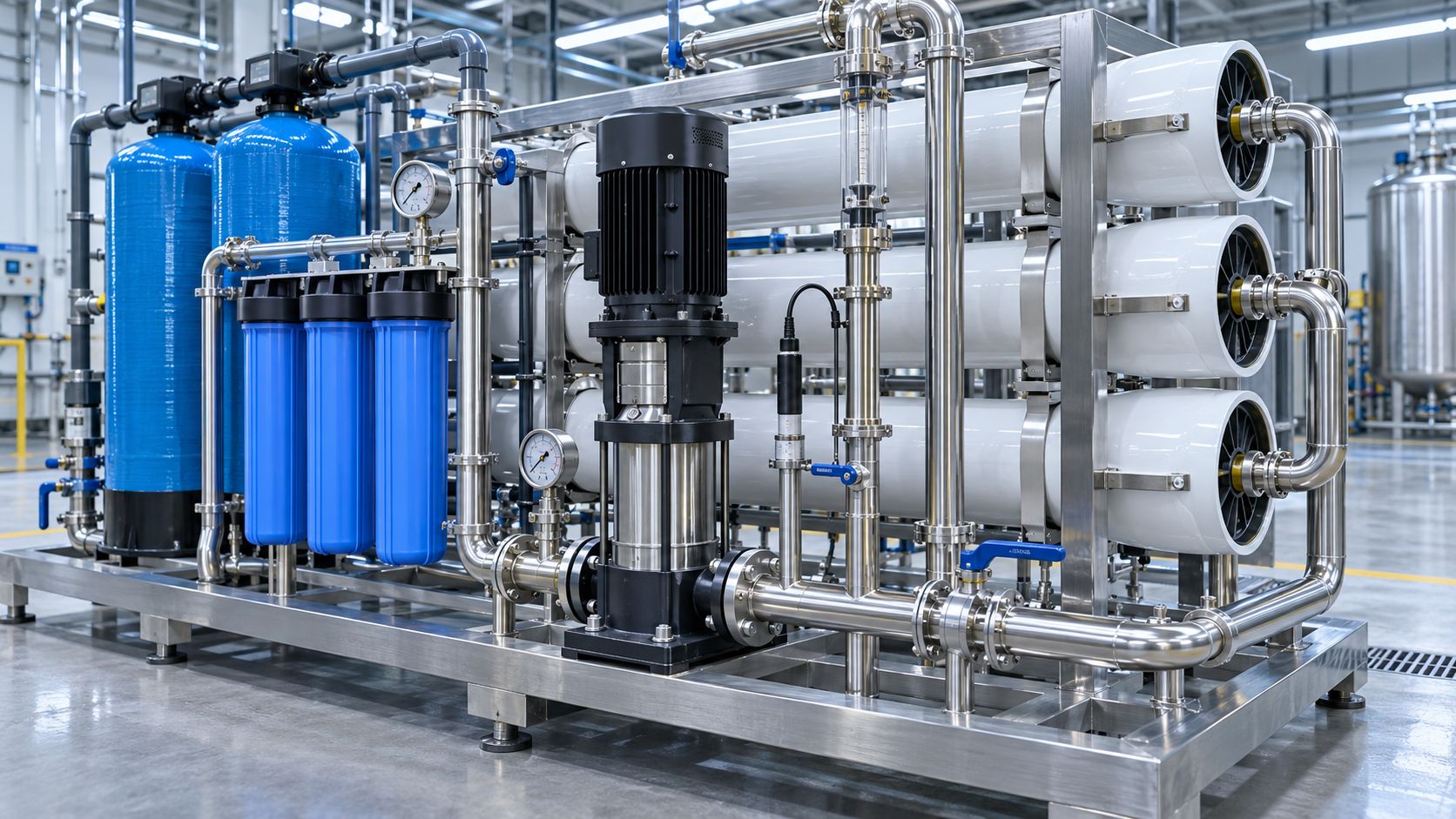
Industrial reverse osmosis water treatment system with membrane vessels and stainless steel piping
MONITORING REQUIREMENTS

Why Is Conductivity Monitoring Important in Pure Water Production?

Conductivity monitoring provides a practical measurement of the ionic conductivity of water. In pure water and RO applications, changes in conductivity can help operators evaluate process trends and investigate abnormal variations.

01 / PROCESS MONITORING

Observe Water Quality Changes

Conductivity readings help operators track changes in ionic content during water purification and distribution. Trend monitoring can support process evaluation and troubleshooting.

02 / SYSTEM EVALUATION

Evaluate RO Treatment Performance

Comparing conductivity readings at appropriate process points can help identify changes in RO permeate quality and determine when further inspection of the treatment system may be needed.

03 / EQUIPMENT INTEGRATION

Support Continuous Data Collection

Analog voltage and RS485 output options allow the corresponding sensor models to be considered for integration with compatible controllers and industrial data acquisition systems.

Conductivity is an overall indicator of ionic conductivity. It does not identify individual dissolved substances or independently establish drinking water safety, chemical purity or regulatory compliance.

MONITORING POINTS

Where to Monitor Conductivity in an RO Water System

Conductivity sensors can be considered at different stages of a purified water process. The actual measurement locations depend on the process design, piping arrangement and monitoring objectives.

01. RO Permeate Outlet

Monitor water leaving the RO membrane stage to observe permeate conductivity and changes in treatment performance.

02. Final Purified Water Outlet

Measure conductivity after the relevant purification stages when the system requires monitoring of final product water.

03. Storage Tank Outlet

Monitor water leaving a purified water storage tank to observe conductivity before downstream distribution.

04. Distribution Pipeline

Selected points in a purified water distribution loop can be monitored to observe conductivity variations during use.

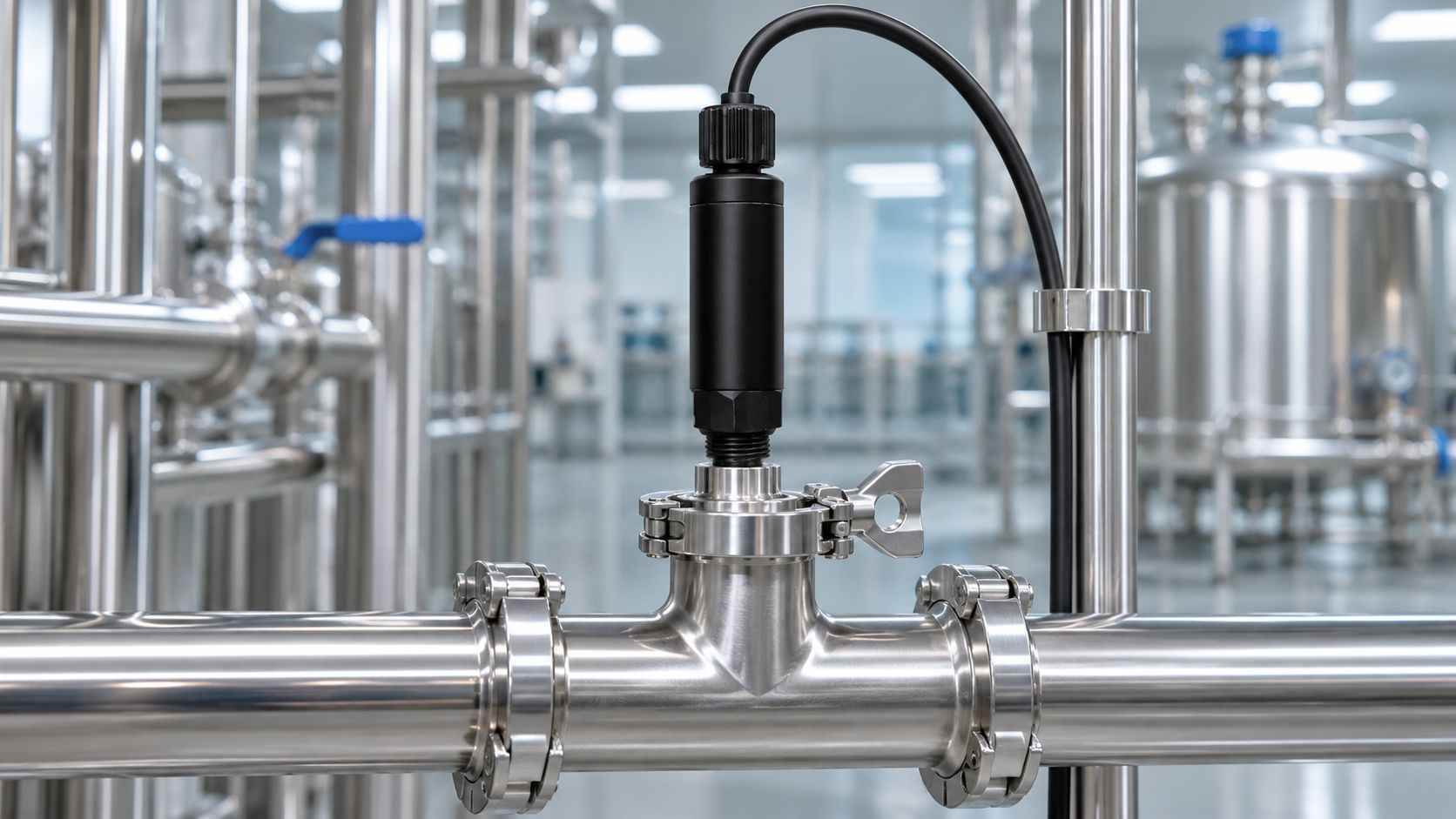
Industrial conductivity monitoring on a pure water pipeline
Illustrative industrial pipeline monitoring scene. Final sensor installation should follow the selected model's mounting requirements and the actual process piping design.
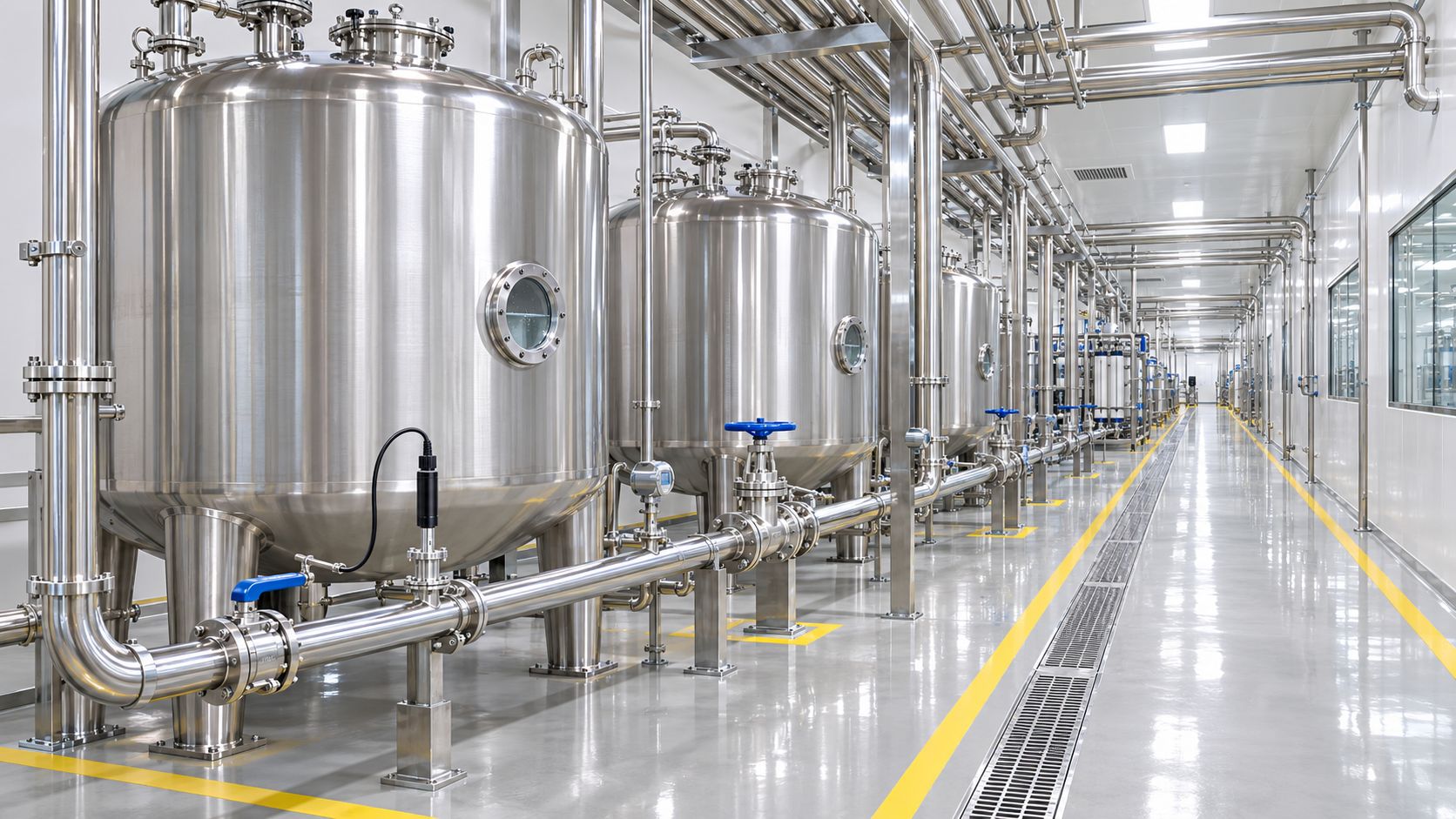
Industrial purified water storage tanks and stainless steel distribution pipelines
INDUSTRIAL WATER APPLICATIONS

From Water Purification to Storage and Distribution

Industrial pure water systems may include pretreatment, reverse osmosis, additional purification stages, storage tanks and distribution pipelines.

Conductivity measurement points should be selected according to the required process information. A measurement at the RO permeate outlet serves a different purpose from one at the final purified water outlet or distribution return.

  • Industrial RO water purification equipment
  • Pure water production systems
  • Purified water storage and distribution
  • Industrial water quality monitoring equipment
  • OEM water treatment system integration
RECOMMENDED WINSEN PRODUCTS

Conductivity Sensors for Low-Conductivity Water Measurement

Winsen provides conductivity sensor options with different measurement ranges and output interfaces. Select the model according to the expected water conductivity, operating conditions and controller requirements.

PURE WATER / RO WATER APPLICATION

ZW-C102

Low-conductivity water sensor for monitoring pure water and RO water quality equipment. Features analog voltage output, repeatability and stable measurement performance.

VIEW PRODUCT DETAILS →

Technical Specifications

Measurement Range
0 to 20 μS/cm
Resolution
0.01 μS/cm
Accuracy
±1.5% F.S.
Operating Temp.
-40 to 100 ℃
Operating Pressure
<0.6 MPa
Power Supply
DC 24V (9V-36V)
Signal Output
0.8V-4V (linear)
Wetted Material
SUS316L
Mounting
M22*1.5 / NPT 1/2
Power Consumption
≤0.3W
Protection
IP68 / IP6K9K
Communication
Analog Voltage
RS485 OUTPUT OPTION

ZW-C1021

Electrochemical conductivity sensor with two published measurement ranges and RS485 output. Consider this model when its range and interface match the application requirements.

VIEW PRODUCT DETAILS →

Technical Specifications

Measurement Range
0-20 / 0-200 μS/cm
Resolution
0.01 / 0.1 μS/cm
Accuracy
≤±3% F.S.
Operating Temp.
-40 to 85 ℃
Operating Pressure
<0.6 MPa
Power Supply
DC 9-36V
Signal Output
RS485
Wetted Material
SUS316L
Mounting
G3/4, 1/2 NPT, M22
Power Consumption
≤0.3W
Protection
IP68 / IP6K9K
PRODUCT SELECTION GUIDE

How to Choose Between ZW-C102 and ZW-C1021

The main selection factors are the expected conductivity range, required output interface, installation connection and operating conditions.

Selection Factor ZW-C102 ZW-C1021
Measurement Range 0 to 20 μS/cm 0-20 / 0-200 μS/cm
Resolution 0.01 μS/cm 0.01 / 0.1 μS/cm
Accuracy ±1.5% F.S. ≤±3% F.S.
Output 0.8V-4V Linear RS485
Power Supply DC 24V (9V-36V) DC 9-36V
Operating Temperature -40 to 100 ℃ -40 to 85 ℃
Wetted Material SUS316L SUS316L
Official Application Pure water / RO water quality equipment, industrial water use and environmental water quality. Laboratory research, domestic wastewater treatment, industrial production and other fields.
Product Page View ZW-C102 → View ZW-C1021 →

ZW-C102

Designed for low-conductivity aqueous solution monitoring, with pure water and RO water equipment explicitly listed in its official application information.

  • Measurement range: 0-20 μS/cm
  • Analog voltage output: 0.8V-4V
  • Resolution: 0.01 μS/cm
  • Suitable for applications matching its published range
Explore ZW-C102 →

ZW-C1021

Offers two published conductivity measurement ranges and RS485 output for compatible monitoring systems.

  • Measurement ranges: 0-20 / 0-200 μS/cm
  • RS485 output
  • Resolution: 0.01 / 0.1 μS/cm
  • Confirm application and range compatibility before selection
Explore ZW-C1021 →
SYSTEM INTEGRATION

From Conductivity Measurement to Water Treatment Monitoring

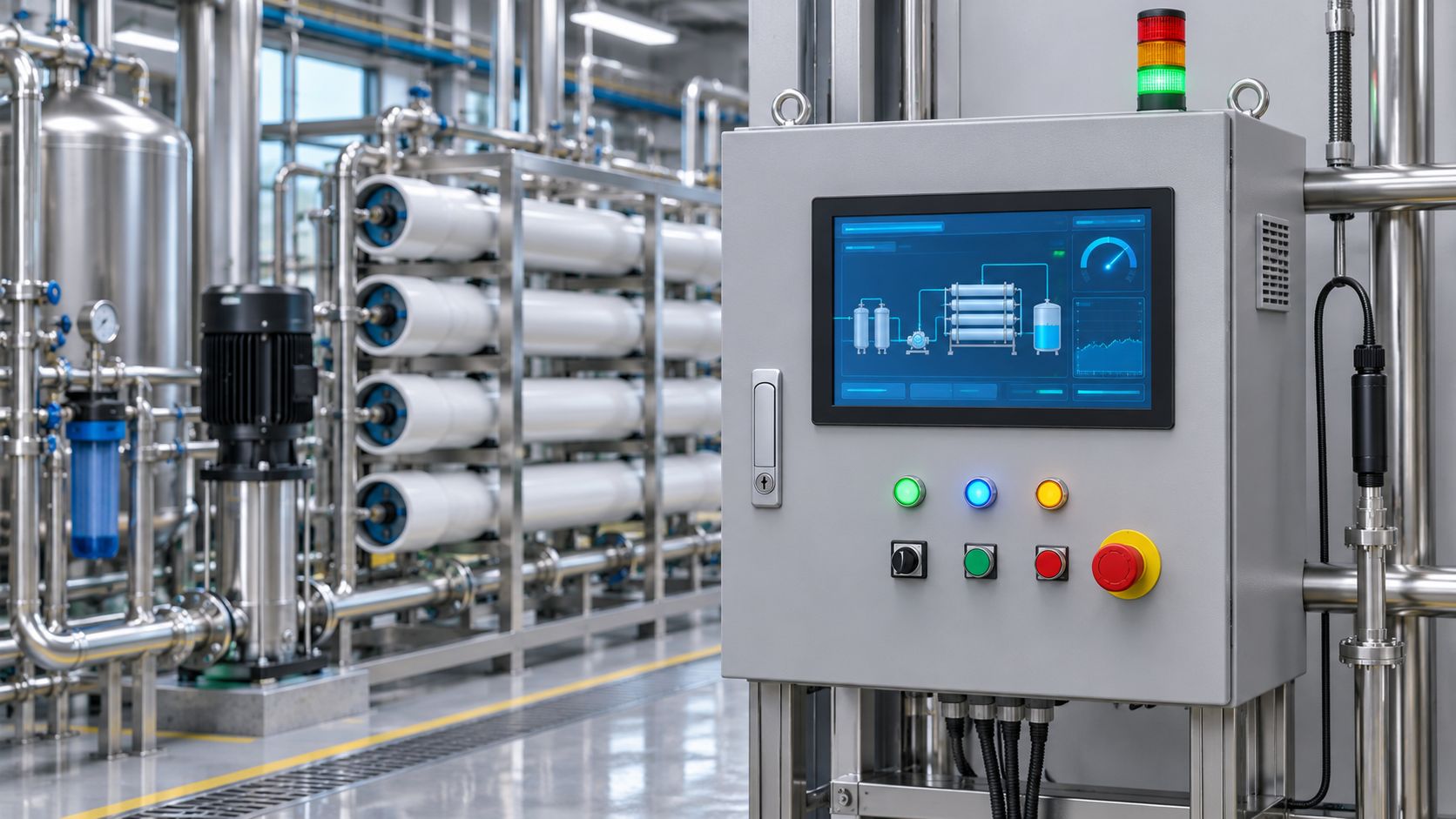
Conductivity sensors can provide measurement signals to compatible data acquisition devices and equipment controllers. The final integration architecture depends on the selected sensor output and the control system design.

STEP 01 Conductivity Sensor ZW-C102 analog output or ZW-C1021 RS485 output.
STEP 02 Data Acquisition Compatible analog input or RS485 interface.
STEP 03 Controller / PLC Measurement processing and application-specific logic.
STEP 04 HMI / Monitoring Platform Display, trend recording and system monitoring.

Signal conditioning, wiring, communication settings and controller configuration should be designed according to the selected model and system requirements. RS485 protocol details should be confirmed from the relevant product documentation.

Industrial water treatment conductivity monitoring control system
ENGINEERING & INSTALLATION

Important Considerations for Conductivity Sensor Integration

Proper measurement-point selection and installation design are important for obtaining representative conductivity readings in pure water and RO water systems.

01. Measurement Range

Select a model whose published measurement range covers the expected conductivity values. Avoid selecting a sensor based only on the general term "pure water."

02. Temperature Conditions

Water temperature affects conductivity readings. Consider the actual operating temperature and verify whether temperature compensation is required at the sensor or system level.

03. Installation Connection

Check the mounting thread, installation structure, wetted material compatibility and pipeline pressure before integrating the sensor.

04. Sampling Conditions

Select a representative measurement point and design the flow path to avoid stagnant water, trapped air and conditions that may affect measurement stability.

05. Electrical Interface

Match the sensor output to the controller input. ZW-C102 provides analog voltage output, while ZW-C1021 provides RS485 output.

06. Maintenance and Verification

Establish inspection and verification procedures according to water conditions, installation design and the operating requirements of the complete system.

TECHNICAL SUPPORT

Frequently Asked Questions

Common questions about conductivity measurement in industrial pure water and reverse osmosis systems.

What does conductivity monitoring measure in pure water?

Electrical conductivity measures the ability of water to conduct an electrical current, which is related to the presence of dissolved ions. It is commonly used as an overall indicator when monitoring low-conductivity water in purification systems.

Can conductivity alone determine whether water is pure?

No. Conductivity provides information about the ionic conductivity of water, but it does not identify individual contaminants or all substances that may affect water quality. Additional testing may be required depending on the application and applicable quality standards.

Which Winsen conductivity sensor is suitable for RO water monitoring?

The ZW-C102 official product page specifically lists pure water and RO water quality equipment among its applications. It has a measurement range of 0 to 20 μS/cm. The ZW-C1021 offers 0-20 and 0-200 μS/cm published ranges with RS485 output. Confirm its suitability for the actual process before selection.

What is the difference between ZW-C102 and ZW-C1021?

The ZW-C102 measures 0 to 20 μS/cm and provides 0.8V-4V linear analog output. The ZW-C1021 lists 0-20 and 0-200 μS/cm measurement ranges and provides RS485 output. Their accuracy, operating temperature and mounting options also differ.

Can Winsen conductivity sensors be connected to a PLC?

Yes, subject to interface compatibility. The ZW-C102 provides analog voltage output, while the ZW-C1021 provides RS485 output. The PLC input, electrical configuration and communication requirements should be checked before integration.

Where should a conductivity sensor be installed in an RO system?

Common monitoring locations include the RO permeate outlet, the final purified water outlet and selected points in the storage or distribution system. The appropriate location depends on which process stage needs to be monitored and the installation requirements of the selected sensor.

Does conductivity measurement require temperature consideration?

Yes. Conductivity varies with temperature. The measurement temperature and any required compensation should be considered when designing the monitoring system. Confirm the available functions of the selected product before assuming built-in temperature compensation.

WINSEN ENGINEERING SUPPORT

Looking for a Conductivity Sensor for Your Pure Water System?

Share your expected conductivity range, operating temperature, installation requirements and controller interface. Our team can help you evaluate the appropriate Winsen conductivity sensor for your application.

REQUEST TECHNICAL CONSULTATION →

Leading gas sensing Solution supplier

Our Hot Products

ANY QUESTIONS?

Frequent Asked Questions

Professional manufacturer of gas sensors, global sensing solutions provider with over 30 years of experience. Top quality guarantee, Excellent service, Customized products, Fast delivery!

Reference lead times: 1-15 days after receiving deposit depending on volume. The actual lead time can be confirmed with Winsen Order Processing Dept.

Winsen will recommend the most appropriate way of transportation (express, air, sea, train, etc.) according to customer's requirement on cost and time.

T/T, Paypal, West Union, Credit Card, etc.

MOQ is different depending on product models. Please contact Winsen sales for details.

Customer LOGO and packing design are acceptable.
Customized design and function will be provided without extra charge (including molding fee).

Sample order is acceptable and the fees will be borne by buyer.

Winsen has a complete and strict flow for offline sensors: aging-reject defective-sampling inspection-issue reports-finished ingoing...outgoing.

All Winsen products go through strict inspections and tests to make sure they are 100% qualified before shipping out.

ppm: parts per million
ppb: parts per billion
VOL: volume ratio
LEL: lower explosive limit
NDIR: Non-Dispersive Infra-Red

CONTACT US

LET'S TALK

Request Consultation