Cooling Tower Conductivity Monitoring Solution
Monitor conductivity in cooling tower circulating water to track dissolved-solids concentration, evaluate cycles of concentration and support blowdown control. Explore Winsen ZW-C101 conductivity sensing for industrial water treatment and cooling system integration.
Conductivity Monitoring in Industrial Cooling Tower Systems
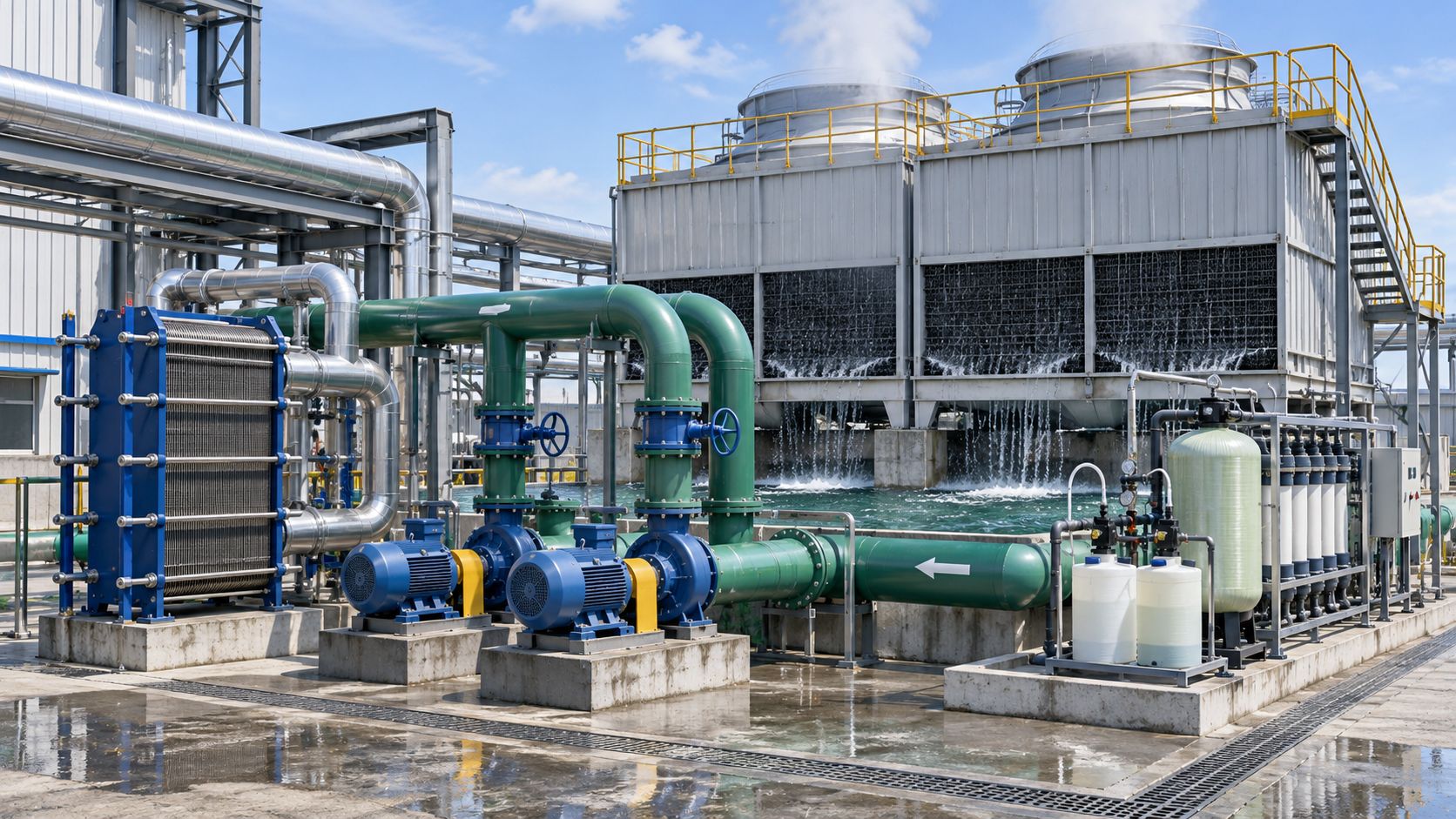
Cooling towers remove heat from industrial processes by circulating water through heat exchangers and exposing the water to air. During this process, part of the water evaporates while most dissolved minerals remain in the circulating water.
As evaporation continues, dissolved substances such as calcium, magnesium, chloride and silica become increasingly concentrated. Excessive concentration can contribute to scale formation, corrosion and other water treatment challenges.
Conductivity monitoring provides an effective way to observe changes in the ionic concentration of circulating water. It can help cooling tower operators evaluate concentration trends and manage blowdown according to the water treatment program.
Winsen ZW-C101 is an electrical conductivity water quality sensor that can be evaluated for cooling tower water monitoring according to the actual measurement range, installation conditions and system requirements.
Why Is Conductivity Monitoring Important?
The concentration of dissolved substances changes as cooling tower water evaporates and recirculates. Monitoring conductivity helps operators understand these changes and make informed water treatment decisions.
Monitor Dissolved Ionic Content
Evaporation removes water but leaves most dissolved minerals behind. Conductivity readings help track changes in the ionic concentration of circulating water.
Manage Scale and Corrosion Risks
Excessive dissolved solids can increase the potential for mineral scale and corrosion. Conductivity trends provide useful information for water treatment management.
Support Blowdown Optimization
Monitoring conductivity helps water treatment controllers determine when circulating water reaches a configured concentration limit and when blowdown may be required.
Conductivity, TDS and Dissolved Solids in Cooling Water
Electrical conductivity measures how easily water conducts an electrical current. Dissolved ions in water contribute to this electrical conductivity.
Total Dissolved Solids (TDS) represents the mass concentration of dissolved substances in water. Conductivity and TDS are related, but they are not identical measurements.
In cooling tower applications, conductivity is commonly used as an operational indicator of changes in dissolved ionic concentration. A site-specific conversion factor may be used when estimating TDS from conductivity, depending on the water chemistry.
For cooling tower management, conductivity measurements of circulating or blowdown water can be compared with make-up water measurements to estimate the cycles of concentration.
The conductivity ratio provides an estimate of the cycles of concentration when measurements are representative and comparable. Water balance methods can also be used to evaluate concentration cycles. Use consistent measurement conditions and consider temperature and water chemistry when comparing readings.
Understanding Cycles of Concentration in Cooling Towers
Cycles of concentration describe how much dissolved material has accumulated in circulating cooling water compared with the incoming make-up water.
More Frequent Water Replacement
Lower concentration cycles generally mean that a larger proportion of water is discharged through blowdown relative to the concentration being maintained. This can increase make-up water demand.
Controlled Water Concentration
An appropriate operating target balances water efficiency with the chemical characteristics of make-up water and the treatment program.
Higher Scaling and Corrosion Risks
Excessively high concentration cycles can increase the potential for mineral precipitation, scaling and corrosion, depending on water chemistry and treatment conditions.
There is no universal target COC for every cooling tower. The allowable operating range should be determined using make-up water quality, circulating water chemistry, equipment materials and the water treatment program.
How Conductivity-Based Blowdown Control Works
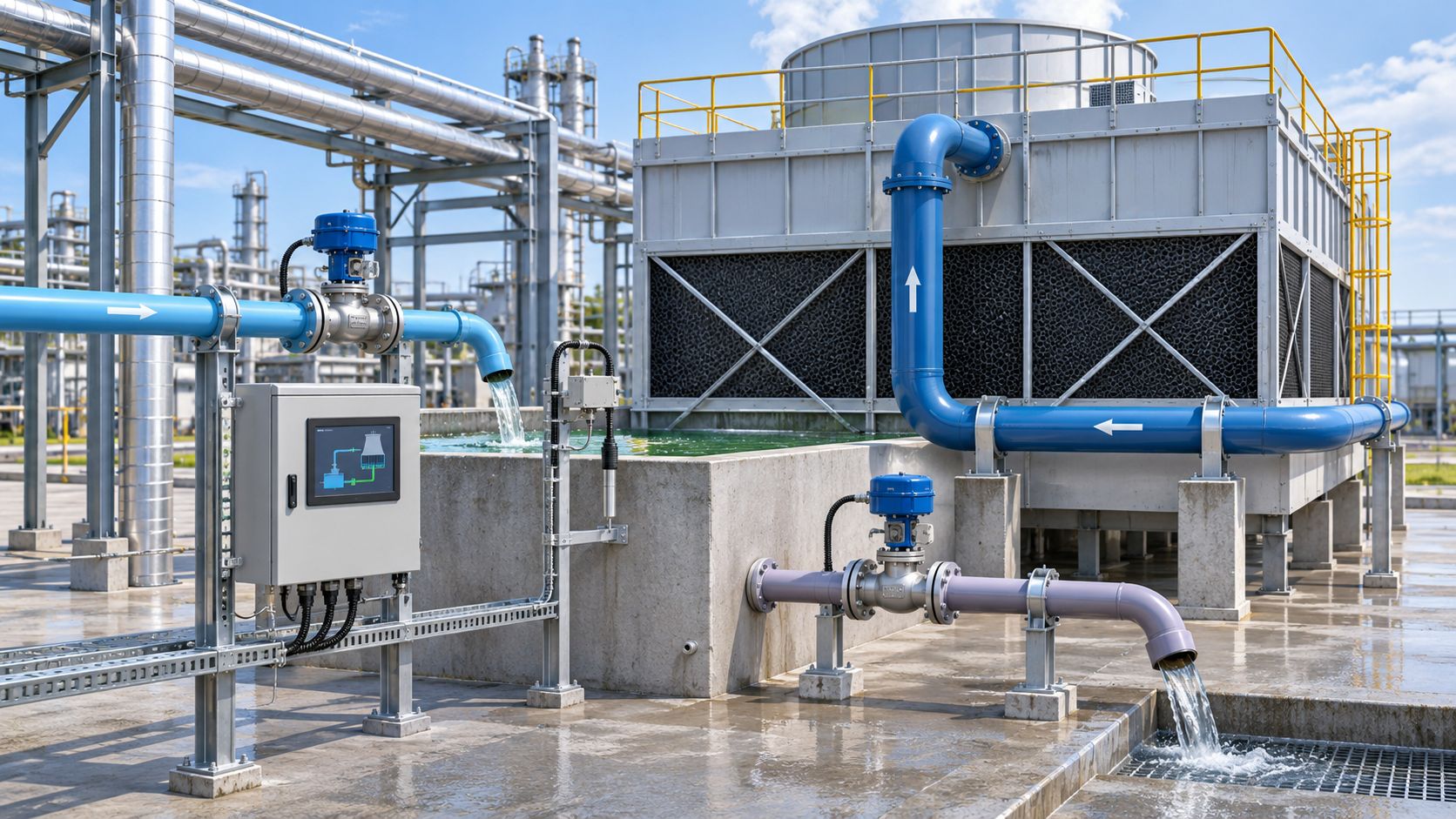
Blowdown, also called bleed-off, removes a portion of concentrated circulating water from the cooling tower system. Make-up water is then added to replace the discharged water and maintain the required operating water level.
A conductivity controller can use continuous conductivity measurements to determine when the circulating water exceeds a configured setpoint. The controller can then activate a blowdown valve according to the system's control logic.
- Measure conductivity in circulating cooling water.
- Compare the reading with the configured setpoint.
- Send a control signal when the operating limit is exceeded.
- Activate the blowdown valve through the controller.
- Replace discharged water with make-up water.
- Continue monitoring after the water concentration changes.
Conductivity Monitoring and Blowdown Control Process
The sensor provides conductivity measurement data. A separate controller or PLC processes the signal and manages the blowdown equipment according to the configured water treatment strategy.
Water Measurement
The conductivity sensor measures the ionic conductivity of circulating cooling water.
Setpoint Comparison
The controller compares the measured value with the configured conductivity limit.
Blowdown Activation
When the control conditions are met, the controller activates the blowdown valve.
Water Replacement
Make-up water replenishes the system while conductivity monitoring continues.
Key Conductivity Monitoring Points in Cooling Tower Systems
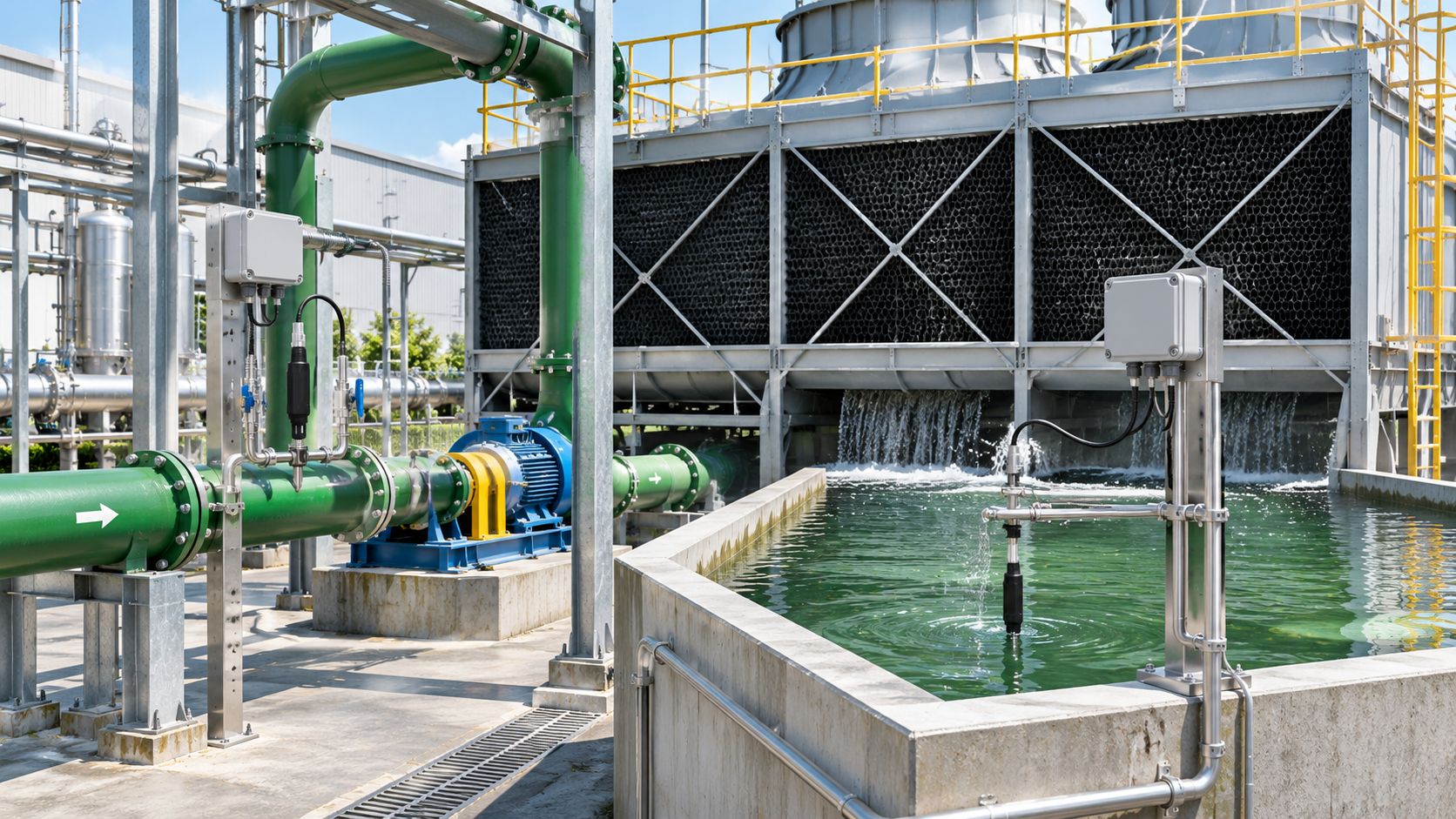
Monitoring locations should be selected according to the system layout and the information required by the water treatment controller.
| Monitoring Point | Measurement Purpose | Application Value |
|---|---|---|
| Circulating Water Basin | Observe the conductivity of water collected in the cooling tower basin. | Monitor changes in circulating water concentration. |
| Circulating Water Return | Measure water returning from the cooling process, subject to suitable installation conditions. | Provide process information for water treatment monitoring. |
| Make-up Water Line | Measure incoming water conductivity. | Establish a reference value for concentration cycle calculations. |
| Blowdown Line | Monitor conductivity of discharged concentrated water. | Support conductivity-based blowdown management and COC evaluation. |
The most appropriate installation point depends on the selected control method. A conductivity sensor installed in a basin or sample chamber should be positioned to obtain representative water measurements and avoid stagnant or poorly mixed water.
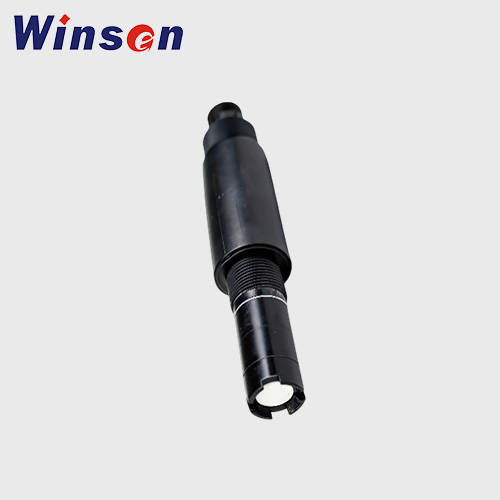
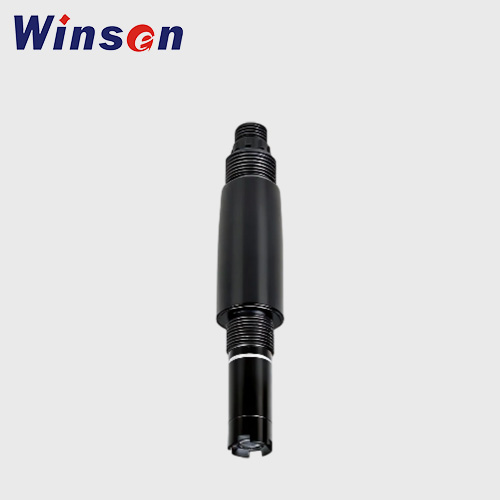
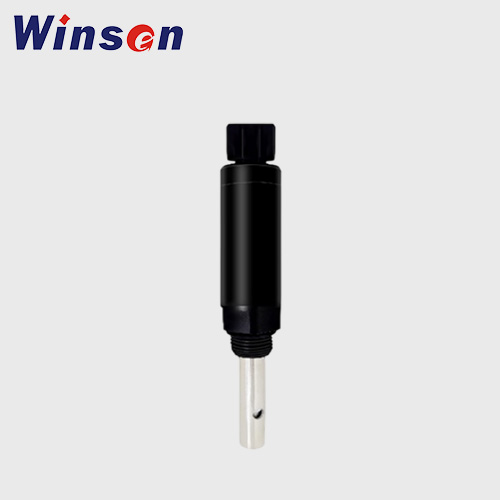
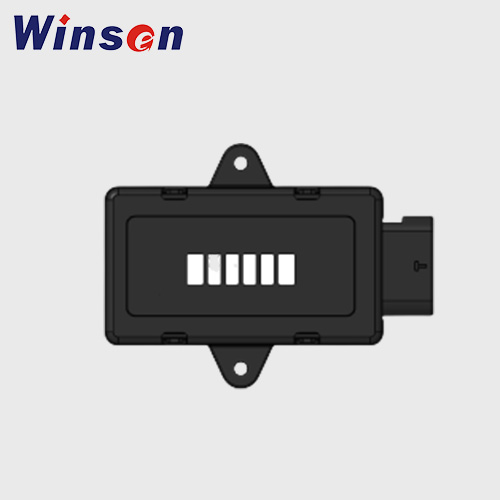
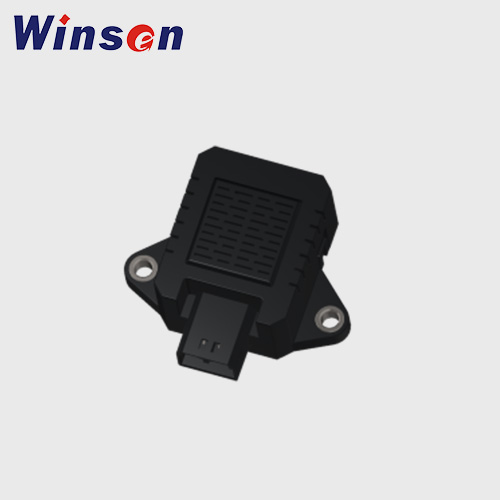
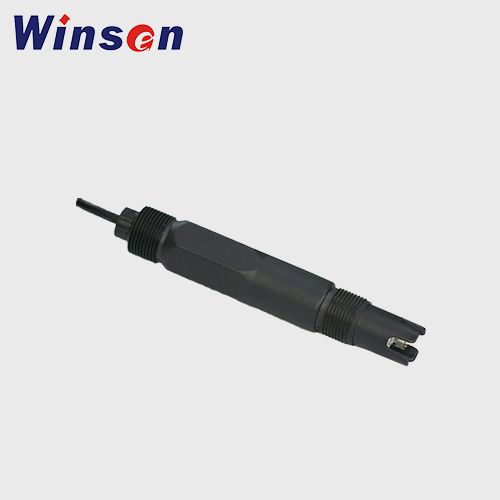
ZW-C101 Electrical Conductivity Water Quality Sensor
ZW-C101 is an electrochemical electrical conductivity water quality sensor designed to measure the conductivity of aqueous solutions. Its measurement range and output options make it a candidate for evaluation in industrial circulating water monitoring systems.
ZW-C101
The sensor works by applying a constant voltage across its electrodes. Changes in solution resistance produce corresponding changes in measurement current, which are used to determine electrical conductivity.
With 4–20mA and RS485 output options, ZW-C101 can be evaluated for integration with compatible industrial controllers and water quality monitoring equipment.
VIEW ZW-C101 PRODUCT DETAILS →Technical Specifications
| Parameter | Specification |
|---|---|
| Model | ZW-C101 |
| Target Parameter | Electrical Conductivity |
| Measurement Range | 0–20000 μS/cm |
| Resolution | 0.01 μS/cm |
| Accuracy | ≤±3% |
| Response Time (T90) | ≤30s |
| Temperature Range | 0–80℃ |
| Working Pressure | 0–4bar |
| Working Humidity | Relative humidity <90% |
| Protection Class | IP68 |
| Installation Method | Immersion type |
| Signal Output | 4–20mA / RS485 |
| Calibration Method | Two-point type |
| Power Supply | DC 9–30V |
Review the actual circulating water conductivity, temperature, pressure and installation conditions before selecting the sensor for a specific cooling tower system.
Integrating Conductivity Sensors with PLC and Water Treatment Controllers
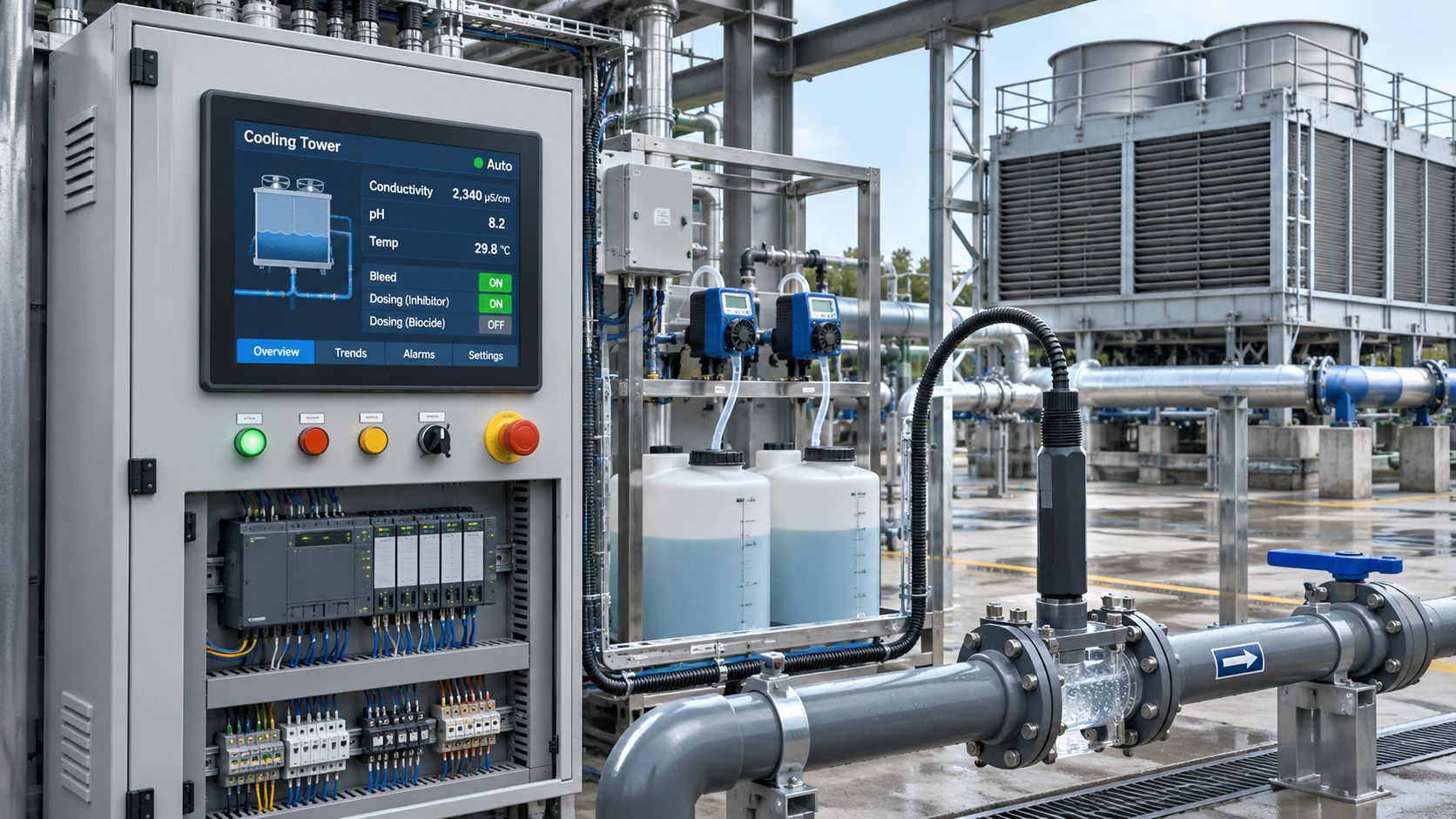
Cooling tower conductivity monitoring systems commonly combine water quality sensors, signal acquisition equipment, controllers and water management devices.
ZW-C101 offers 4–20mA and RS485 output options. The appropriate interface depends on the controller input and system communication requirements.
A compatible PLC or water treatment controller can process the conductivity measurement and execute application-specific blowdown logic.
Conductivity measurement
4–20mA or RS485
Setpoint comparison and logic
Blowdown valve and make-up system
Important Considerations for Cooling Tower Conductivity Monitoring
Correct sensor selection and installation help ensure that conductivity readings represent the actual circulating water conditions.
01. Conductivity Measurement Range
Determine the expected conductivity range of the circulating water and make-up water. Confirm that the selected sensor covers the required operating range without exceeding its measurement limits.
02. Water Temperature
Conductivity changes with water temperature. Consider operating temperature and the temperature measurement or compensation method used by the overall monitoring system.
03. Installation Location
Select a representative measurement point with adequate water contact and circulation. Consider immersion installation or a suitable sample chamber according to the sensor design.
04. Operating Pressure
Verify that the installation arrangement and operating pressure are compatible with the published sensor specifications.
05. Signal Compatibility
Match the sensor's 4–20mA or RS485 output with the receiving controller. Confirm wiring, electrical requirements and communication settings.
06. Water Treatment Program
Set conductivity limits according to make-up water chemistry, scaling and corrosion potential, chemical treatment and the cooling tower's operating requirements.
07. Sensor Maintenance
Establish an inspection and cleaning schedule based on water conditions and actual sensor installation. Verify readings periodically according to the maintenance plan.
08. Control Valve Configuration
Configure blowdown and make-up water control separately through the controller. Consider valve response, water level control and appropriate operating interlocks.
Frequently Asked Questions
Common questions about cooling tower conductivity monitoring, concentration cycles and blowdown control.
What is conductivity monitoring in a cooling tower?
Conductivity monitoring measures the ability of circulating cooling water to conduct electricity. Since dissolved ions contribute to conductivity, changes in readings can indicate changes in the ionic concentration of circulating water.
Why does conductivity increase in cooling tower water?
Cooling towers remove heat partly through evaporation. Water evaporates while most dissolved minerals remain in the circulating water. As water continues to evaporate, dissolved substances become more concentrated, resulting in increased conductivity.
What are cycles of concentration in cooling towers?
Cycles of concentration describe the concentration of dissolved substances in cooling tower water relative to make-up water. It can be estimated by comparing the conductivity of blowdown water with the conductivity of make-up water under comparable measurement conditions.
How does conductivity control cooling tower blowdown?
A conductivity controller monitors the circulating water and compares the reading with a configured conductivity setpoint. When the control conditions are met, the controller can activate a blowdown valve to discharge concentrated water and allow make-up water to replenish the system.
Can conductivity be used to calculate TDS?
Conductivity is related to dissolved ionic content, but it is not the same as TDS. A conversion factor may be used to estimate TDS from conductivity, but the relationship depends on the composition of the water and should be established for the specific application.
Which Winsen sensor can be considered for cooling tower conductivity monitoring?
The Winsen ZW-C101 electrical conductivity water quality sensor provides a measurement range of 0–20000 μS/cm and offers 4–20mA and RS485 output options. Its suitability should be evaluated against the actual circulating water range, temperature, pressure and installation conditions.
Can ZW-C101 connect to a PLC?
ZW-C101 provides 4–20mA and RS485 signal output options. It can be evaluated for integration with compatible PLCs and water treatment controllers. The electrical interface and communication requirements should be confirmed before integration.
Does ZW-C101 automatically control the blowdown valve?
No. ZW-C101 is a conductivity measurement sensor. A separate PLC or water treatment controller processes its measurement signal and controls the blowdown valve according to the system's configured logic.
What conductivity setpoint should a cooling tower use?
There is no universal conductivity setpoint for all cooling towers. The appropriate limit depends on make-up water quality, circulating water chemistry, scale and corrosion control, treatment chemicals and equipment operating conditions.
Related Water Quality Monitoring Solutions
Explore other Winsen water quality applications and conductivity sensing products.
Looking for a Conductivity Sensor for Your Cooling Tower System?
Share your circulating water conductivity range, make-up water quality, operating temperature and controller interface. Our team can help evaluate the appropriate Winsen conductivity sensing option for your industrial water monitoring application.
REQUEST TECHNICAL CONSULTATION →