Hydrogen Energy Is Accelerating — We Protect the Green Future with Sensor Technology
In March 2026, China’s hydrogen industry received a major policy boost. The Ministry of Industry and Information Technology (MIIT), the Ministry of Finance (MOF), and the National Development and Reform Commission (NDRC) jointly issued “Notice on Launching Hydrogen Comprehensive Application Pilot Programs” (工信部联节〔2026〕59号), signaling a clear shift toward scaled, scenario-driven hydrogen deployment.
The notice sets ambitious goals for 2030, including:
- End-use hydrogen average price lowered to ≤ 25 RMB/kg (with a goal of ~15 RMB/kg in advantaged regions)
- Fuel cell vehicle (FCV) fleet targeted to reach 100,000 units nationwide
- A “1 + N + X” application ecosystem: one common FCV scenario + multiple industrial scenarios + innovative scenarios, selected via a competitive “揭榜挂帅” mechanism
This “application-led, scenario-driven” roadmap means one thing for the industry: the entire hydrogen chain—production, storage, transport, and use—will expand faster than ever.
Scaling Hydrogen Means Scaling Safety
Opportunity and safety always rise together.
Hydrogen has unique physical properties that make leak detection and rapid intervention essential:
- It has a wide flammability range (about 4%–75% in air)
- It requires very low ignition energy, which increases risk in real operating environments
As hydrogen applications expand into fuel cell vehicles, hydrogen corridors, hydrogen blending, and hydrogen-based industrial processes, the “smallest leak” can quickly become a major hazard.
At the same time, fuel-cell systems have another critical safety dimension: thermal management media safety. Coolant conductivity drift can impact insulation performance and system reliability, especially under long-duration and high-load operation.
Our Two Core Products for Hydrogen Safety Scenarios
We have built our hydrogen safety solution around two “must-control” risks:
- Hydrogen leak risk (gas safety)
- Coolant conductivity risk (media safety)
1) ZC61 Vehicle Hydrogen Leakage Detection Sensor
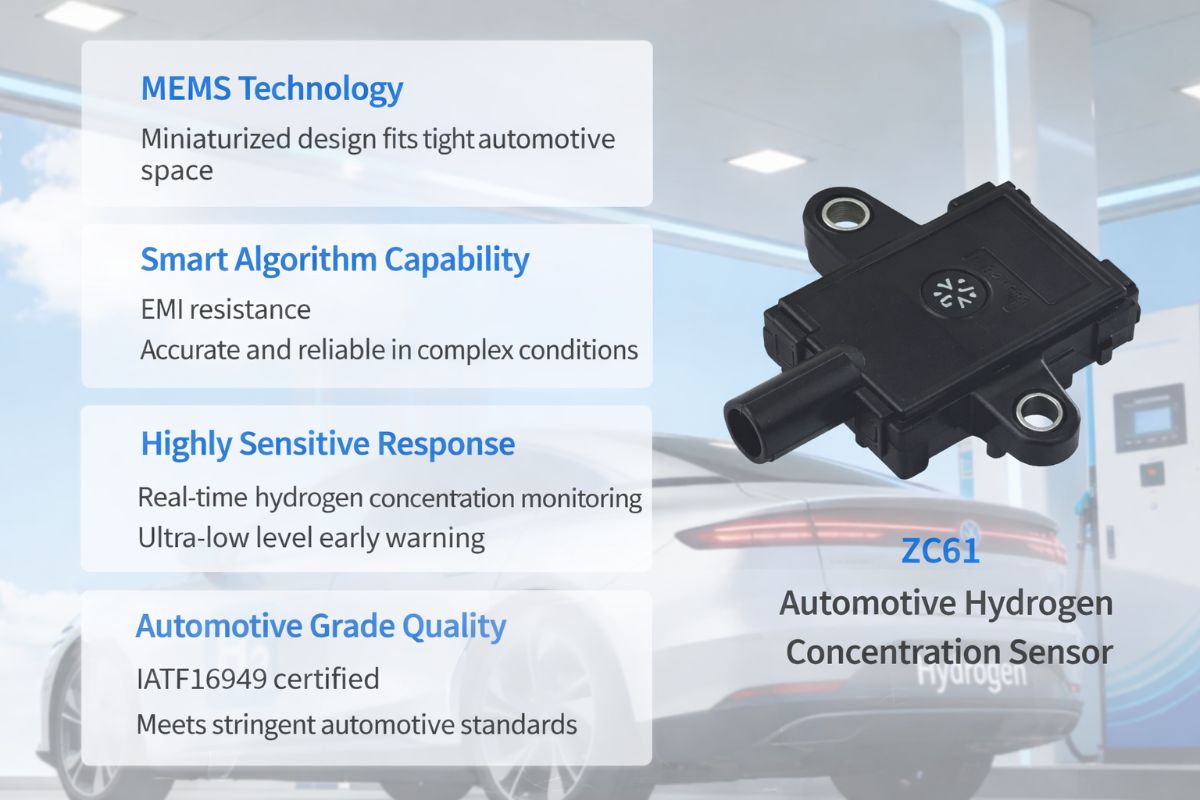
Real-time monitoring for H₂ leakage in fuel cell engine compartments and hydrogen supply pipelines
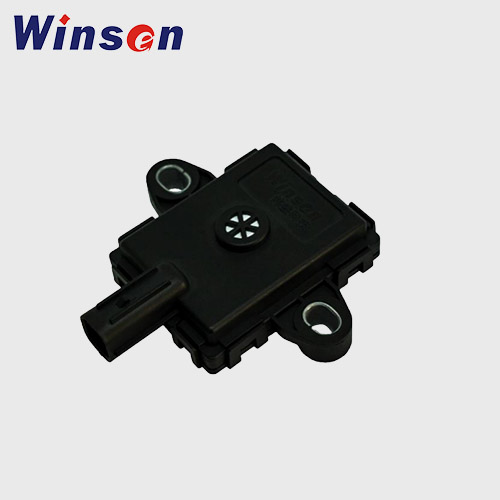
ZC61 is designed for hydrogen leakage monitoring in hydrogen fuel cell engines and hydrogen supply pipeline systems, using a MEMS-process catalytic combustion sensing principle to detect hydrogen concentration.
Key highlights (reference):
- Detection range: 0–40000 ppm
- Response time: T90 < 3 s
- Output: CAN (also listed with CAN/PWM)
- Protection: IP68
- Operating voltage: DC 9–36 V
- IATF 16949 compliant
- Applications: hydrogen energy vehicles, hydrogen production, storage, transportation
Why it matters for pilots and scaled deployment
As hydrogen moves into more vehicles and industrial sites, safety design must shift from “manual checks” to continuous sensing + fast control linkage.
2) ZW-HC101 On-line Coolant Conductivity Sensor
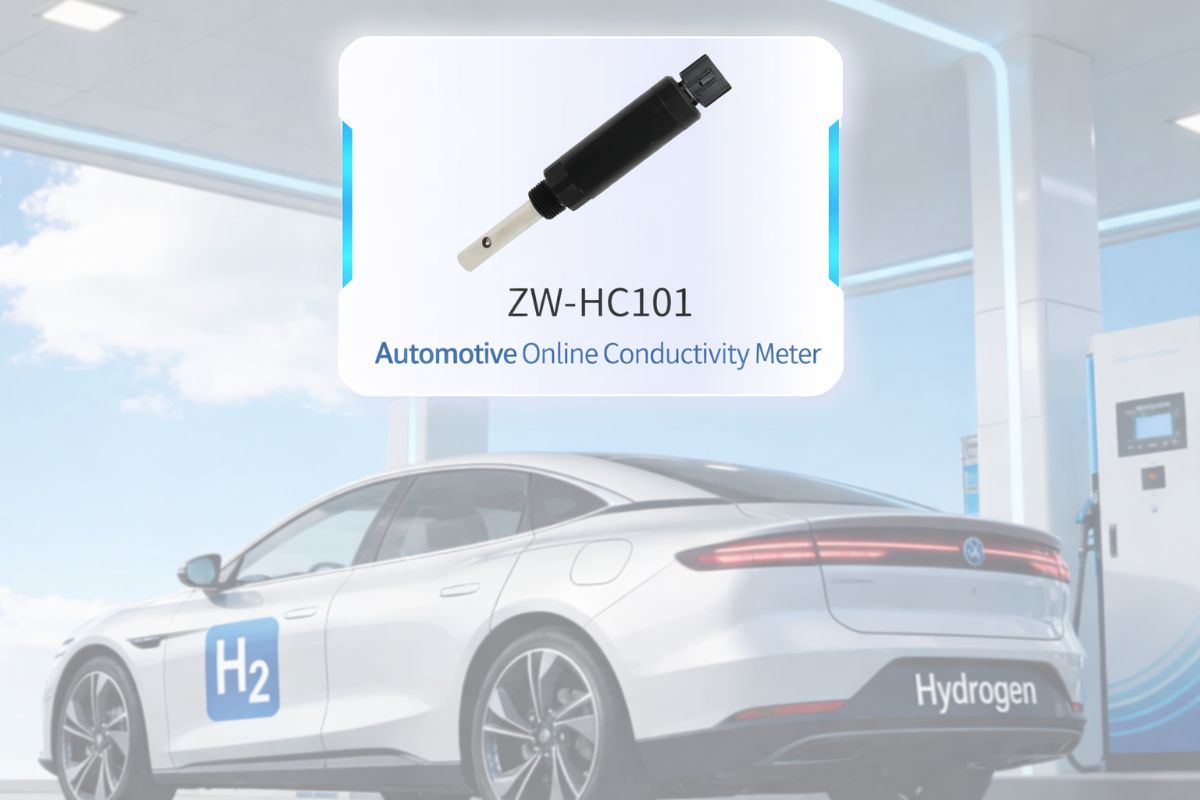
Continuous conductivity monitoring for fuel-cell thermal management systems
Fuel cell antifreeze coolant must maintain appropriate conductivity. If conductivity becomes abnormal, it can negatively impact performance and reliability, and in severe cases may lead to system shutdown or safety incidents.
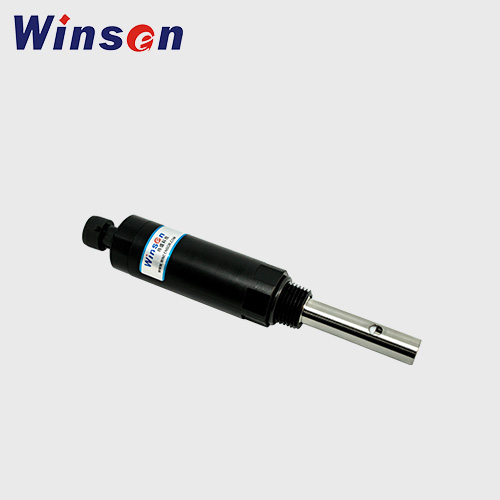
ZW-HC101 measures conductivity by applying periodically changing excitation signals across electrodes and digitally processing the response to determine conductivity.
Key highlights (reference):
- Detection range: 0.01–20 μS/cm
- Resolution: 0.01 μS/cm
- Accuracy: ±1.5% F.S.
- Operating temperature: −40°C to 100°C
- Operating pressure: < 0.6 MPa
- Protection: IP68 / IP6K9K
- Output: CAN / Analog (customizable)
- IATF 16949 compliant
Why it matters
Online conductivity monitoring is a more reliable safety strategy than periodic inspection because it provides continuous feedback and enables immediate intervention when abnormal conductivity is detected.
Quick Selection Table
| Risk to control | Where it happens | Recommended sensing | Our solution |
|---|---|---|---|
| Hydrogen leakage | engine bay, valves, fittings, pipelines, storage interfaces | fast H₂ concentration detection + CAN linkage | ZC61 H₂ leak sensor |
| Coolant media safety | fuel-cell thermal management loop | online conductivity monitoring (real-time) | ZW-HC101 conductivity sensor |
Deployment Tips for Pilot Projects (Practical)
For hydrogen “comprehensive application” pilots, we recommend designing safety monitoring from the beginning:
- H₂ leak sensors at likely leak points: valve blocks, joints, regulators, pipeline transitions, and engine compartment airflow “collection zones”
- Conductivity monitoring as a closed-loop safeguard in the thermal management loop: trend analysis + threshold alarms + maintenance triggers
- Integrate both signals into the vehicle/controller logic via CAN for fast response and clear diagnostics
Conclusion: Safety Is the Foundation of Hydrogen Scale-Up
The 2026 pilot policy sets a clear direction: hydrogen applications will expand quickly across transportation and industrial scenarios toward 2030 targets.
As scale increases, safety must become more systematic—built on continuous sensing, reliable algorithms, and fast system linkage.
From hydrogen leak prevention to coolant media monitoring, we will continue advancing sensing technologies that make hydrogen applications more economical, more efficient, and more secure.