Small Temperature Sensor, Big Upgrade
How Smart Temperature Sensing Is Transforming Bottle Shakers and Baby Feeding Devices
In infant feeding, temperature is never a trivial detail. A baby’s mouth and esophagus are far more delicate than those of adults, and their tolerance to temperature deviations is much lower. In today’s era of scientific parenting, caregivers expect feeding devices to be not only convenient, but also more precise, more hygienic, and more intelligent.
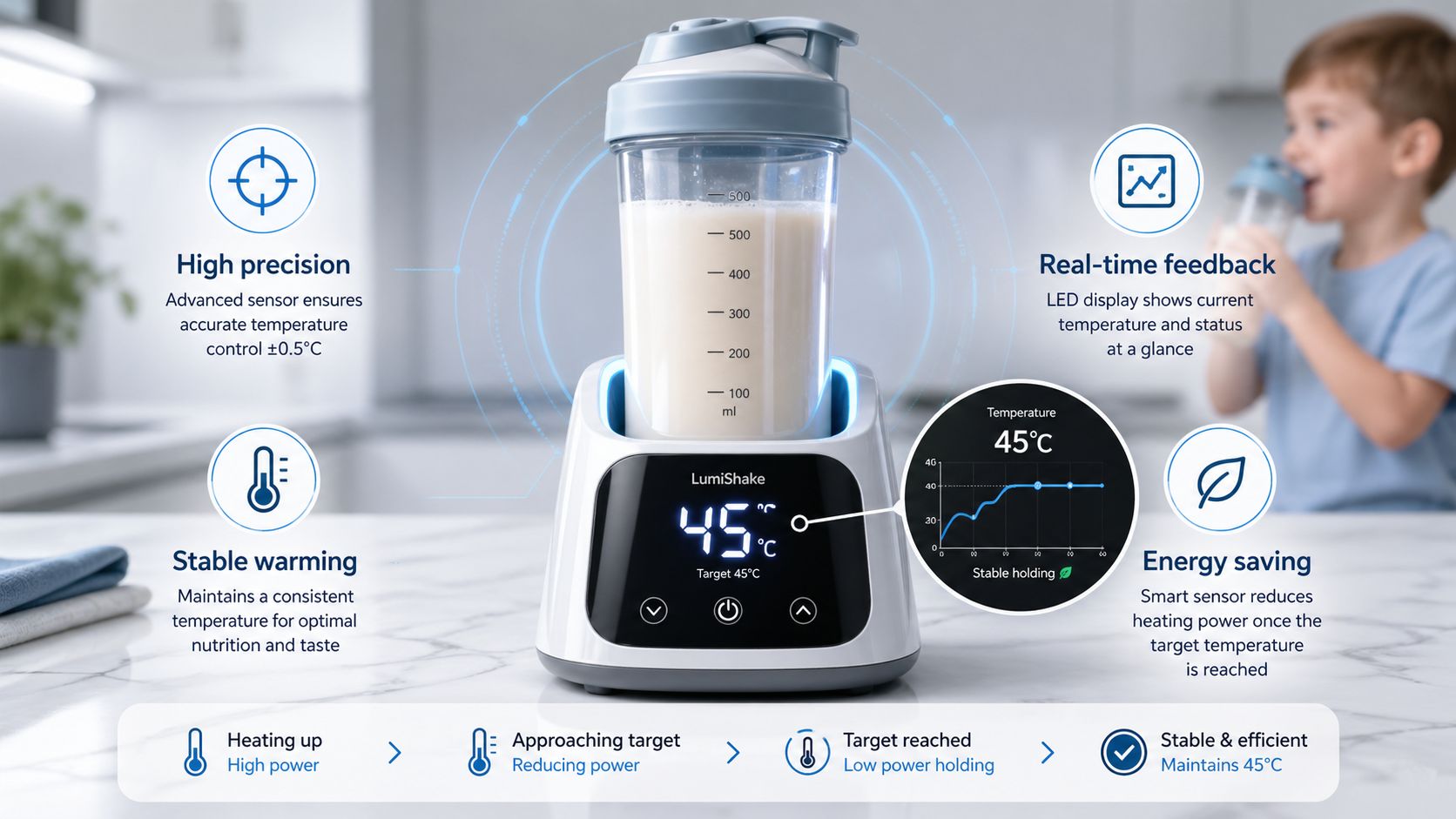
This is why smart bottle shakers, milk warmers, and multi-function baby feeding appliances are rapidly evolving. Functions such as constant-temperature shaking, intelligent milk warming, and multi-level temperature control are becoming standard features. At the heart of this upgrade is one key component: the infrared temperature sensor.
By moving from “guessing by hand” to digital temperature sensing, smart bottle shakers can now offer a new level of safety, consistency, and user experience.
Why Temperature Matters So Much in Infant Feeding
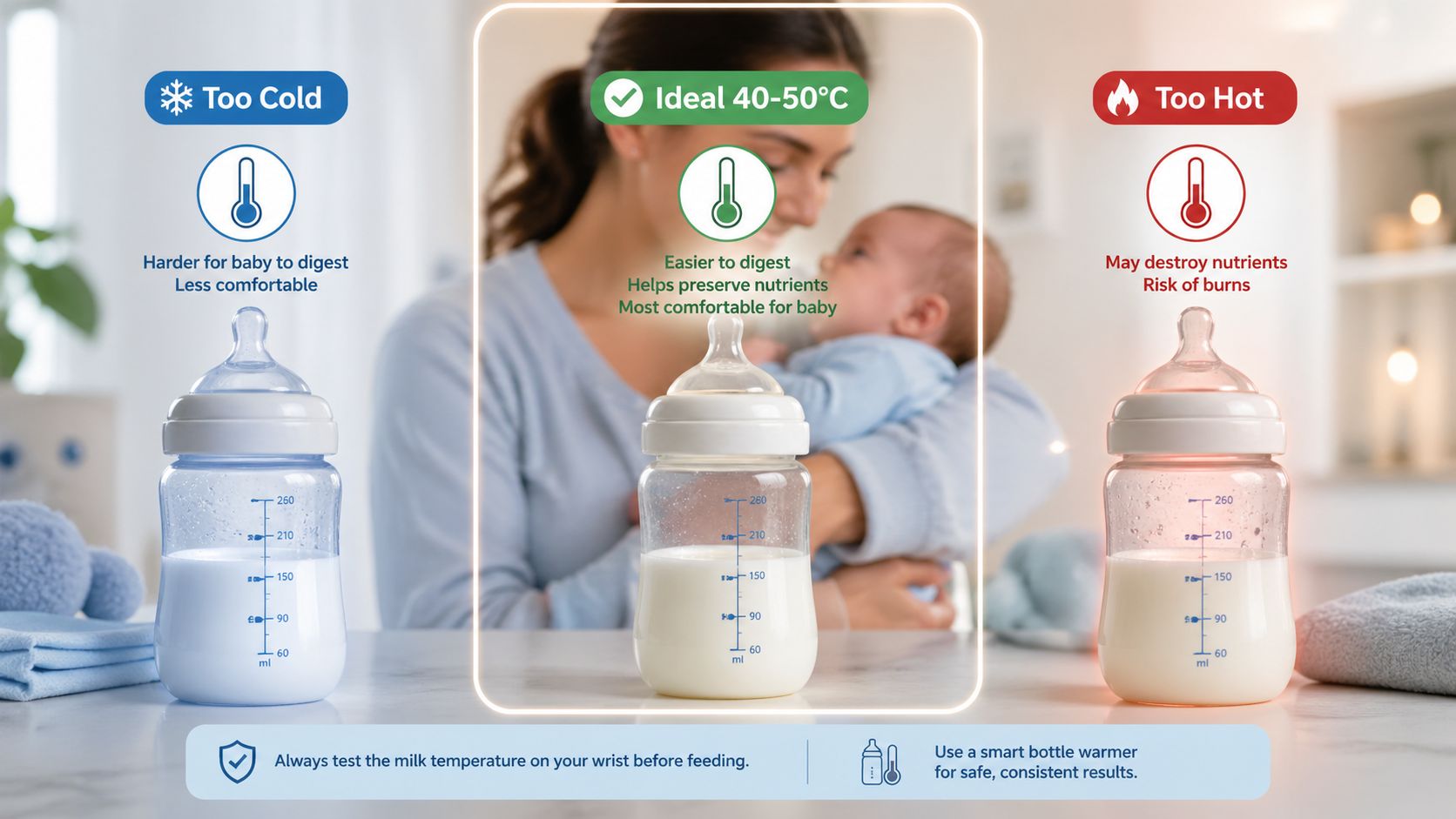
Temperature directly affects:
- the retention of heat-sensitive nutrients
- the solubility and consistency of formula
- the feeding comfort of the baby
- the safety and peace of mind of parents
If the milk is too hot, it may damage heat-sensitive components and increase the risk of scalding. If it is too cool, formula may dissolve incompletely, leading to clumping and a less ideal feeding experience.
This is exactly why modern bottle preparation devices are shifting toward precise temperature control, rather than simple heating alone.
From Manual Guesswork to Intelligent Sensing
Traditional feeding routines often rely on experience:
- touching the bottle by hand
- testing milk on the wrist
- estimating temperature based on heating time
These methods are simple, but they are also inconsistent and difficult to standardize. For baby appliances, this creates a clear need for a more reliable solution.
Smart bottle shakers solve this problem by introducing infrared temperature sensing, allowing the device to detect bottle or milk temperature in real time without direct contact with the liquid.
How Infrared Temperature Sensors Help Bottle Shakers “See” Temperature
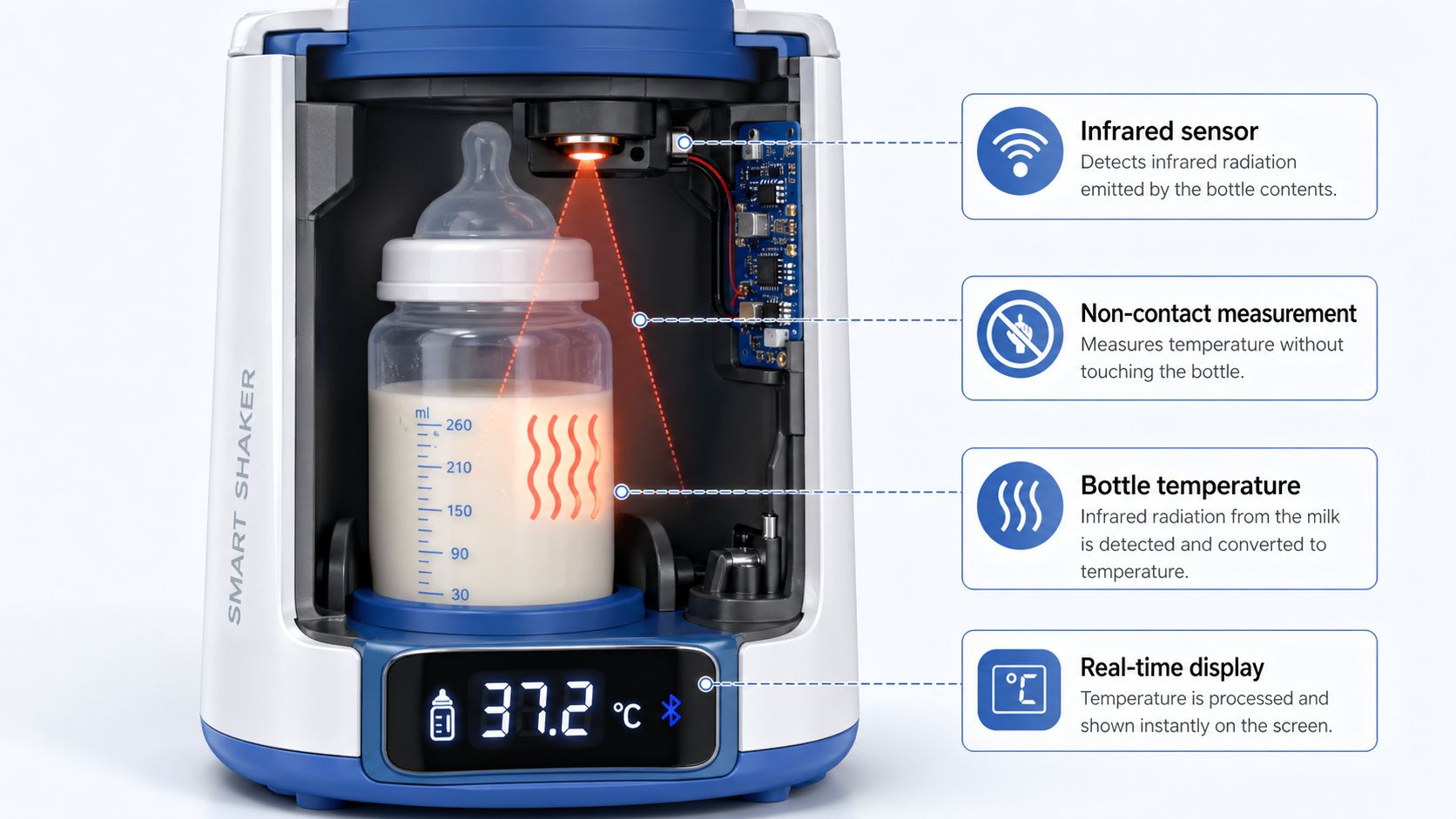
Infrared temperature sensors work by detecting the infrared radiation emitted by an object. Since all objects above absolute zero emit infrared energy, the sensor can convert this radiation into a temperature reading through internal signal processing and calibration algorithms.
For bottle shakers and milk warmers, this means the system can:
- detect temperature without touching the milk
- provide continuous feedback during warming and shaking
- support precise temperature control in dynamic operating conditions
- improve hygiene by avoiding direct contact with the liquid
This is the core technology that allows smart bottle shakers to move from basic warming to intelligent thermal management.
Four Core Advantages of Infrared Temperature Sensors in Smart Bottle Shakers
1) Non-contact temperature measurement for cleaner feeding
Traditional contact-based sensing solutions may require a probe to touch the liquid or closely contact the container. This can create several issues:
- cleaning blind spots
- risk of bacterial growth
- possible cross-contamination
- temperature deviation caused by poor contact
Infrared sensing avoids these problems entirely. Because it measures temperature without direct contact, it helps protect milk purity from the source and reduces the burden of cleaning sensor parts.
For baby feeding products, this is a major advantage in both hygiene and user convenience.
2) High-precision temperature control to protect nutrition
Milk temperature control is not just about comfort—it is also about product performance. Sensitive formulas, milk preparations, and baby feeding routines all benefit from stable thermal control.
Our infrared temperature sensing solution integrates:
- low-noise PGA amplification
- 24-bit Sigma-Delta high-precision ADC
- DSP calibration algorithms
This combination enables highly accurate temperature measurement and stable control performance, allowing bottle shakers and milk warmers to maintain the target temperature more precisely.
For parents, that means:
- more consistent milk temperature
- better support for delicate feeding requirements
- less risk of overheating or underheating
3) Real-time feedback so parents can see every temperature change
One common concern with baby feeding appliances is whether temperature remains stable throughout the process. In a bottle shaker, the milk is in motion, which makes the temperature environment even more dynamic.
Infrared temperature sensors offer fast response, allowing the system to capture temperature fluctuations even while the bottle is being shaken or kept warm. The device can then display temperature information in real time and continuously adjust heating power.
This helps ensure that:
- milk can be brought quickly to the desired temperature
- the target temperature can be maintained steadily
- parents can view and trust the process instead of guessing
4) Smarter energy-saving control for safer, greener operation
Infrared sensing also improves the control efficiency of the whole appliance.
Once the milk reaches the set temperature, the sensor immediately sends feedback to the control system, which can:
- reduce heating power
- stop heating temporarily
- enter a lower-energy maintenance mode
This brings several benefits at once:
- prevents overheating
- reduces nutrient loss risk
- lowers scalding risk
- saves energy
- supports a more environmentally friendly household appliance design
In other words, the sensor does not only improve measurement—it also supports smart thermal management.
A Better Smart Feeding Solution Powered by Domestic Innovation
For a long time, infrared temperature sensing technology in consumer appliances was dominated by overseas brands, often creating high cost and supply chain pressure for domestic manufacturers.
By combining sensor technology + algorithms + product-level factory calibration, we provide a complete infrared temperature sensing solution for baby-care appliances and other consumer products. This helps manufacturers achieve:
- high-performance non-contact temperature measurement
- faster product development
- lower integration difficulty
- better cost control
- stronger supply chain flexibility
For the bottle shaker segment, this makes large-scale adoption of non-contact temperature sensing more practical and more competitive.
Recommended Temperature Sensors for Baby Feeding Devices
RTT-D7211-5.5
Recommended sensing distance: 3–5 cm
Field of view: 65°
Temperature range: -20°C to 250°C
This model is well suited for compact bottle shaker structures where the sensor is mounted relatively close to the bottle or target surface.
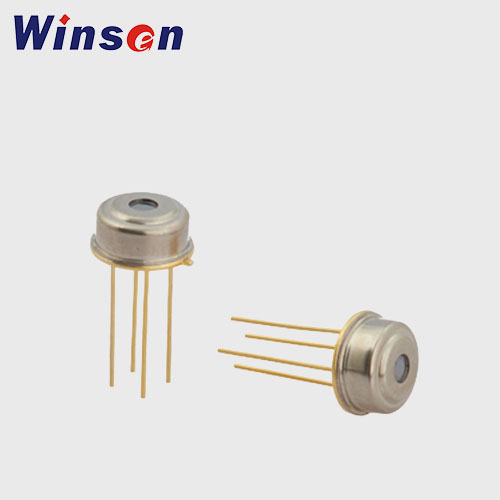
RTT-D7211-5.5-A1
Recommended sensing distance: 10 cm
Field of view: 33°
Structure: with aluminum sleeve
Temperature range: -20°C to 250°C
This model is more suitable for applications requiring a longer sensing distance or a narrower field of view for more concentrated target detection.
Typical Application Scenarios
Infrared temperature sensors can support a wide range of mother-and-baby appliance designs, including:
- smart bottle shakers
- baby milk warmers
- constant-temperature bottle preparation systems
- integrated feeding appliances
- intelligent warming devices for maternal and infant care
As user demand continues to shift toward smart, hygienic, and easy-to-use products, infrared sensing will become an increasingly important enabling technology in this category.
Why Infrared Sensing Is a Natural Fit for Bottle Shakers
Bottle shakers present a unique challenge compared with ordinary warming devices. The system must operate under dynamic conditions, respond quickly, and keep milk within a safe and comfortable range. Infrared measurement is especially suitable because it offers:
- fast response
- non-contact operation
- high accuracy
- easy integration into smart control systems
This allows bottle shakers to evolve from “simple household appliances” into intelligent parenting devices.
Conclusion
A small temperature sensor can make a big difference.
With advanced infrared temperature sensing, smart bottle shakers can move beyond traditional temperature estimation and deliver a better feeding experience through:
- non-contact hygiene
- precise temperature control
- real-time feedback
- energy-efficient intelligent heating
By combining strong sensor technology with algorithm support and product-level calibration, we help bottle shaker manufacturers build smarter, safer, and more competitive products.
From precise temperature protection for every feeding, to a more convenient parenting experience, infrared temperature sensing is becoming a key force behind the intelligent upgrade of mother-and-baby appliances.
FAQ
Why is non-contact temperature sensing important in bottle shakers?
Because it avoids direct contact with milk, reduces contamination risk, simplifies cleaning, and still provides accurate temperature measurement.
Can infrared temperature sensors work accurately while the bottle is shaking?
Yes. Fast-response infrared sensing can track temperature changes in dynamic operating conditions, making it suitable for smart bottle shakers and constant-temperature feeding devices.
What are the main benefits of infrared sensing over contact probes?
Key advantages include:
- non-contact hygiene
- faster response
- fewer cleaning issues
- better integration into smart temperature control systems
Which models are recommended for mother-and-baby products?
For this application, we recommend:
- RTT-D7211-5.5 for shorter-distance sensing
- RTT-D7211-5.5-A1 for longer-distance, narrower-angle sensing
Can this technology help reduce product energy consumption?
Yes. Real-time temperature feedback allows the control system to reduce or stop heating once the target temperature is reached, improving energy efficiency.