Thermal Mass Gas Flow Sensors: Principle, Selection, and Wide Applications
Many traditional gas flow measurement methods read volumetric flow, not mass flow. The problem is that gas volume changes significantly with temperature and pressure. Without compensation, the error can easily reach 10%–20% or more—especially when conditions fluctuate.
Even worse, at very low flow rates, many traditional measurement methods become unstable or fail to provide reliable readings.
For modern applications that demand accurate, low-loss, low-flow-capable measurement, thermal mass gas flow sensors are becoming the mainstream choice—thanks to their strong low-flow response, high accuracy, and system-friendly design.
01) How Thermal Mass Gas Flow Sensors Work
Thermal mass flow sensing is based on a simple and intuitive physical phenomenon:
Flowing gas removes heat from a heated surface—and the amount of heat removed is related to the gas’s mass flow.
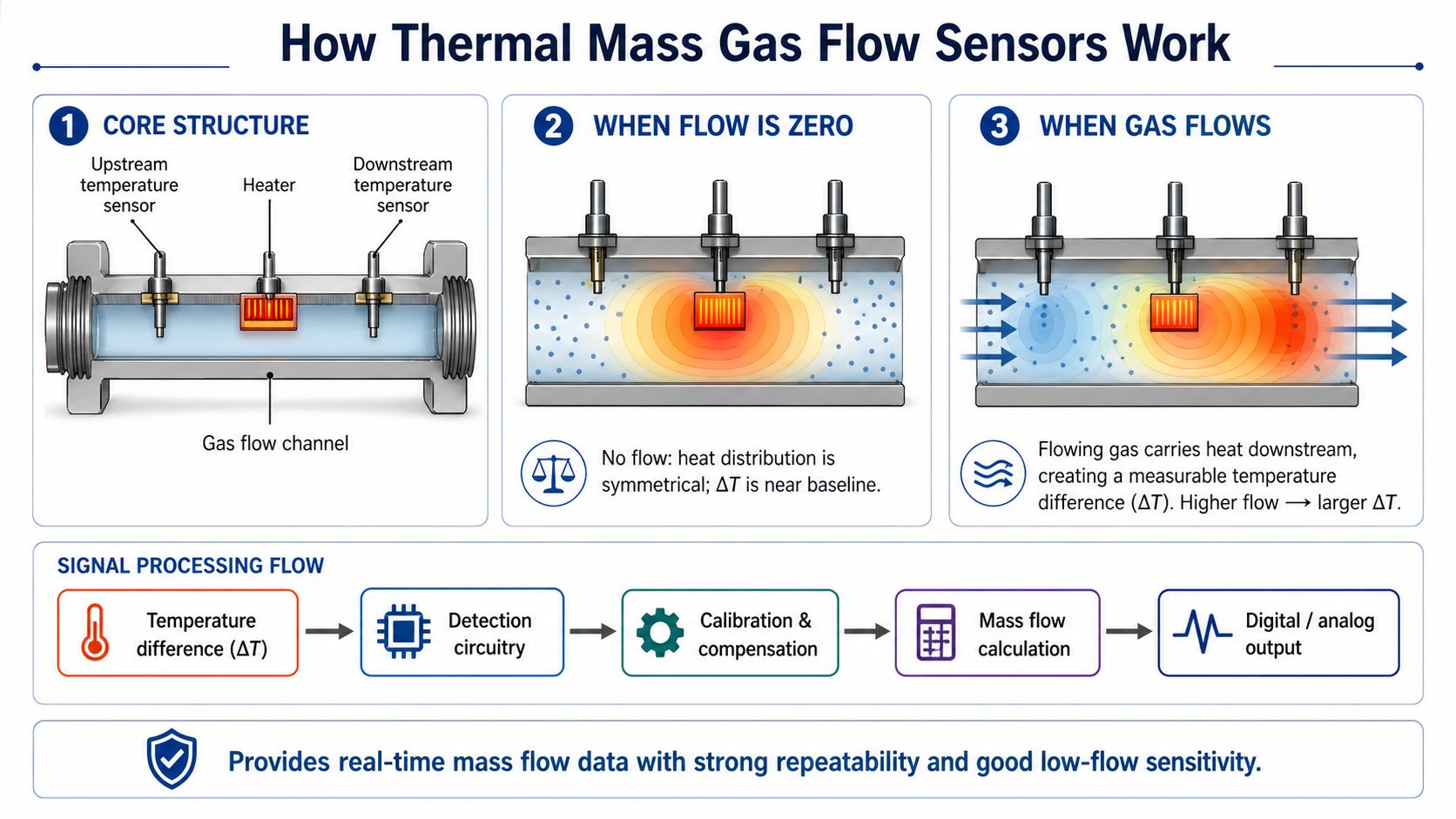
Core structure: two temperature sensors + one heater
A typical thermal mass flow sensor includes:
- a heating element
- two matched temperature sensing elements (usually positioned upstream and downstream)
When flow is zero
With no gas movement, the heat distribution around the heater is symmetrical. The two temperature sensors experience a stable temperature field, and the temperature difference remains near a fixed baseline.
When gas flows
When gas passes through the sensing channel, it carries heat downstream. The result is:
- the upstream sensor cools differently than the downstream sensor
- a measurable temperature difference (ΔT) appears
- higher flow → more heat carried away → larger ΔT
Signal processing: ΔT → electrical signal → mass flow output
Inside the sensor, high-precision detection circuitry continuously measures the temperature difference and converts it into a stable electrical signal. A dedicated internal algorithm then:
- performs calibration and compensation
- calculates mass flow
- outputs the result as a digital or analog signal
This gives you real-time mass flow data with strong repeatability and accuracy—even under low-flow conditions.
02) Key Selection Points for Thermal Mass Gas Flow Sensors
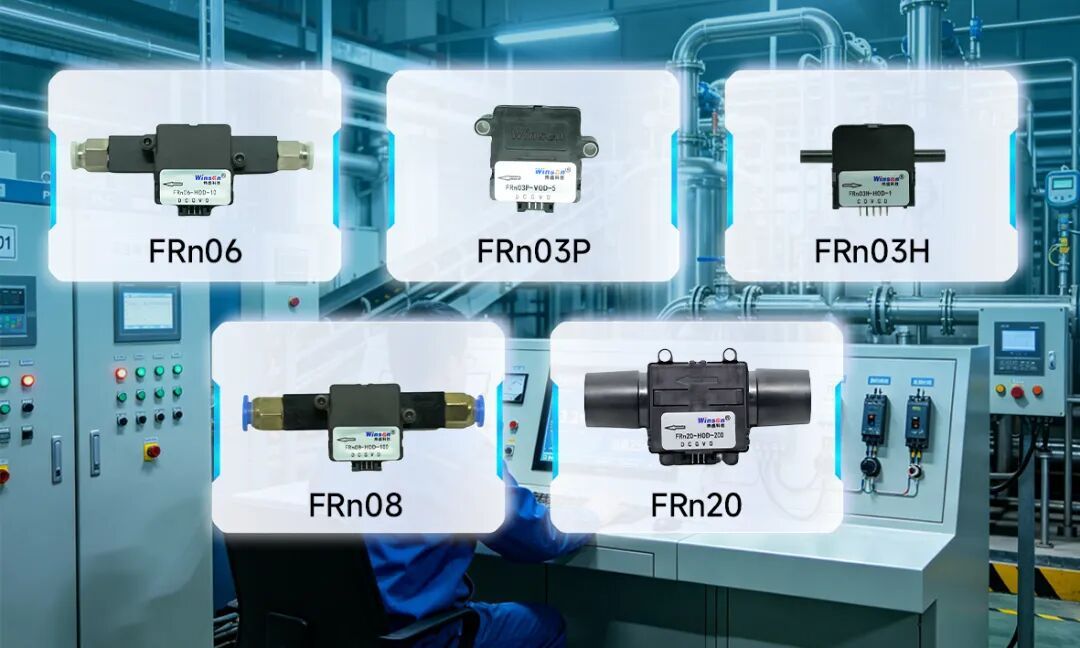
We have been deeply involved in thermal mass flow technology for many years. Our gas flow sensors have been in development and industrial use since 2012, supported by multiple patents. We also launched the FRn series high-accuracy MEMS thermal mass flow sensors and participated in drafting the industry standard JB/T 13111-2017 Thermal Mass Flow Sensor, helping set technical and quality benchmarks for the sector.
Our FRn series is designed to suppress intrinsic drift mechanisms, keeping the measurement reference stable over long periods. By combining fluid dynamics with optimized flow-channel design, FRn maintains stable response curves from minimum to maximum flow—delivering excellent zero-point stability and full-scale stability across changing conditions.
When selecting a thermal mass flow sensor, focus on these essentials:
1) Define the target gas (media compatibility)
Thermal mass flow sensors are generally suitable for dry, clean, non-corrosive, non-condensing gases, such as:
- air
- nitrogen (N₂)
- oxygen (O₂)
- methane (CH₄)
- carbon dioxide (CO₂)
Before final selection, you should confirm:
- gas composition (including impurities)
- humidity/condensation risk
- temperature/pressure conditions
- whether corrosion or particle contamination is possible
2) Choose the correct flow range (SCCM / SLM)
The “range” is the minimum to maximum flow the sensor can measure accurately, often specified as:
- SCCM (standard cubic centimeters per minute)
- SLM (standard liters per minute)
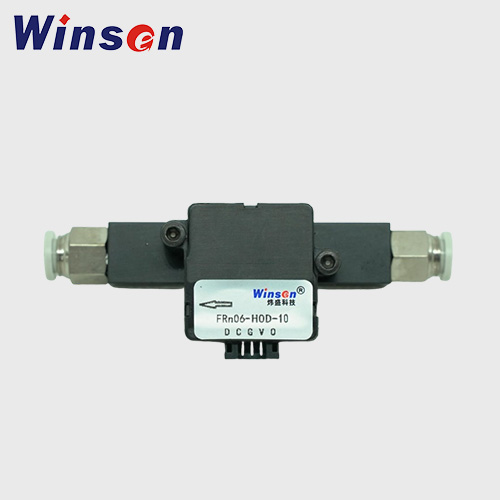
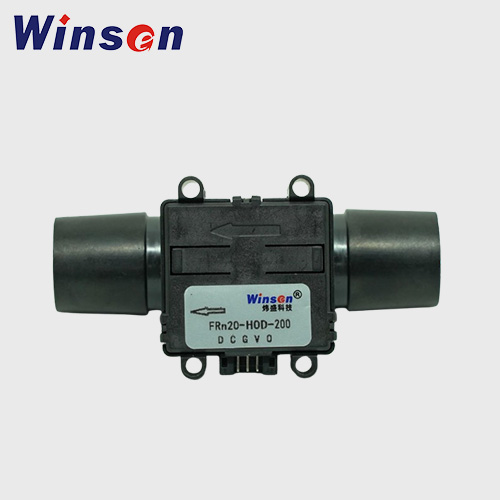
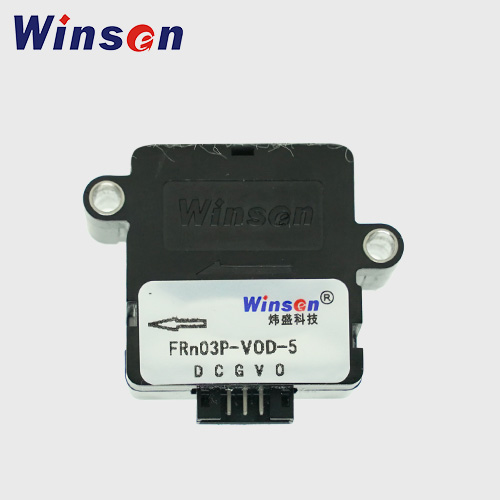
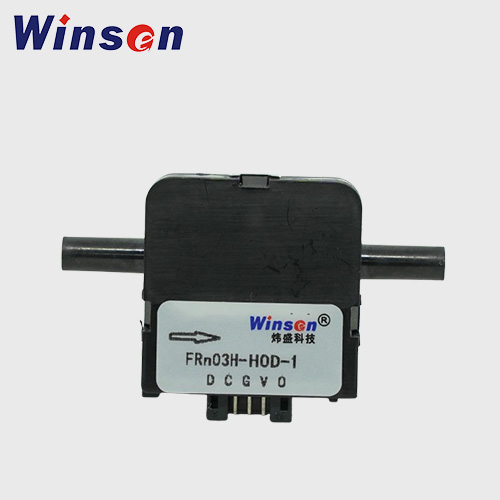
Our FRn series supports measurement ranges from as low as 50 SCCM up to 300 SLM, with range customization available for different applications and markets.
Selection tip:
Choose a range where your normal operating flow sits in the stable middle of the sensor’s operating curve—avoid running near the extreme low end or constantly near full scale.
3) Zero drift and long-term stability
Zero drift refers to how much the sensor output shifts over time and temperature when true flow is zero. It directly affects accuracy and reliability—especially in low-flow applications.
For FRn series, the zero drift can be controlled to ≤ 0.1% FS, and temperature drift across 0–50°C can remain within the stated specification range (per product manual), supporting stable long-term operation.
4) Output interface and system integration
In real products, integration matters as much as sensing performance:
- Digital output (e.g., I²C) simplifies MCU integration and supports data diagnostics
- Analog output enables compatibility with legacy controllers and fast testing/validation
FRn series provides options including I²C and analog signal output, making it easier to integrate across different control architectures.
5) Installation environment and reliability requirements
Consider:
- operating temperature range
- vibration and mechanical constraints
- contamination risk (dust/oil mist)
- pressure requirements
- maintenance access and lifecycle expectations
If the application involves harsh environments, protective mechanical design and stable calibration strategy become critical.
Winsen Thermal Mass Gas Flow Sensors
03) Wide Applications of Thermal Mass Flow Sensors
Thermal mass flow sensors are widely used wherever gas flow must be controlled, monitored, or validated. Their application footprint spans industrial production, environmental monitoring, medical equipment, and smart devices.
A) Process control (most mature and widely used)
Process control is the largest application category. In industries such as:
- semiconductor manufacturing
- laser systems
- argon arc welding equipment
- gas filling and leak-testing lines (e.g., lighter production)
Accurate gas flow turns an invisible flow into a measurable process parameter—improving yield, consistency, and safety.
B) Environmental monitoring & sampling equipment (“the heart of sampling”)
In areas such as:
- environmental protection monitoring
- occupational hygiene monitoring
- cleanroom testing
- air sampling instruments
The flow sensor becomes the “heart” of the sampling device—directly determining whether data is reliable.
C) Medical equipment (safety-critical control)

In medical systems, gas flow is often life-critical. Thermal mass flow sensors are widely used in:
- ventilators
- anesthesia machines
- infant incubators
- insufflators (pneumoperitoneum systems)
Accurate flow control can directly affect patient safety and treatment outcomes.
D) Smart devices and high-end consumer products
Thermal flow sensors also appear in advanced consumer and electronics systems, where airflow monitoring supports:
- intelligent fan control
- cabinet cooling optimization
- safety protection and performance tuning
These systems use airflow feedback to become more intelligent, quieter, and safer.
Conclusion
Thermal mass flow sensing has expanded rapidly from industrial process control into environmental monitoring, medical systems, and smart devices—quietly supporting a future that is more efficient, cleaner, safer, and more intelligent.
If you are facing gas flow measurement challenges—especially low-flow instability, high accuracy requirements, or integration constraints—we’re ready to support your project with professional selection guidance and application engineering recommendations.
Want to choose the right flow sensor quickly?
Send us your gas type, flow range (SCCM/SLM), pressure, temperature, and preferred output interface (I²C/analog)—and we’ll recommend the best FRn configuration plus integration tips for your device.