Smoke in the Bathroom = Instant “Social Death”?
How Transparent-Toilet Tech Shows the Evolution of Smoke Sensors
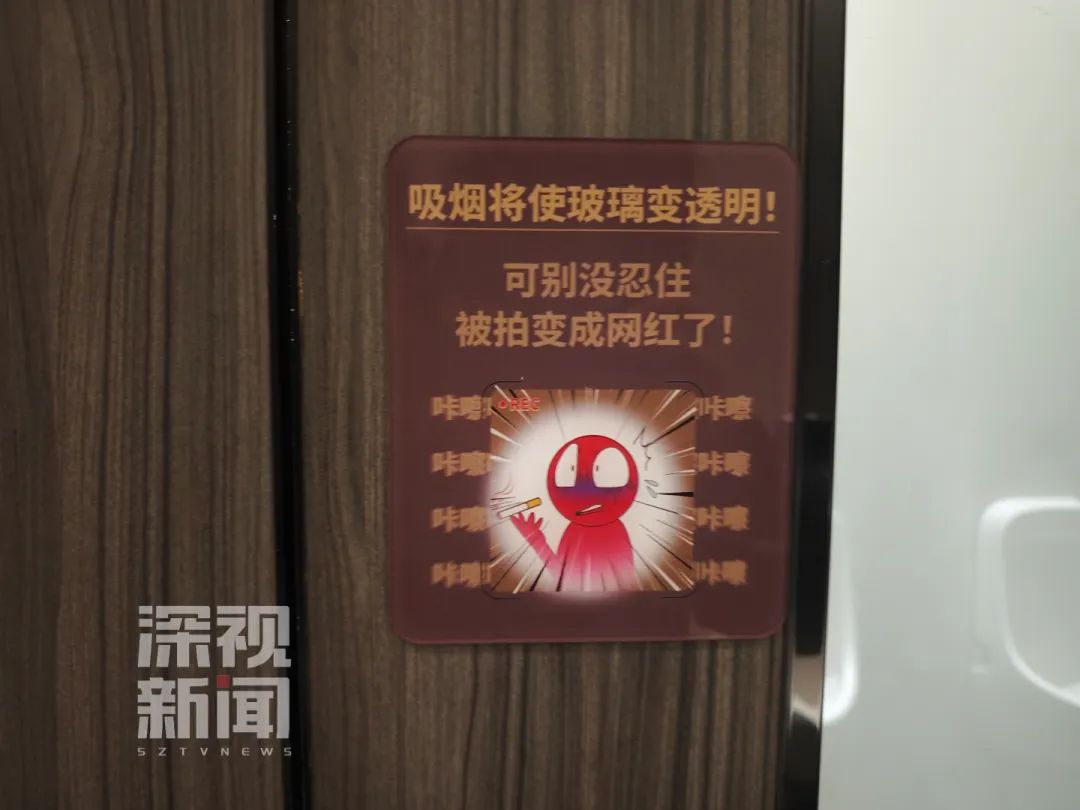
A viral installation in Shenzhen’s Luohu District sparked intense discussion: “If you smoke, the restroom stall glass becomes transparent.” With warning signs joking about becoming an internet meme, the system leverages a powerful combination of visual exposure + psychological deterrence to target a long-standing “blind spot” in public no-smoking enforcement: bathroom stalls.
Behind the drama is a serious trend: in the IoT era, smoke sensors are no longer only for fire alarms. They’re becoming multi-purpose perception nodes—interacting with smart glass, ventilation, cameras, building platforms, and public-space governance systems.
01. “Smoke Makes It Transparent” Restrooms
How the system works—and why it’s controversial
At its core, this is a smart sensing + linkage system. The workflow is simple:
-
Smoke detection inside the stall
A smoke sensor detects smoke particles generated by smoking. -
Instant linkage to smart glass
A control signal triggers smart dimming glass to switch from frosted/opaque to clear/transparent. -
Audio-visual alarm + staff notification
A siren/light alarm activates to warn the smoker and alert management.
Why it’s effective (from a behavioral perspective)
It creates immediate consequences using two powerful levers:
- Visibility: the fear of exposure
- Social pressure: embarrassment as a deterrent
This can be more effective than signs or passive monitoring, especially in private spaces where rule-breaking is common.
02. Smoke Sensors in Public Spaces
From “Fire Alarm Only” to Multi-Scenario Smart Governance
The Shenzhen example is an extreme form of “strong intervention.” In reality, smoke sensors are evolving in multiple directions—often more mature, more systematic, and less controversial.
A) Smart fire protection: early detection + unified platform
In malls, commercial complexes, and smart districts, smoke detectors are increasingly deployed as part of a broader safety network:
- wireless smoke detectors
- AI thermal cameras
- electrical cabinet monitoring
- centralized dashboards and mobile alerts
The goal is early discovery → early warning → early disposal, reducing loss and improving emergency response.
B) Low-cost coverage for “high-risk blind zones”
In small shops, older neighborhoods, and places with weak fire infrastructure, standalone wireless smoke alarms help cover gaps:
- no wiring required
- easy installation
- low deployment cost
- scalable coverage
Here, smoke sensors serve as “basic safety infrastructure” rather than high-end IoT nodes.
C) Air-quality management: smoke sensors as part of IAQ control
In cinemas, shopping centers, and other dense indoor spaces, smoke sensing can be combined with:
- CO₂ monitoring (ventilation adequacy)
- PM2.5 monitoring (particulate load)
- VOC monitoring (odor and chemical sources)
- HVAC linkage (fresh air + filtration control)
This represents a shift from:
- passive punishment after events
to - active prevention and environmental assurance
D) Restrooms and semi-private spaces: a new frontier
Restrooms are uniquely difficult:
- private behavior happens behind closed doors
- ventilation varies
- steam and aerosols increase false-alarm risk
- hygiene and dignity are central
The Shenzhen “transparent door” solution proves one thing: the industry is experimenting. But it also highlights the need for privacy-first, ethically acceptable system design.
03. Engineering Reality Check
Why “bathroom smoke detection” is hard (and how to do it better)
If you’re designing a restroom anti-smoking system, the biggest technical challenge is not detection—it’s reliable detection with minimal false triggers.
Common sources of false alarms in restrooms
- hot steam from flushing or hot water
- aerosol sprays (fragrance, disinfectants)
- dust or humidity condensation
- maintenance cleaning chemicals
Practical design strategies (privacy + reliability)
Here’s a more balanced, scalable approach that many smart-building teams prefer:
1) Tiered intervention (graded response)
Instead of “instant transparency,” use levels:
- Level 1: local voice prompt / visual warning
- Level 2: trigger ventilation boost + notify staff
- Level 3: if repeated or sustained signal → escalation (access control, stronger alert, incident log)
This reduces privacy risk while still stopping behavior.
2) Sensor fusion to improve certainty
Smoke alone can be ambiguous in humid spaces. Consider combining:
- smoke sensing + humidity/temperature trend
- smoke sensing + VOC pattern
- smoke sensing + CO or CO₂ trend (contextual)
The goal is to build a confidence score: Is this likely smoking, or just steam?
3) Placement and airflow design
Bathroom airflow is tricky. Installation decisions can make or break accuracy:
- avoid direct airflow jets that dilute smoke too quickly
- avoid spots where condensation forms
- validate detection zones with smoke tests and real ventilation conditions
4) Privacy-by-design features
If the system impacts visibility or creates records:
- keep no camera inside stalls
- avoid any “exposure” design (or make it impossible by using partial opacity only)
- store only event logs, not personal imagery
- display clear signage describing what the system does and does not do
If local regulations define restroom stalls as protected private space, the safest route is to avoid any function that could reveal a person’s body or identity.
04. The Bigger Trend
Smoke sensors are becoming “policy + safety + environment” infrastructure

The key takeaway is not whether transparent doors are right or wrong. The real takeaway is:
Smoke sensors have evolved from a single-purpose fire alarm into a core perception component of smart public spaces.
They now support three simultaneous goals:
- Fire safety (early detection, alarm linkage, prevention)
- Environmental health (air-quality control, ventilation automation)
- Behavior governance (no-smoking compliance, risk prevention)
In the IoT era, the question becomes:
- Not “Can we detect smoke?”
- But “What is the most effective, lawful, and humane way to respond to smoke signals?”
Conclusion: Effective—and with dignity
A restroom stall that turns transparent when smoke is detected is a powerful symbol of what technology can do. It also forces a necessary conversation: public health vs. privacy, order vs. dignity, deterrence vs. ethics.
The future of smart no-smoking systems will likely be:
- sensitive perception
- smarter judgment (multi-sensor + algorithms)
- tiered intervention
- and a clear boundary of human dignity and privacy
Finding that balance—effective and humane—will be one of the clearest markers of real progress in smart-city governance.



MQ-4 MOS Flammable Gas Sensor for Methane CH4 Detector
- methane CH4, natural gas, flammable gas
- CH4(300-10000ppm)
- Read More

FAQ
What sensor is typically used to detect smoking in a restroom?
Many systems start with smoke detection, but restroom environments often require multi-sensor logic (humidity/temperature/VOC context) to reduce false triggers caused by steam or aerosols.
Why can smoke sensors false alarm in bathrooms?
Steam, deodorant sprays, and humidity condensation can mimic smoke-like particle behavior. That’s why placement, airflow design, and signal filtering matter.
Is “transparent door punishment” legally safe?
It depends on local laws and venue policy. In many regions, restroom stalls are treated as privacy-protected spaces. If the system can expose bodies or identities, it may carry significant legal and ethical risk. Consult compliance and legal counsel before deployment.
What is a privacy-friendly anti-smoking restroom strategy?
A common approach is tiered intervention: warning → ventilation boost → staff notification → escalation only if sustained/repeated evidence, without any exposure mechanism.
How do smoke sensors integrate into smart buildings?
They can link to alarms, emergency systems, HVAC, and centralized IoT/fire platforms—supporting early warning, remote maintenance, and data-driven safety management.