ZD100 Radon Detection Module: Built for Long-Term Indoor Radon Monitoring
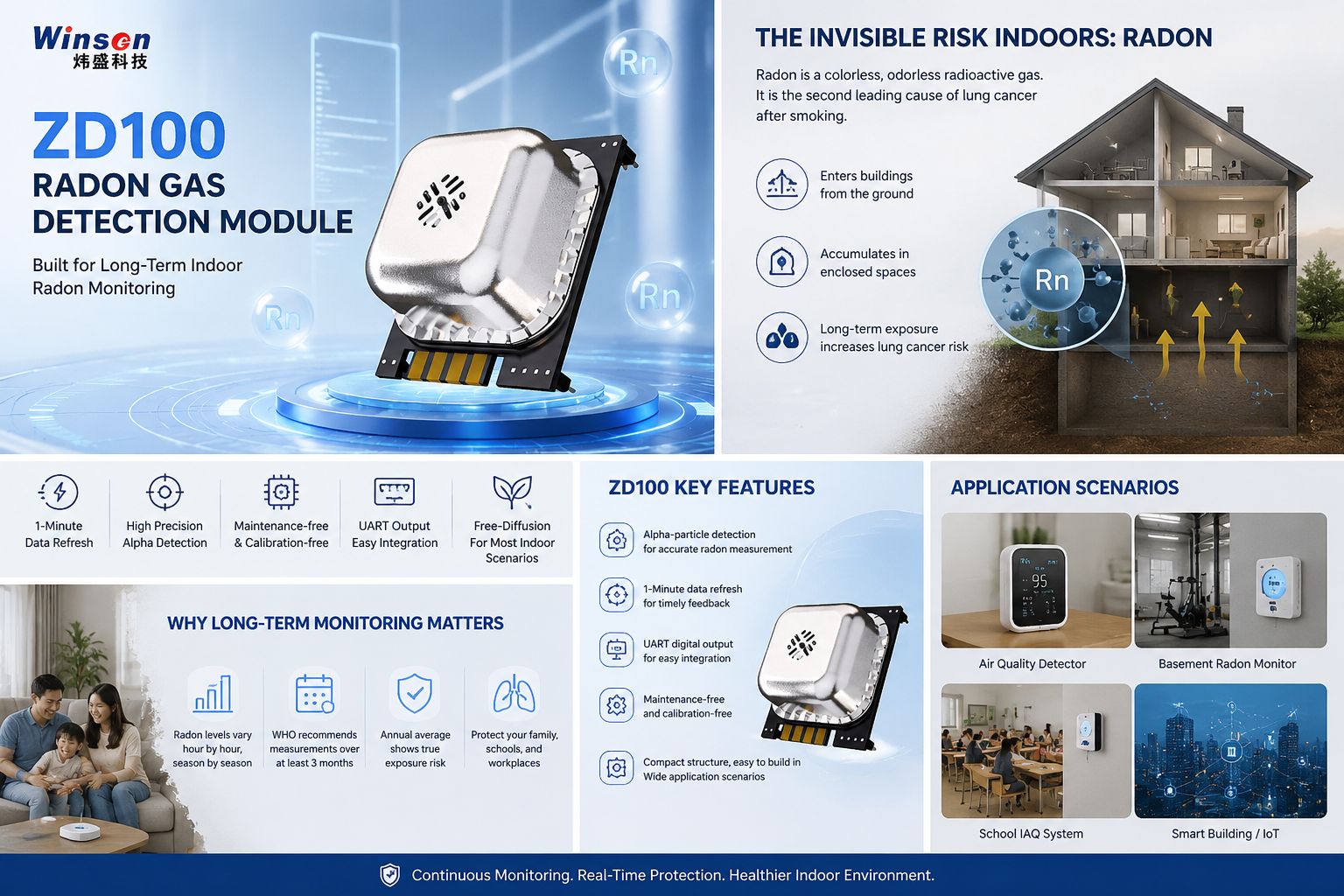
Indoor air quality is no longer limited to PM2.5, VOCs, CO₂, temperature, or humidity. In many homes, schools, offices, basements, and underground spaces, there is another hidden risk that cannot be seen, smelled, or felt: radon gas.
Radon is a naturally occurring radioactive gas that may accumulate indoors, especially in buildings with direct contact with soil, poor ventilation, or underground spaces. The World Health Organization identifies radon as one of the leading causes of lung cancer and estimates that it may account for 3% to 14% of all lung cancers in a country, depending on average radon levels and smoking prevalence.
To support the growing demand for continuous indoor radon monitoring, we introduce the ZD100 Radon Detection Module—a compact, high-reliability module designed for fixed radon detectors and long-term indoor air quality monitoring devices.
Why Radon Monitoring Matters
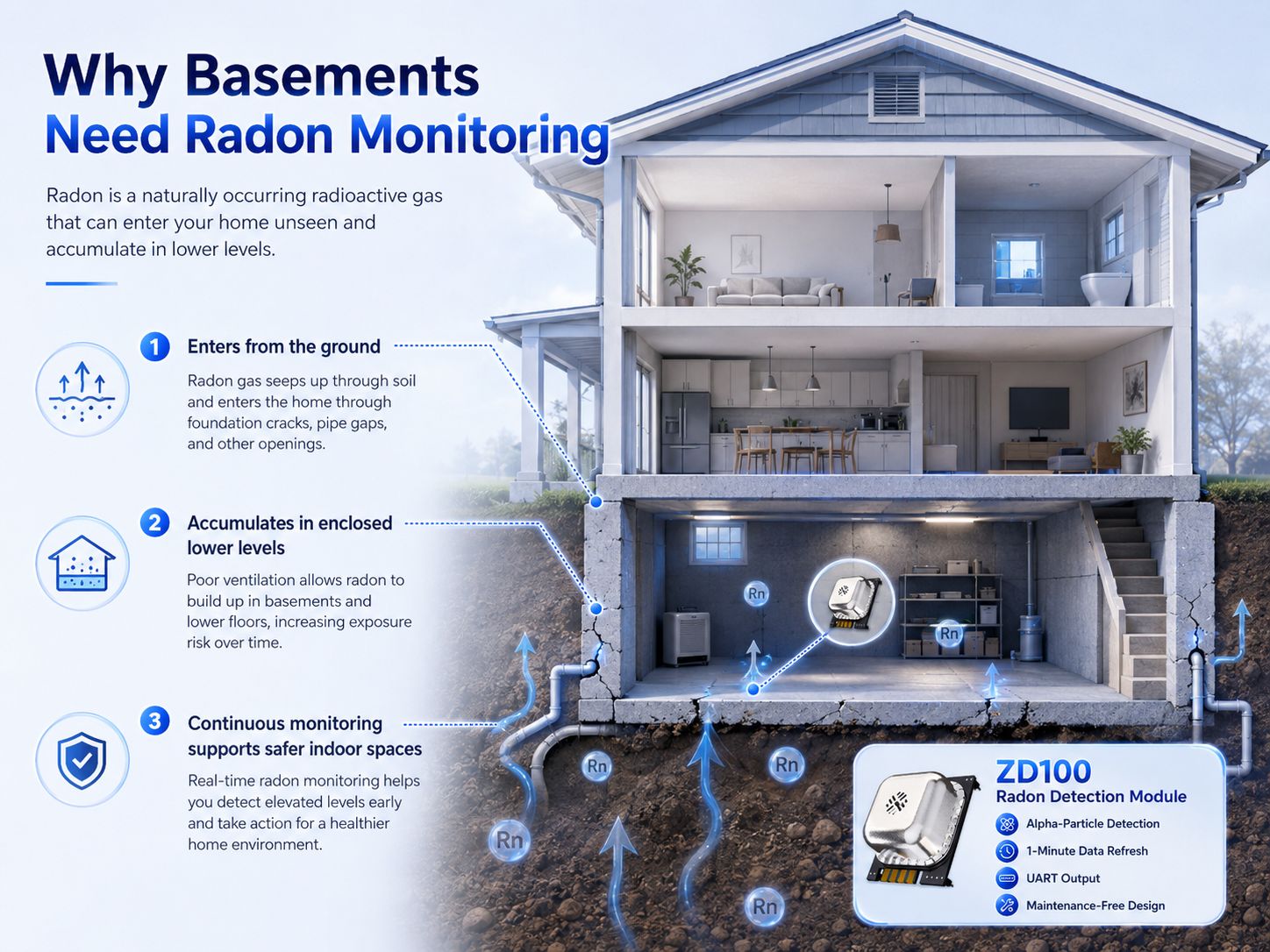
Radon is produced by the natural decay of uranium in rocks and soil. It can enter buildings through cracks in foundations, gaps around pipes, floor-wall joints, porous construction materials, drains, and other small openings. Once indoors, radon may accumulate in enclosed or poorly ventilated areas. WHO notes that radon levels are usually higher indoors, and that higher levels are often found in basements, cellars, and living spaces in contact with the ground.
Unlike smoke, odor, or visible dust, radon provides no direct sensory warning. It has:
- no color
- no smell
- no taste
- no immediate irritation
- no obvious short-term symptoms
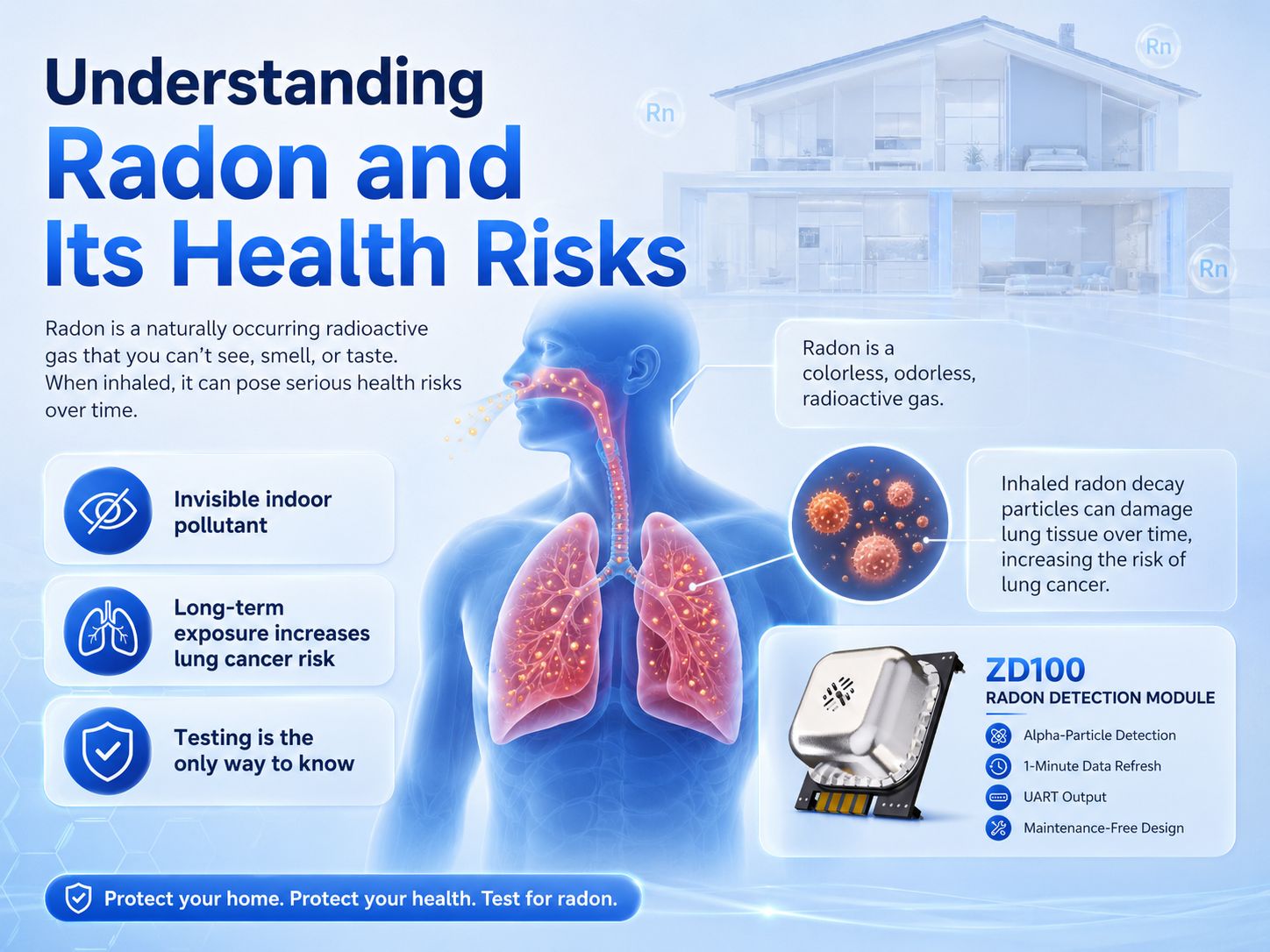
The health risk comes from long-term exposure. When radon decays, it produces radioactive particles that can be inhaled and deposited on the cells lining the airways, where they may damage DNA and increase the risk of lung cancer.
This makes radon different from many other indoor pollutants. A short-term “air feels fresh” judgment is not enough. The only reliable approach is measurement.
From Short-Term Testing to Long-Term Indoor Monitoring
Radon concentration is highly dynamic. It can change with:
- geology and soil gas conditions
- building structure
- ventilation behavior
- seasonal temperature differences
- air pressure changes
- basement usage
- sealing and insulation levels
WHO emphasizes that radon concentrations can vary substantially from building to building and even within the same building from day to day and hour to hour. For this reason, annual mean exposure is preferably estimated through measurements over at least three months.
This is why the radon detection market is changing.
Radon measurement is no longer only a tool for engineering acceptance, real estate inspection, or laboratory testing. It is increasingly becoming a part of daily indoor health management, especially for:
- family homes
- finished basements
- schools and classrooms
- office buildings
- underground workplaces
- elderly care facilities
- rental apartments
- smart indoor air quality devices
For device manufacturers, this creates a clear requirement: the core sensor module must be stable, reliable, easy to integrate, and suitable for long-term continuous operation.
ZD100 Radon Detection Module
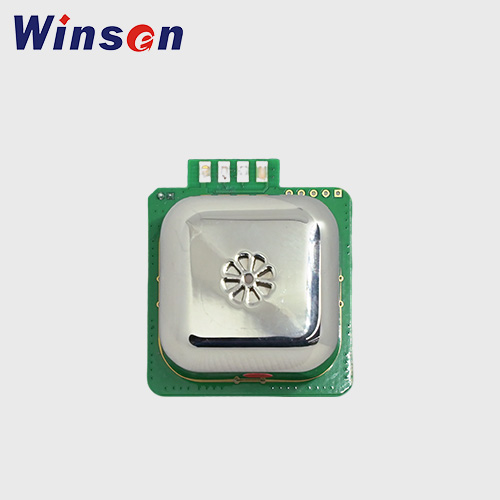
The ZD100 is a new-generation radon detection module developed for indoor radon concentration monitoring. It detects radon by capturing alpha particles released during radon decay, enabling accurate concentration measurement in long-term indoor environments.
It is designed for integration into:
- fixed radon detectors
- indoor radon monitors
- home IAQ monitoring devices
- school and office air quality systems
- smart building environmental monitoring terminals
- basement and underground-space radon monitoring equipment
The goal is simple: help equipment manufacturers build radon detection products that are accurate, stable, easy to integrate, and suitable for everyday indoor use.
Key Features of ZD100
1. High-precision alpha-particle detection
Radon monitoring is not ordinary gas detection. Because radon is radioactive, the detection mechanism must focus on radiation-related signals rather than conventional chemical gas reactions.
ZD100 captures alpha particles produced during radon decay and converts the detection result into radon concentration data. This supports accurate monitoring for indoor environments where long-term exposure assessment is more important than one-time sampling.
2. Designed for long-term indoor monitoring
Radon exposure risk is closely related to long-term concentration trends. ZD100 is designed for continuous operation in fixed radon detection devices, helping end users understand whether indoor radon levels remain low, fluctuate, or rise above reference/action levels over time.
This makes it suitable for products positioned as:
- home health monitors
- basement radon detectors
- school IAQ monitors
- office building indoor air safety devices
- smart building environmental terminals
3. 1-minute data refresh for timely feedback
ZD100 supports a 1-minute data refresh interval, allowing terminal devices to display radon concentration trends more quickly and give users more timely feedback.
Compared with traditional long-cycle passive testing, this real-time feedback helps users better understand how ventilation, weather, season, and building usage affect indoor radon levels.
4. UART output for easy integration
ZD100 provides UART digital output, allowing developers to integrate the module into host devices more easily.
For OEM and ODM customers, this reduces the complexity of signal acquisition and shortens the development cycle for radon detection products. It is suitable for integration into:
- MCU-based consumer devices
- smart IAQ terminals
- fixed wall-mounted detectors
- building monitoring equipment
- connected indoor environmental systems
5. Free-diffusion sampling for most indoor scenarios
ZD100 uses a free-diffusion detection structure, making it suitable for most indoor civil environments where continuous background monitoring is required.
This design helps simplify the mechanical structure of the terminal device, reduce airflow-system complexity, and improve product reliability in long-term use.
6. Maintenance-free and calibration-free design
For consumer and commercial indoor monitoring products, maintenance burden is a major barrier to adoption.
ZD100 is designed for maintenance-free and calibration-free operation, helping terminal manufacturers provide a better user experience. End users do not need to frequently recalibrate the device or perform complex maintenance procedures.
This is especially valuable for home users, schools, offices, property managers, and smart building operators.
7. Compact structure for flexible product design
The module’s compact form factor allows product designers to develop smaller, cleaner, and more user-friendly devices.
Whether the terminal product is a desktop radon monitor, a wall-mounted detector, or an integrated IAQ device, ZD100 supports flexible enclosure design and easier system integration.
Global Radon Reference Levels: Why Long-Term Monitoring Is Necessary
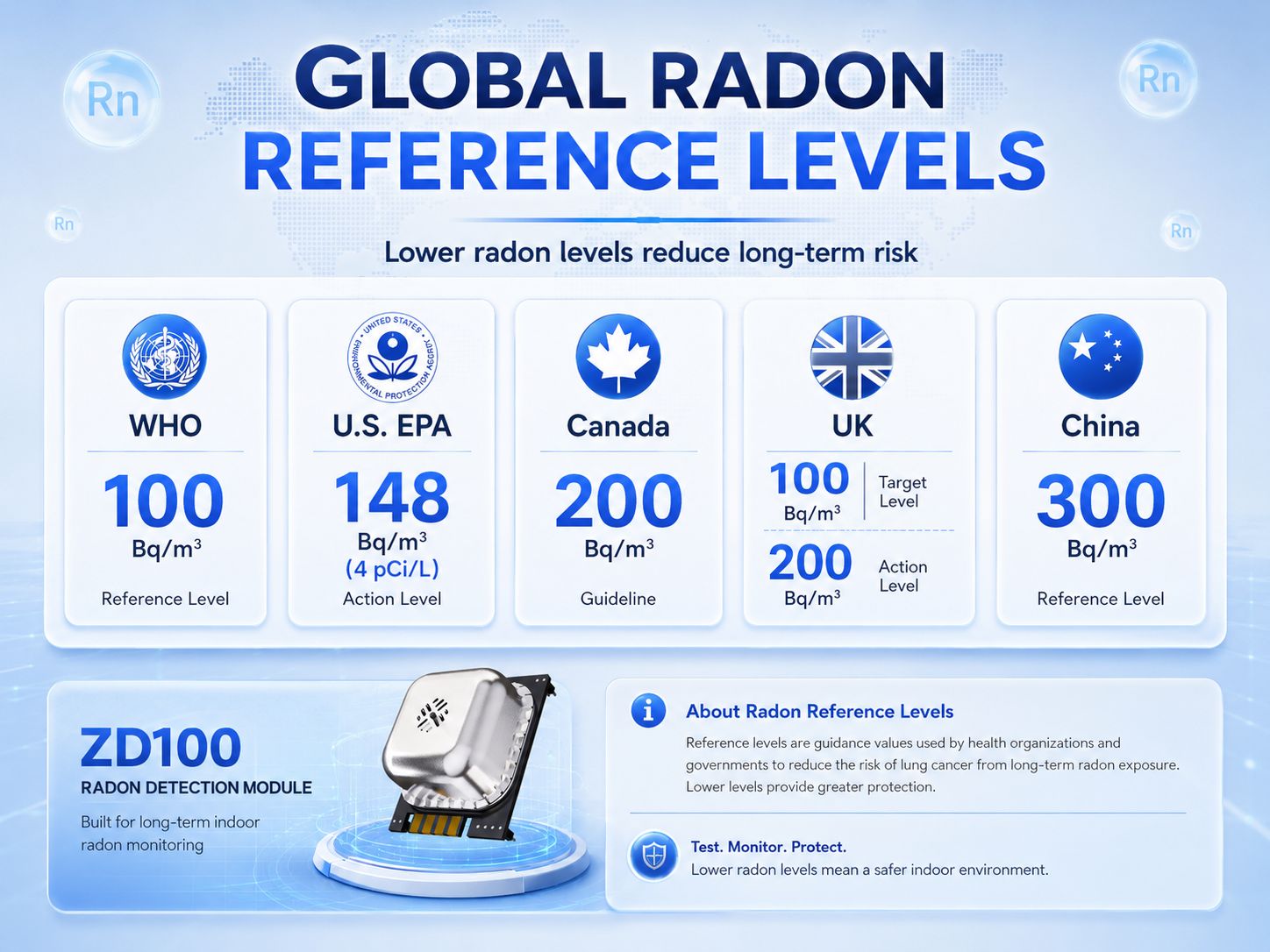
Radon reference or action levels vary by country and region, but global public health agencies share a common message: lower is better, and long-term measurement is essential.
The U.S. EPA recommends fixing homes when radon reaches 4 pCi/L, equivalent to about 150 Bq/m³, and also recommends considering mitigation between 2 and 4 pCi/L because there is no known safe level of radon exposure.
Health Canada sets its indoor radon guideline at 200 Bq/m³ and recommends corrective action when the average annual radon level exceeds this value in normally occupied areas of a building.
In the United Kingdom, the Action Level for homes is 200 Bq/m³, while the Target Level is 100 Bq/m³, which is considered the ideal outcome for remediation and protective measures.
The European Code Against Cancer states that the WHO recommends radon levels should not exceed 100 Bq/m³, and if a country uses a different recommended maximum level, it should not exceed 300 Bq/m³ under EU legislation.
In China’s GB/T 18883-2022 Indoor Air Quality Standard, the reference level for indoor ²²²Rn annual average concentration is ≤300 Bq/m³. The standard also makes clear that this value is a reference level, not a strict boundary between “safe” and “dangerous.”
These international reference levels show why reliable radon monitoring devices are becoming more important. Users need more than a single number. They need long-term data, trend visibility, and clear risk awareness.
Why Basements and Ground-Contact Rooms Need More Attention
Basements are often the highest-risk indoor areas because they are closer to the soil source and usually have poorer ventilation. Radon can enter through:
- foundation cracks
- floor-wall joints
- pipe penetrations
- drainage openings
- basement walls
- construction gaps
In the past, many basements were used mainly as storage spaces. Today, they are often converted into:
- home gyms
- home offices
- children’s activity rooms
- classrooms
- entertainment rooms
- rental living spaces
The longer people stay in these lower-level spaces, the more important continuous radon monitoring becomes.
A radon detector powered by ZD100 can help users understand whether these spaces are suitable for long-term occupancy and whether ventilation or mitigation measures are needed.
Application Scenarios
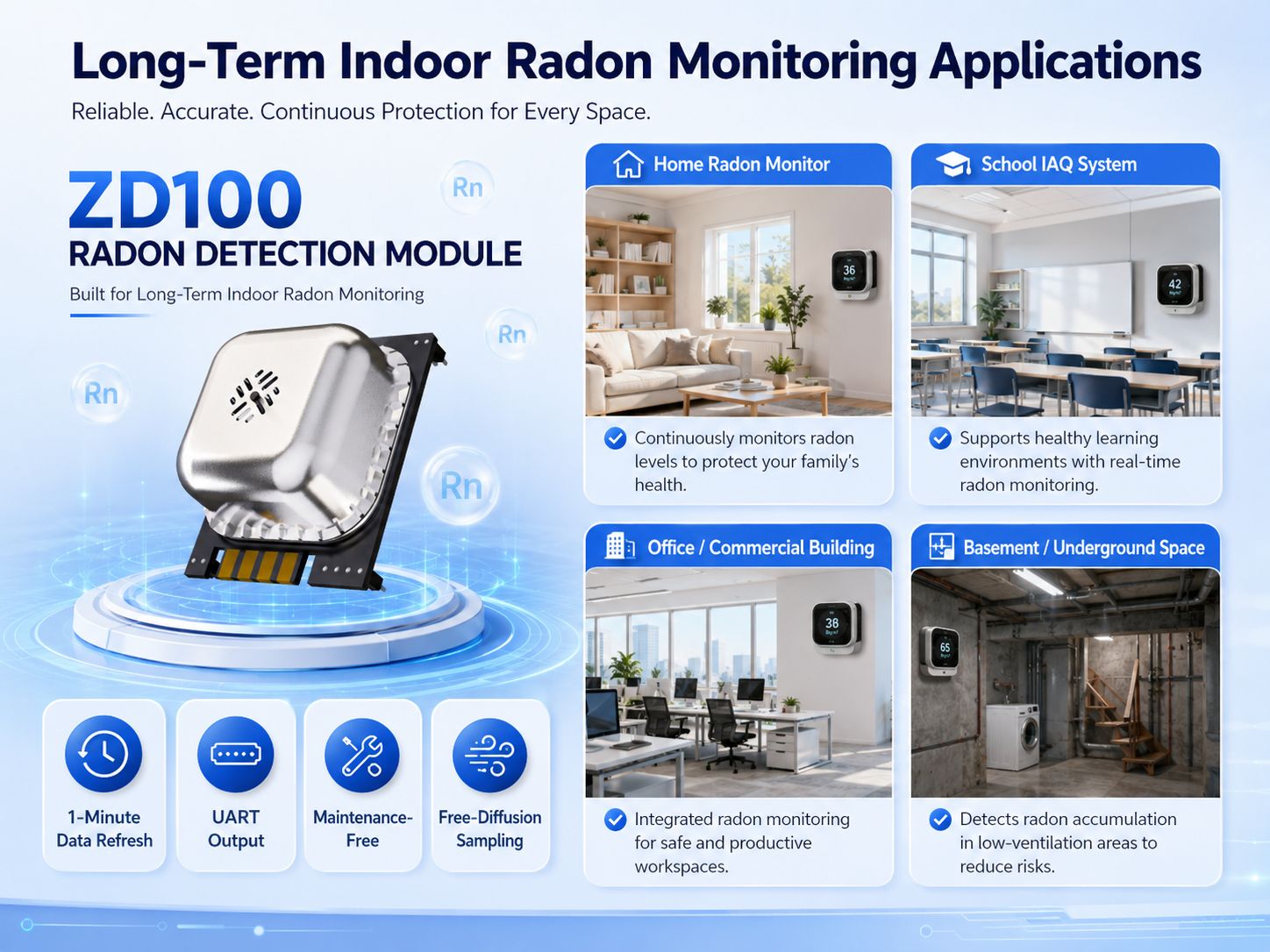
Home radon monitors
For families, radon monitoring is especially important in basements, first-floor bedrooms, living rooms, and other frequently occupied spaces. A ZD100-based device can help homeowners understand long-term radon trends and take action when needed.
School indoor air quality systems
Children may spend long hours in classrooms, activity rooms, and indoor learning spaces. ZD100 can support radon detection equipment for schools, helping facility managers monitor indoor environmental safety more comprehensively.
Office and commercial buildings
Office buildings, underground workplaces, and ground-contact rooms may require long-term IAQ monitoring. ZD100 enables compact fixed detectors that can be deployed across multiple rooms or zones.
Smart building and IoT monitoring terminals
ZD100’s UART output and compact structure make it suitable for smart building systems that integrate radon with other indoor air parameters such as CO₂, PM2.5, VOCs, temperature, humidity, and ventilation status.
Radon detector OEM / ODM products
For manufacturers developing radon detection devices, ZD100 provides a dedicated sensor core with high integration convenience, supporting faster product development and more competitive terminal designs.
What Makes ZD100 Valuable for Device Manufacturers
Terminal product performance depends heavily on the quality of the sensing core. For radon detector manufacturers, ZD100 offers several practical advantages:
| Requirement | ZD100 Value |
|---|---|
| Long-term monitoring | Designed for continuous indoor radon detection |
| Fast feedback | 1-minute data refresh |
| Easy integration | UART digital output |
| Low maintenance | Maintenance-free and calibration-free design |
| Civil indoor deployment | Free-diffusion sampling |
| Compact product design | Small module structure for flexible terminals |
| Better market competitiveness | Supports reliable radon monitoring products for homes, schools, offices, and smart buildings |
Product Positioning: From “Testing Tool” to “Indoor Health Guardian”
The radon detection market is moving from occasional testing toward continuous monitoring.
A traditional radon test answers one question:
“What was the radon level during the test period?”
A smart radon monitor answers a better question:
“How does radon behave in this indoor space over time?”
ZD100 is built for this second generation of products. It helps terminal manufacturers create devices that support daily awareness, long-term risk management, and healthier indoor environments.
FAQ
What is radon?
Radon is a naturally occurring radioactive gas produced by the decay of uranium in rocks and soil. It is colorless, odorless, and tasteless, so it can only be detected through measurement.
Why is radon dangerous?
When radon decays, it releases radioactive particles that can be inhaled and deposited in the lungs. These particles may damage DNA and increase the risk of lung cancer over long-term exposure.
Why is long-term radon monitoring recommended?
Radon levels can change from hour to hour and season to season. WHO notes that measurements over at least three months are preferable for estimating annual mean indoor radon concentration.
What indoor radon level requires action?
Different countries use different reference or action levels. For example, the U.S. EPA recommends fixing homes at 4 pCi/L, approximately 150 Bq/m³, and considering action between 2 and 4 pCi/L. Canada uses 200 Bq/m³ as a guideline, while the UK uses 200 Bq/m³ as the home Action Level and 100 Bq/m³ as the Target Level.
Where should radon detectors be installed?
They are usually installed in the lowest regularly occupied areas, such as basements, first-floor living spaces, offices, classrooms, or underground rooms. Local measurement protocols should be followed for formal assessment.
What is ZD100 used for?
ZD100 is a radon detection module designed for fixed radon detectors and long-term indoor monitoring products. It is suitable for home, school, office, basement, and smart building monitoring applications.
What output does ZD100 provide?
ZD100 supports UART digital output, making it easier for device manufacturers to integrate radon monitoring into terminal products.
Conclusion: Detect. Monitor. Protect.
Radon is invisible, odorless, and easy to ignore—but long-term exposure can carry serious health risks. As people spend more time indoors and pay closer attention to healthy buildings, radon monitoring is becoming an essential part of modern indoor air quality management.
The ZD100 Radon Detection Module is built for this new demand. With alpha-particle detection, 1-minute data refresh, UART output, free-diffusion sampling, compact design, and maintenance-free operation, it provides a reliable sensing core for next-generation radon detectors.
For home safety, school protection, office IAQ monitoring, and smart building systems, ZD100 helps transform radon detection from occasional testing into continuous indoor health protection.