Ethylene Sensors for Fruit Ripening: How C₂H₄ Monitoring Supports Ripening and Fresh Storage
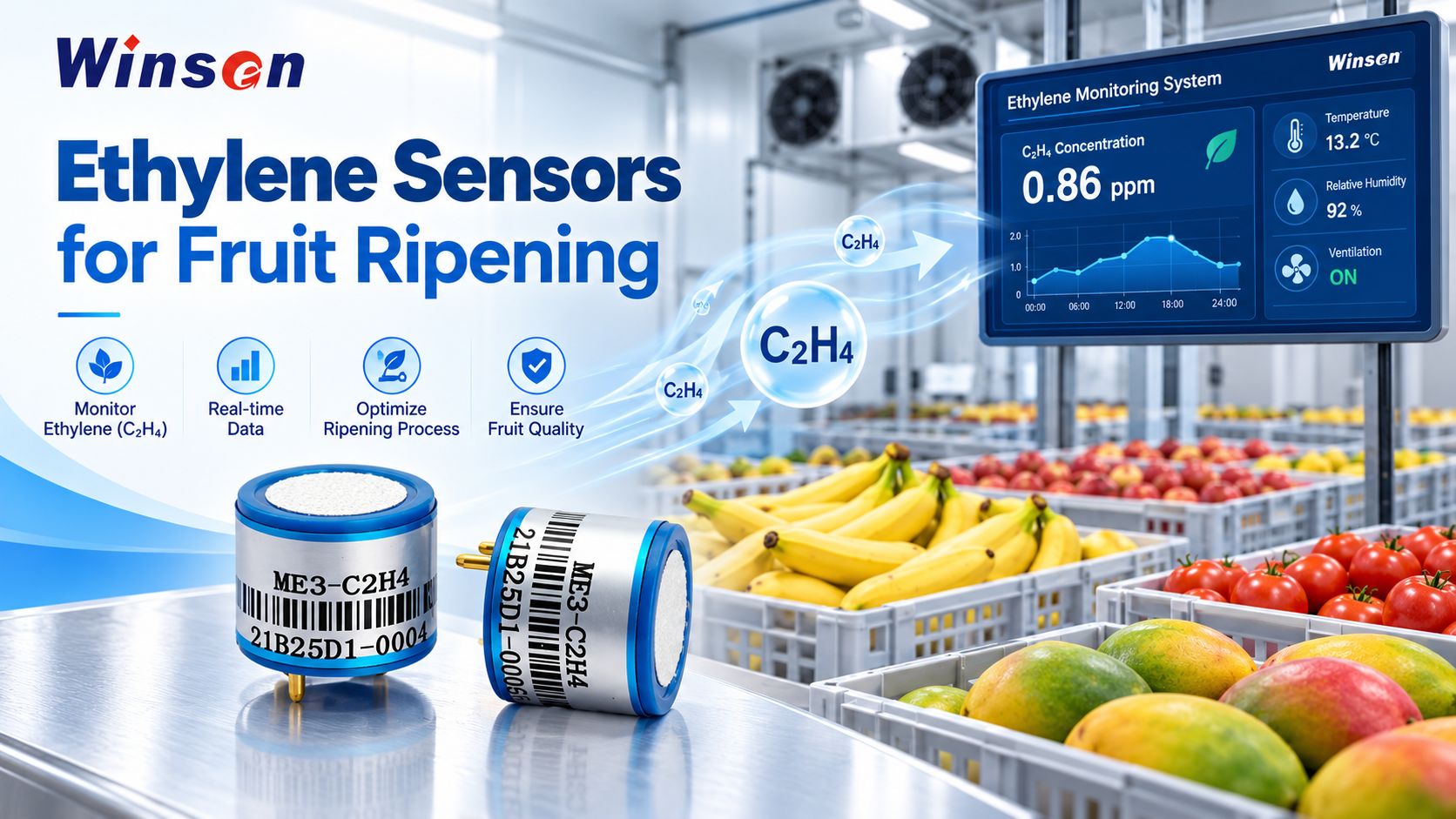
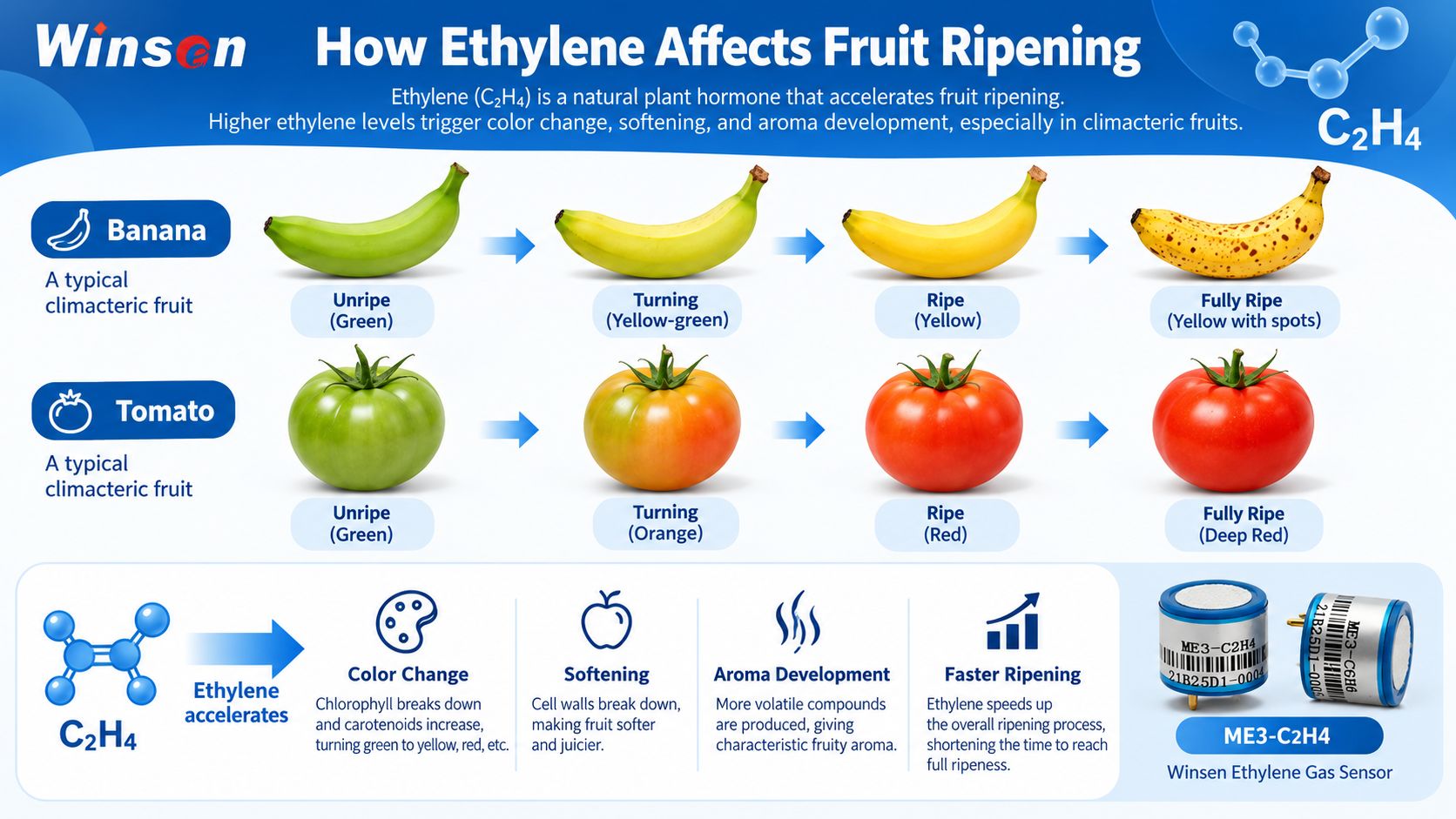
Ethylene (C₂H₄) plays an important role in fruit ripening, postharvest handling and fresh produce storage. As a naturally occurring plant hormone, ethylene influences physiological processes such as color development, fruit softening and aroma formation.
For commercial fruit ripening facilities, ethylene may be deliberately introduced to initiate or coordinate ripening. In cold storage and distribution environments, however, unwanted ethylene accumulation may accelerate ripening, senescence or quality deterioration in sensitive produce.
An ethylene gas sensor measures the concentration of C₂H₄ in the surrounding atmosphere. When properly selected and integrated, it can provide useful data for evaluating ripening conditions, monitoring gas exposure and supporting postharvest management.
However, commercial ripening rooms and low-concentration fresh storage environments do not necessarily require the same sensor.
The required measurement range, resolution, environmental compatibility and sampling arrangement must match the intended application.
Winsen provides the ME3-C2H4 Electrochemical Ethylene Gas Sensor for C₂H₄ detection applications, with a nominal measurement range of 0–100 ppm. For fruit-related equipment development, the sensor should be evaluated against the actual ethylene concentration, temperature, humidity and system requirements.
What Is Ethylene and How Does It Affect Fruit Ripening?
Ethylene is a colorless hydrocarbon gas with the chemical formula C₂H₄. It also functions as a gaseous plant hormone involved in fruit development, ripening and aging.
Many fruits naturally produce ethylene as they mature. In ethylene-responsive fruits, exposure to the gas can initiate or accelerate several biochemical and physiological changes.
These changes may include:
- Color development: Chlorophyll breakdown and pigment changes alter the appearance of the fruit.
- Softening: Cell-wall modifications contribute to changes in firmness and texture.
- Aroma formation: Ripening-related metabolic processes influence volatile compounds responsible for characteristic fruit aromas.
- Changes in flavor: Sugar, acid and other metabolic changes affect eating quality.
- Progression toward senescence: Continued ripening eventually leads to over-ripening and quality deterioration.
The response depends on fruit species, cultivar, maturity at harvest, ethylene exposure, temperature and other storage conditions.
For commercial operations, the goal is not simply to increase ethylene concentration.
The objective is to maintain conditions appropriate for the fruit and the desired stage of ripening.
This is where ethylene monitoring can provide useful process information.
Climacteric vs. Non-Climacteric Fruits: Why the Difference Matters
Fruits do not all respond to ethylene in the same way.
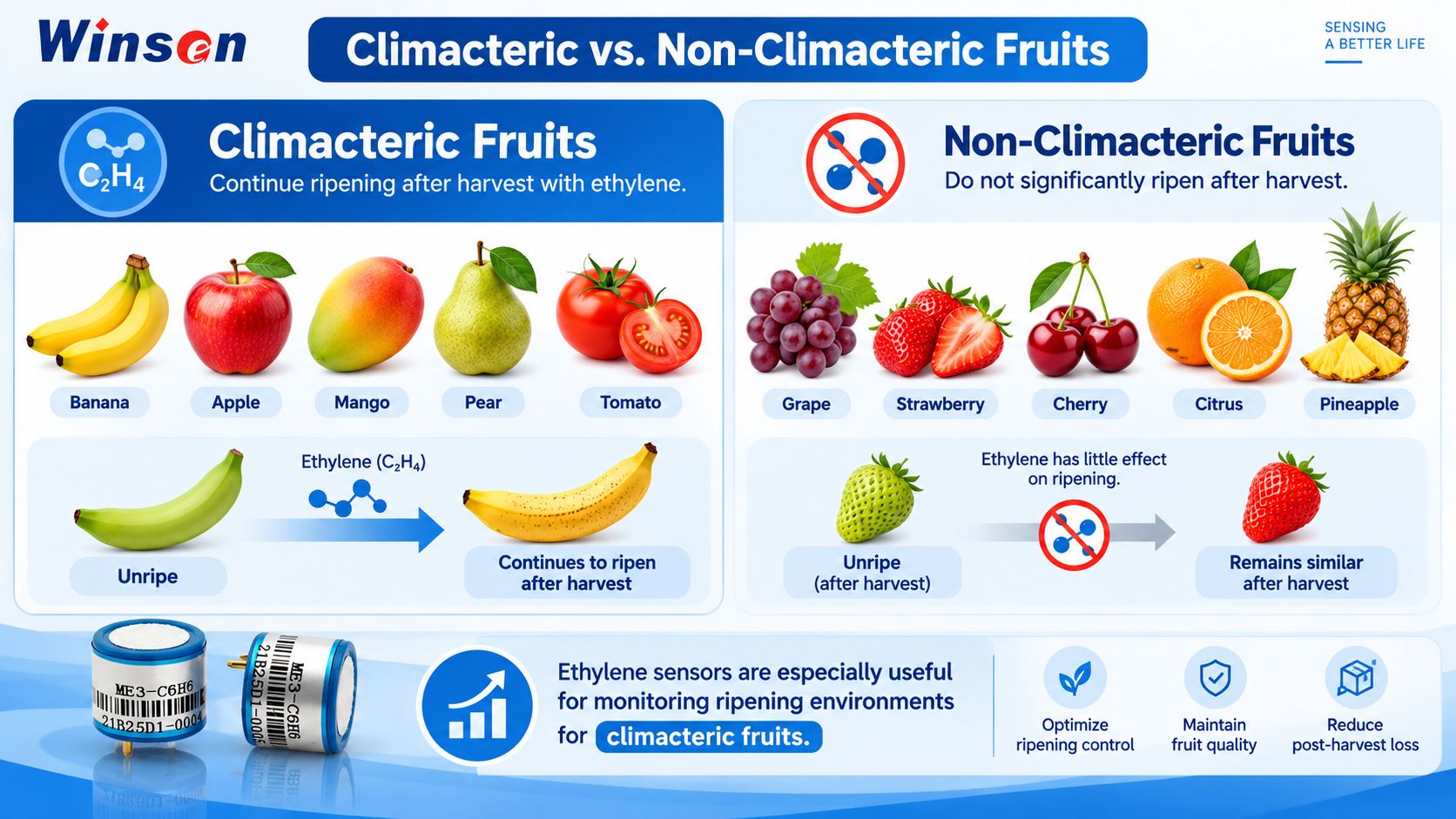
A major distinction in postharvest physiology is between climacteric and non-climacteric fruits.
Climacteric Fruits
Climacteric fruits show a characteristic increase in respiration and ethylene production during ripening.
Many can continue ripening after harvest when harvested at an appropriate physiological maturity.
Examples include:
- Bananas
- Apples
- Mangoes
- Pears
- Tomatoes
- Avocados
For these fruits, ethylene plays an important role in coordinating ripening processes.
This makes ethylene concentration particularly relevant in commercial ripening rooms and postharvest handling.
Non-Climacteric Fruits
Non-climacteric fruits generally do not exhibit the same ethylene-associated respiratory rise during ripening.
Examples include:
- Grapes
- Strawberries
- Cherries
- Citrus fruits
- Pineapples
These fruits may continue to change after harvest, but they do not normally develop the same ethylene-driven ripening response as climacteric fruits.
Non-climacteric does not mean completely insensitive to ethylene. Some produce may still experience ethylene-related changes in senescence, color or quality.
For fruit storage operators, this distinction is important when determining whether ethylene should be introduced, monitored or minimized.
Why Is Ethylene Monitoring Important After Harvest?
Ethylene management serves different purposes at different stages of the fruit supply chain.
Supporting Controlled Fruit Ripening
Commercial operators may expose suitable fruits to ethylene under controlled conditions.
Monitoring C₂H₄ provides information about the gas environment during the treatment process.
Together with temperature, relative humidity, CO₂ and airflow data, ethylene measurement can help operators evaluate whether the environment is following the intended process conditions.
Identifying Unwanted Ethylene Accumulation
Some fresh produce is sensitive to ethylene exposure during storage.
Ethylene released by ripening fruit may affect other commodities stored nearby.
Monitoring can help identify unwanted gas accumulation, provided the instrument has sufficient sensitivity for the concentrations relevant to the produce.
Supporting Postharvest Quality Management
Ethylene measurements can contribute to decisions about storage conditions, ventilation, separation of incompatible commodities and further inspection.
However, ethylene concentration alone does not directly measure fruit maturity, firmness or remaining shelf life.
It should be interpreted alongside the actual condition of the produce and other environmental parameters.
Providing Data for Automated Equipment
For OEM manufacturers, ethylene measurement can be one input in equipment designed for:
- Fruit ripening rooms
- Postharvest monitoring instruments
- Cold storage management
- Produce research equipment
- Controlled-atmosphere monitoring
- Gas concentration data acquisition
The sensing component supplies measurement data. The complete equipment determines how this information is displayed, recorded or used.
How Much Ethylene Is Used in Commercial Fruit Ripening?
Ethylene concentration requirements depend on the fruit and process.
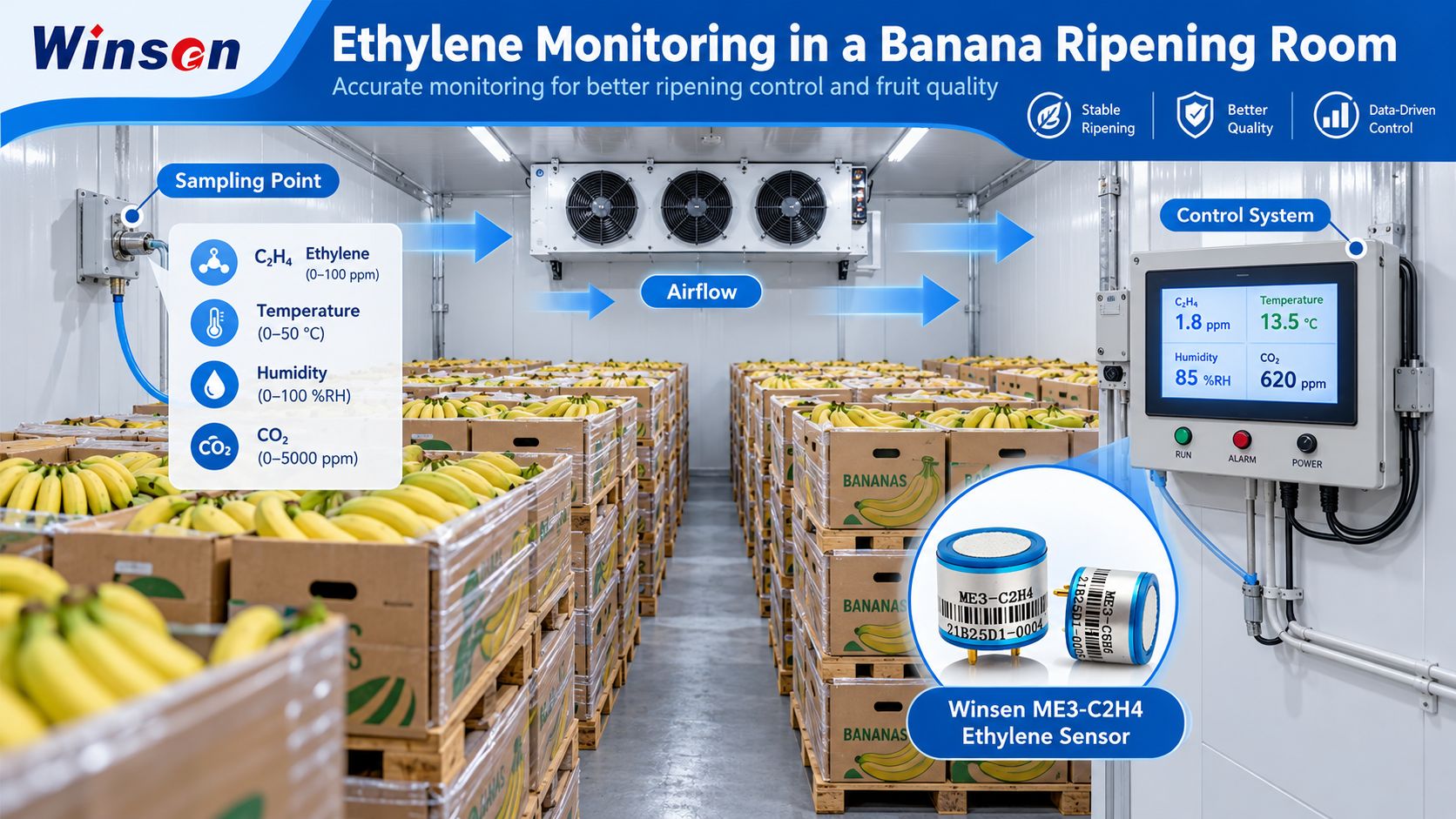
A commonly referenced example is commercial banana ripening.
According to the University of California, Davis Postharvest Research and Extension Center, many commercial banana cultivars require approximately 100–150 ppm ethylene for 24–48 hours, together with appropriate temperature, humidity and airflow conditions, to initiate uniform ripening.
Its published guidance also identifies typical treatment conditions of 15–20°C and 90–95% relative humidity, with CO₂ controlled to avoid delaying ethylene action.
These values are specific to the published banana guidance and should not be applied universally to every fruit or ripening facility.
Reference: UC Davis — Banana Postharvest Recommendations
Why Measurement Range Matters
A sensor's nominal measurement range must cover the concentration that the equipment actually needs to measure.
For example, Winsen ME3-C2H4 has a nominal detection range of 0–100 ppm, with a listed maximum range of 200 ppm.
This does not mean the 0–100 ppm calibration and performance specifications automatically extend to 200 ppm.
If a banana ripening process requires accurate measurement around 100–150 ppm, an OEM should confirm the suitability of the selected sensing system, including its calibrated measurement range and exposure limits.
A sensor specified for 0–100 ppm should not automatically be described as suitable for precise closed-loop control at 150 ppm.
Fruit Ripening Rooms vs. Cold Storage: Different Ethylene Monitoring Goals
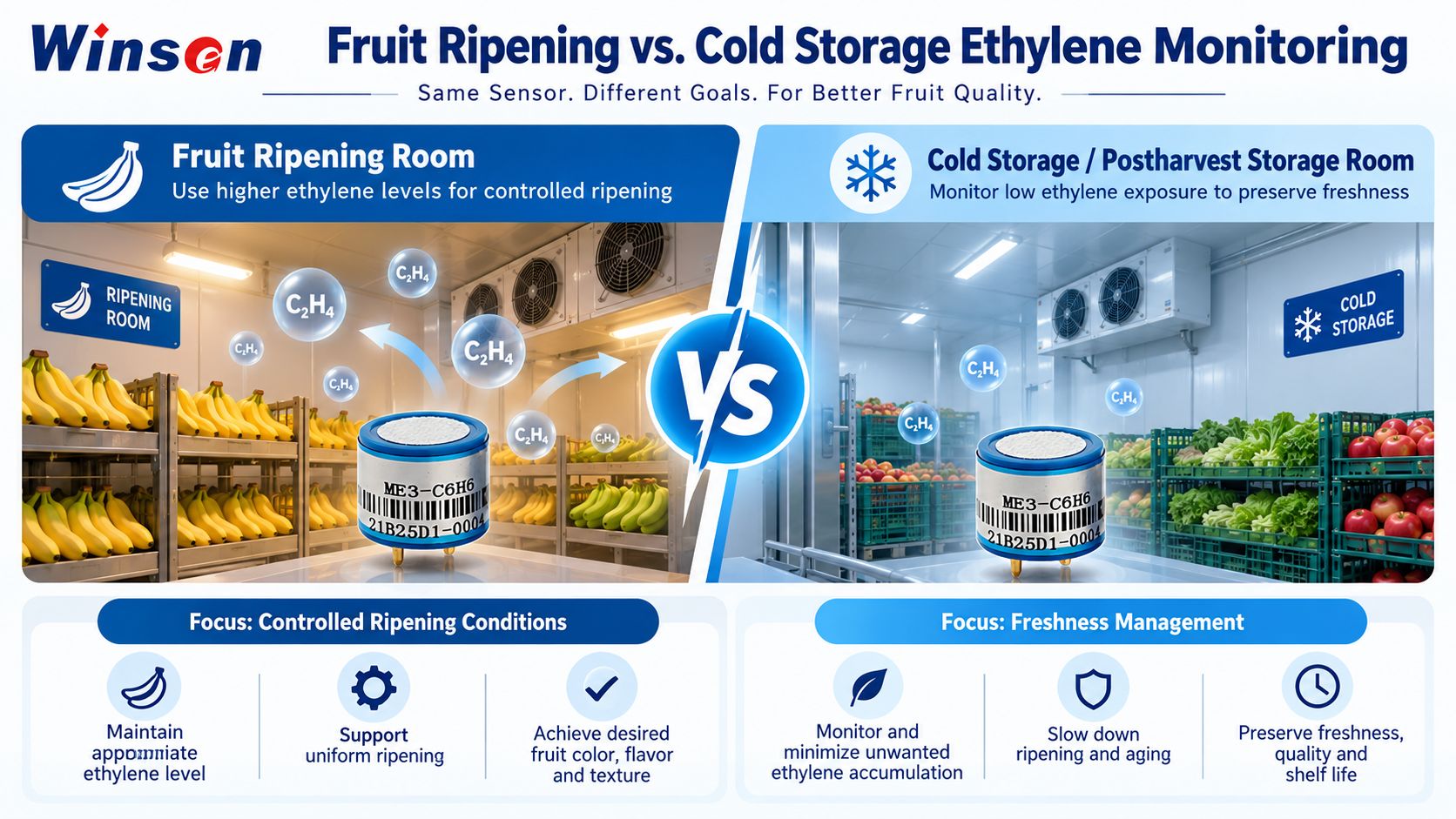
Both ripening rooms and cold storage facilities may benefit from ethylene data, but their monitoring goals can be very different.
| Comparison | Commercial Ripening Room | Fresh Produce Cold Storage |
|---|---|---|
| Main objective | Support controlled ripening | Limit unwanted ripening or deterioration |
| Ethylene management | May deliberately introduce ethylene | Usually aims to reduce unwanted exposure |
| Typical concentration requirement | Depends on the fruit; can reach tens or hundreds of ppm | May require sub-ppm or ppb sensitivity |
| Other important parameters | Temperature, humidity, CO₂, airflow | Temperature, humidity, O₂/CO₂ where applicable |
| Sensor selection priority | Appropriate process measurement range | Low detection limit and environmental compatibility |
Ethylene Monitoring in Ripening Rooms
In a ripening room, C₂H₄ measurements can be used to observe the applied ethylene atmosphere, the distribution of gas and changes during ventilation or treatment.
The measurement system must cover the intended treatment concentration.
Sampling points should also account for air circulation and potential concentration differences within the room.
Ethylene Monitoring in Cold Storage
Cold storage applications may require considerably greater sensitivity.
Some ethylene-sensitive commodities can respond to concentrations far below 1 ppm.
For example, UC Davis discusses situations where concentrations around 0.02 ppm, equivalent to 20 ppb, are important for kiwifruit storage.
Reference: UC Davis — Ethylene Compatibility of Produce
A sensor with 0.5 ppm resolution cannot be assumed to quantify concentrations of 0.02 ppm reliably.
Therefore, low-concentration cold storage monitoring may require a different sensing technology or analytical instrument with a suitably verified detection limit.
The key selection principle is to match the ethylene sensor to the actual concentration range rather than assuming one sensor can cover every fruit application.
How Does an Electrochemical Ethylene Sensor Work?
An electrochemical ethylene sensor uses a chemical reaction at an electrode to produce an electrical signal related to the concentration of ethylene.
In a simplified measurement process:
- Ethylene-containing air reaches the sensor's gas-access interface.
- Ethylene participates in an electrochemical oxidation reaction at the working electrode.
- The reaction generates an electrical current.
- The current is measured by the signal-conditioning circuit.
- After calibration and necessary compensation, the signal can be converted into a C₂H₄ concentration reading.
For a sensor operating within its specified measurement range, the output current is related to the concentration of the target gas.
Electrochemical sensing can offer low power consumption and a compact form factor, making it useful for many OEM gas detection applications.
Nevertheless, practical performance depends on sensor calibration, interfering gases, temperature, humidity, electronics and exposure conditions.
Where Should Ethylene Sensors Be Installed in Fruit Ripening and Storage Facilities?
Correct monitoring-point selection is essential for representative ethylene data.
Unlike gas safety detector placement, where a system may prioritize potential leak or accumulation locations, fruit-ripening monitoring normally seeks measurements that represent the intended process atmosphere.
The appropriate arrangement depends on whether the system uses direct ambient sensing or an air-sampling system.
1. Representative Air Circulation Areas
A measurement point should reflect the air conditions relevant to the fruit.
In a mechanically ventilated ripening room, a representative circulation or return-air location may be useful, provided its suitability is verified during commissioning.
The sensor should not automatically be installed at the nearest convenient position.
2. Avoid Direct Exposure to Ethylene Injection
A sensor placed immediately beside an ethylene injection outlet may measure a localized concentration that is not representative of the whole room.
Sampling position and mixing time should be considered when interpreting the reading.
3. Consider Pallets, Packaging and Airflow Obstructions
Fruit boxes, pallets and storage racks can affect air circulation.
Large facilities may develop local concentration differences where circulation is restricted.
Additional sampling points may be justified depending on the room size and process requirements.
4. Control Moisture and Condensation
Fruit ripening rooms and refrigerated environments can have high relative humidity.
This is particularly important for electrochemical sensing equipment.
The ME3-C2H4 published specification lists a relative humidity operating range of 15–90% RH. Meanwhile, commercial banana ripening recommendations may call for 90–95% RH.
The sensor therefore should not be assumed suitable for direct, continuous exposure to every banana ripening-room environment.
Where required, OEMs should evaluate a suitable sampling arrangement, environmental protection or sample conditioning method while ensuring ethylene measurement integrity.
5. Verify the Complete Sampling System
For systems using tubing, pumps or external sampling chambers, the complete sampling arrangement should be evaluated.
Relevant factors include:
- Sampling flow and residence time
- Leakage in tubing or fittings
- Adsorption or loss in sampling materials
- Condensation
- Response delay
- Calibration access
- Representative sample location
These factors can affect the performance of the completed instrument even when the sensing component itself meets its specifications.
Ethylene Sensor Monitoring Architecture for OEM Equipment
A practical monitoring architecture can be represented as:
Fruit Storage / Ripening Atmosphere → Air Sampling or Sensor Chamber → Ethylene Sensor → Signal Conditioning → Controller → Display / Data Logging
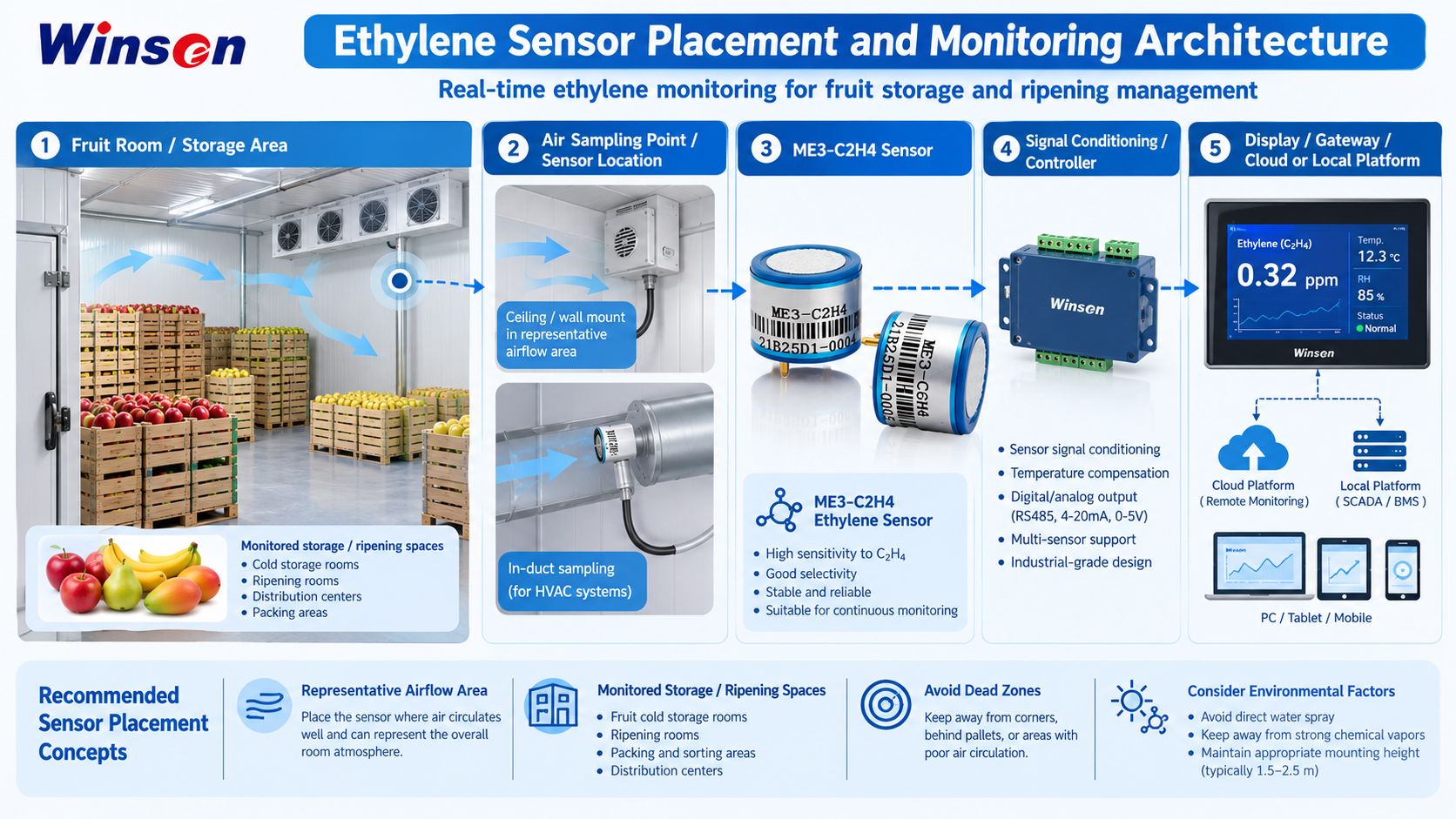
The architecture depends on the equipment design.
A bare electrochemical sensing component does not inherently provide an industrial digital communication interface.
The OEM normally needs to develop or integrate signal-conditioning electronics and a controller before the data can be processed or transmitted to a monitoring platform.
Depending on the completed equipment architecture, the controller may then provide a display, alarms, logging, communication or integration with other environmental sensors.
The actual output interfaces must be confirmed from the finished module or controller rather than assumed from the bare sensor.
Why Monitor Ethylene Together with CO₂, Temperature and Humidity?
Fruit ripening is a biological process affected by several interacting conditions.
Ethylene concentration alone cannot fully describe the ripening environment.
Temperature
Temperature influences respiration, ripening rates and the physiological condition of fruit.
Even when ethylene concentration is similar, fruit responses may vary at different temperatures.
Relative Humidity
Humidity affects fruit water loss and storage conditions.
Excessively low humidity may increase moisture loss, while high humidity can introduce condensation and measurement challenges for sensing equipment.
Carbon Dioxide
CO₂ is produced through fruit respiration and can accumulate in enclosed environments.
Elevated CO₂ can also affect the response to ethylene in certain ripening processes.
For commercial bananas, UC Davis recommends keeping CO₂ below 1% during ethylene treatment to avoid delaying ethylene action.
Airflow
Air circulation affects temperature distribution, moisture conditions and gas mixing.
Monitoring data from a single location may not represent the entire room if airflow is poorly distributed.
The objective of multi-parameter monitoring is to provide a clearer picture of the actual environment rather than treating ethylene as the only indicator of fruit quality.
Winsen ME3-C2H4 Electrochemical Ethylene Gas Sensor
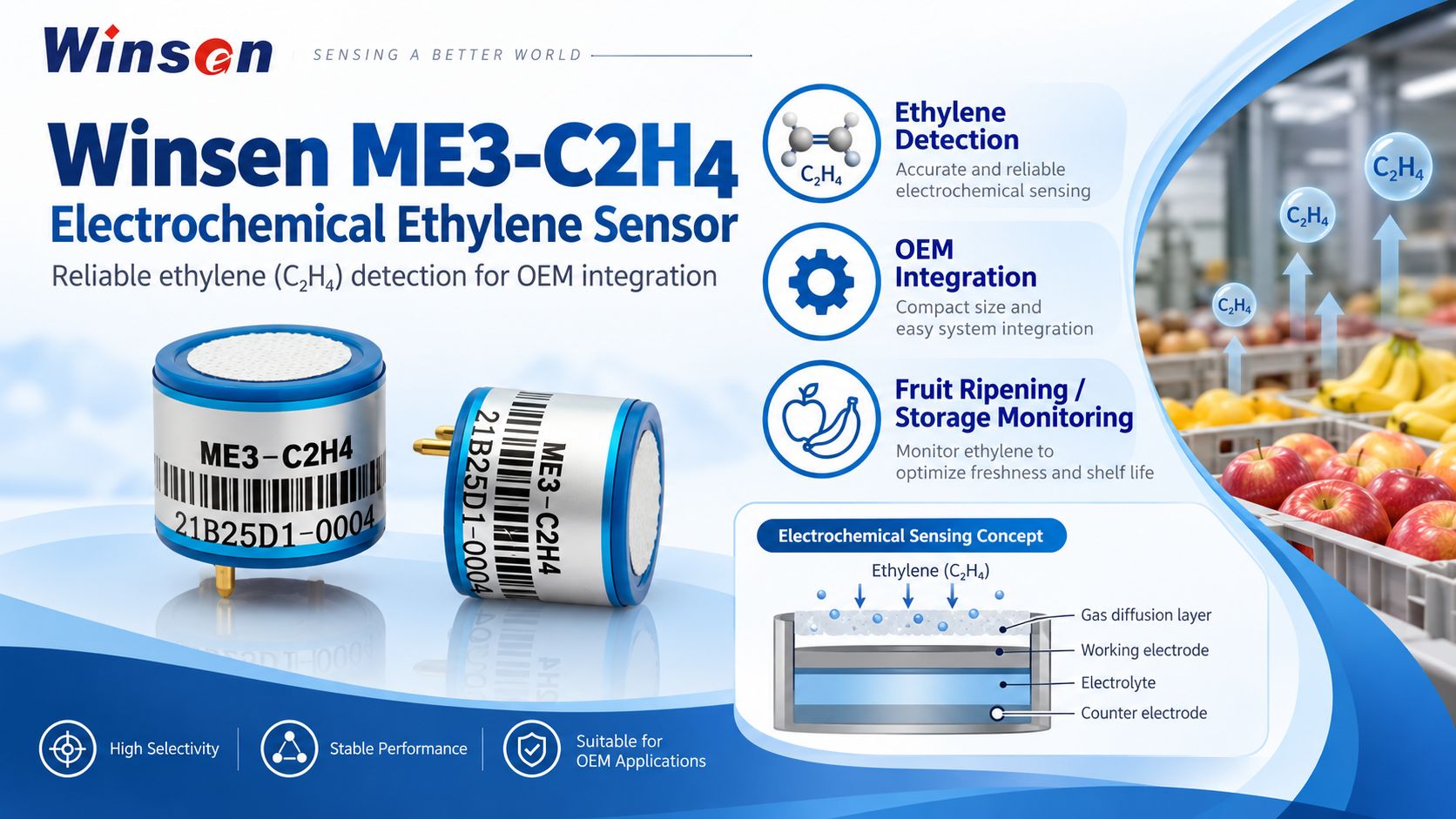
Winsen's ME3-C2H4 Electrochemical Ethylene Gas Sensor is designed for ethylene detection in industrial and environmental monitoring applications.
The sensor detects C₂H₄ through an electrochemical oxidation reaction and produces a current signal that can be measured by suitable external electronics.
For fruit-related monitoring equipment, ME3-C2H4 can be evaluated as a sensing component where the application conditions are compatible with its published specifications.
ME3-C2H4 Technical Specifications
| Parameter | Published Specification |
|---|---|
| Model | ME3-C2H4 |
| Target gas | Ethylene (C₂H₄) |
| Detection principle | Electrochemical |
| Nominal measurement range | 0–100 ppm |
| Maximum range | 200 ppm |
| Resolution | 0.5 ppm |
| Response time (T90) | ≤20 seconds |
| Operating temperature | -20°C to 50°C |
| Operating humidity | 15–90% RH |
| Bias voltage | 0 mV |
| Size | Ø20 × 16.4 mm |
| Signal type | Electrochemical current signal requiring conditioning |
Specifications are based on the published product information. Please confirm the latest datasheet and application-specific performance with Winsen before final equipment design.
Applications Worth Evaluating
ME3-C2H4 may be considered for equipment requiring ethylene measurement within its specified range, such as:
- Ethylene gas measurement instruments
- Fruit ripening research equipment
- Postharvest environmental monitoring equipment
- Industrial C₂H₄ detection devices
- OEM ethylene monitoring systems
Actual application suitability should be verified through testing under representative gas, temperature, humidity and exposure conditions.
Important Limitations for Fruit Applications
The published ME3-C2H4 specifications should not be interpreted as a universal solution for all fruit ripening and storage conditions.
In particular:
- Its 0–100 ppm nominal range must be checked against the concentration required by the ripening process.
- Its 0.5 ppm resolution is not sufficient to claim precise ppb-level ethylene monitoring.
- Its 15–90% RH operating range requires careful evaluation in high-humidity ripening rooms.
- A bare electrochemical sensor requires suitable electronics, calibration and integration.
- Its response and long-term performance should be validated in the actual application environment.
These considerations are important when transitioning from laboratory evaluation to a commercial OEM product.
How to Choose an Ethylene Sensor for Fruit Applications
When selecting a C₂H₄ sensor, the first step is to define the measurement objective.
Measurement Range
Determine whether the application requires measurements at several ppm, tens of ppm or above 100 ppm.
A sensor should be selected around the actual working range, not only its absolute maximum exposure range.
Resolution and Detection Limit
Low-concentration storage monitoring may require sub-ppm or ppb measurement capability.
Resolution and detection limit are different specifications, and neither should be assumed from the other.
Target Gas and Interference
Verify that the sensor has been evaluated for ethylene and that likely interfering gases in the installation environment have been considered.
Temperature and Humidity Compatibility
Confirm that the sensor and sampling system can operate under the actual room conditions, including condensation risk.
Response Time
Consider not only the sensing element's response time but also the delay introduced by the sampling path, electronics and data processing.
Maintenance and Calibration
The equipment should allow practical calibration, inspection and sensor replacement where required.
System Interface
Determine whether the OEM requires a bare sensing element, conditioned analog output, digital communication or a completed monitoring module.
Different product architectures require different levels of integration work.
Frequently Asked Questions About Ethylene Sensors and Fruit Ripening
What is an ethylene sensor used for in fruit ripening?
An ethylene sensor measures C₂H₄ gas concentration. In fruit ripening applications, the data can help operators observe the ethylene atmosphere during treatment and evaluate concentration trends alongside temperature, humidity, CO₂ and other conditions.
Which fruits are most affected by ethylene?
Climacteric fruits such as bananas, apples, mangoes, pears, tomatoes and avocados show important ethylene-related ripening responses. Other produce can also be sensitive to ethylene exposure even if it is not classified as climacteric.
How much ethylene is needed to ripen bananas?
UC Davis reports that many commercial banana cultivars are exposed to approximately 100–150 ppm ethylene for 24–48 hours under specified ripening conditions. Requirements vary by cultivar, maturity and process.
Can an ethylene sensor tell whether a fruit is ripe?
Not directly. Ethylene concentration measures the surrounding gas atmosphere, not fruit firmness, color, sugar content or internal maturity. It should be used together with other quality information.
Where should an ethylene sensor be placed in a ripening room?
The measurement point should represent the atmosphere being monitored. Air circulation, injection locations, pallets, packaging, obstructions and sampling-system design should be considered. The final placement should be verified at the facility.
Can the same ethylene sensor be used for ripening rooms and cold storage?
Not necessarily. Ripening rooms may need to measure relatively high concentrations, while fresh storage applications may require much lower detection limits. A sensor should be selected for the actual concentration range and environmental conditions.
Is Winsen ME3-C2H4 suitable for banana ripening rooms?
ME3-C2H4 may be evaluated as a sensing component, but its published nominal range of 0–100 ppm does not fully cover the commonly referenced 100–150 ppm commercial banana treatment concentration. Its 15–90% RH specification also requires consideration where room humidity is higher. Suitability should be confirmed for the specific equipment design.
Does ME3-C2H4 directly support RS485 or 4–20 mA?
ME3-C2H4 is an electrochemical sensing component. A suitable signal-conditioning circuit and controller are needed for concentration calculation and any required industrial communication interface. The bare sensor should not be described as having those outputs without an appropriate accompanying module.
What is the difference between ppm and ppb ethylene monitoring?
One ppm equals 1,000 ppb. A sensor suitable for ppm-level monitoring is not automatically suitable for low-ppb measurements. Very low concentrations may require more sensitive measurement technologies.
Building a Practical Ethylene Monitoring System
Ethylene monitoring has different objectives across commercial fruit ripening, postharvest storage and produce distribution.
In controlled ripening, it can provide information about the applied C₂H₄ atmosphere.
In storage, suitably sensitive ethylene measurements can help operators identify unwanted gas exposure that may affect sensitive commodities.
In OEM equipment, an ethylene sensor provides a measurement input that can be combined with temperature, humidity, CO₂ and other environmental data.
The correct implementation depends on matching the sensor to the intended concentration range, environmental conditions and equipment design.
Winsen ME3-C2H4 provides an electrochemical sensing option for C₂H₄ detection within its published specifications.
For OEM manufacturers, monitoring equipment developers and postharvest technology companies, Winsen can support discussions covering measurement requirements, sensor evaluation, calibration and integration into ethylene monitoring equipment.
Related Winsen Product: ME3-C2H4 Electrochemical Ethylene Gas Sensor
Technical References