Indoor Radon Monitoring: Detection, Standards and the Winsen ZD100 Module
When evaluating indoor air quality, people often focus on familiar pollutants such as formaldehyde, PM2.5, and volatile organic compounds (VOCs). However, another invisible environmental risk deserves attention: radon gas.
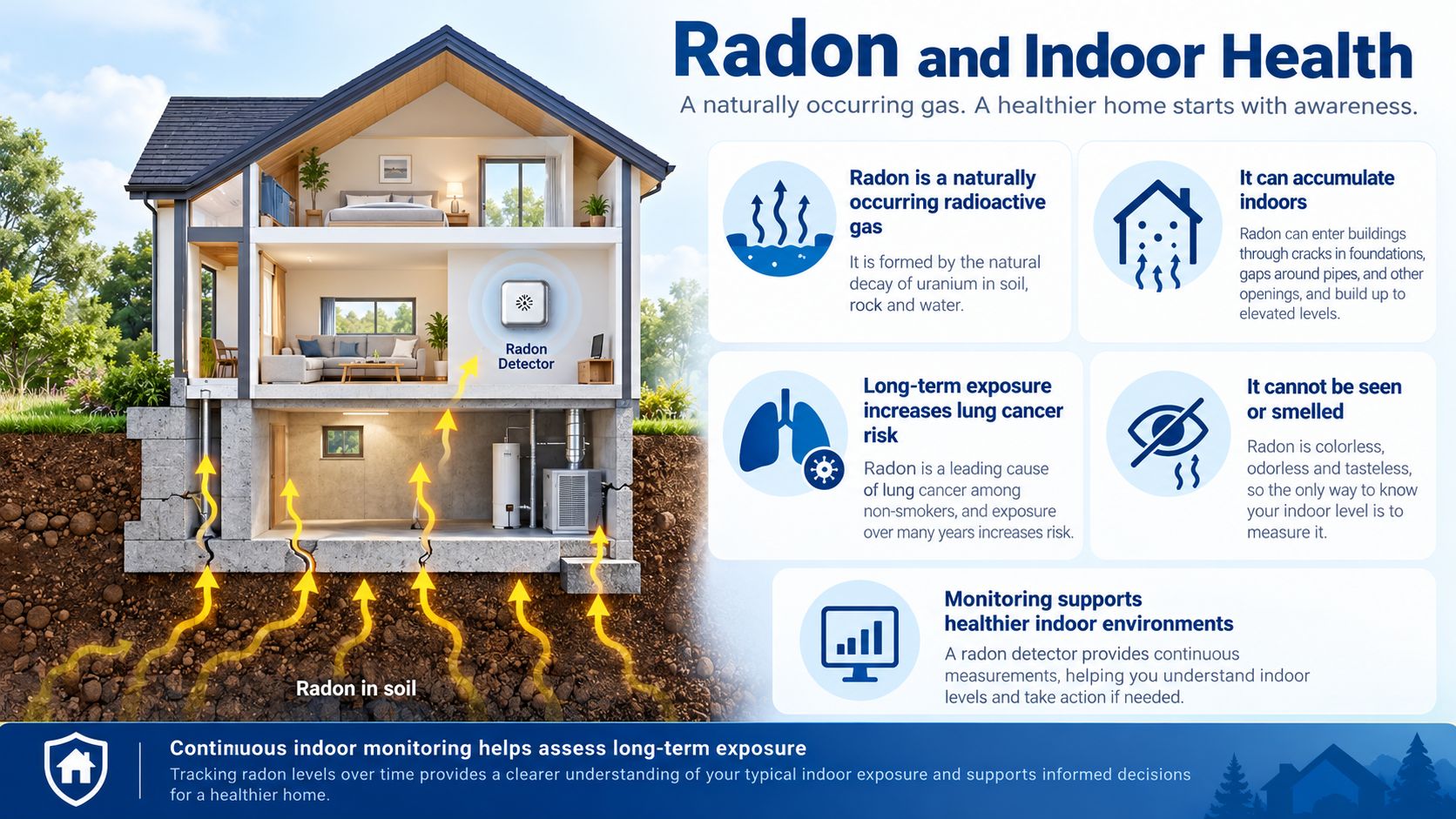
Radon is a naturally occurring radioactive gas released from soil and rocks. It can enter buildings through cracks in foundations, gaps around pipes, and other structural openings. Because radon is colorless and odorless, its presence cannot be identified through human senses.
When radon and its radioactive decay products are inhaled, they can damage lung tissue. Long-term exposure to elevated radon concentrations increases the risk of lung cancer. The World Health Organization (WHO) recognizes radon as an important environmental risk factor for lung cancer.
Since radon cannot be detected by sight or smell, appropriate measurement equipment is essential for identifying potential indoor exposure risks.
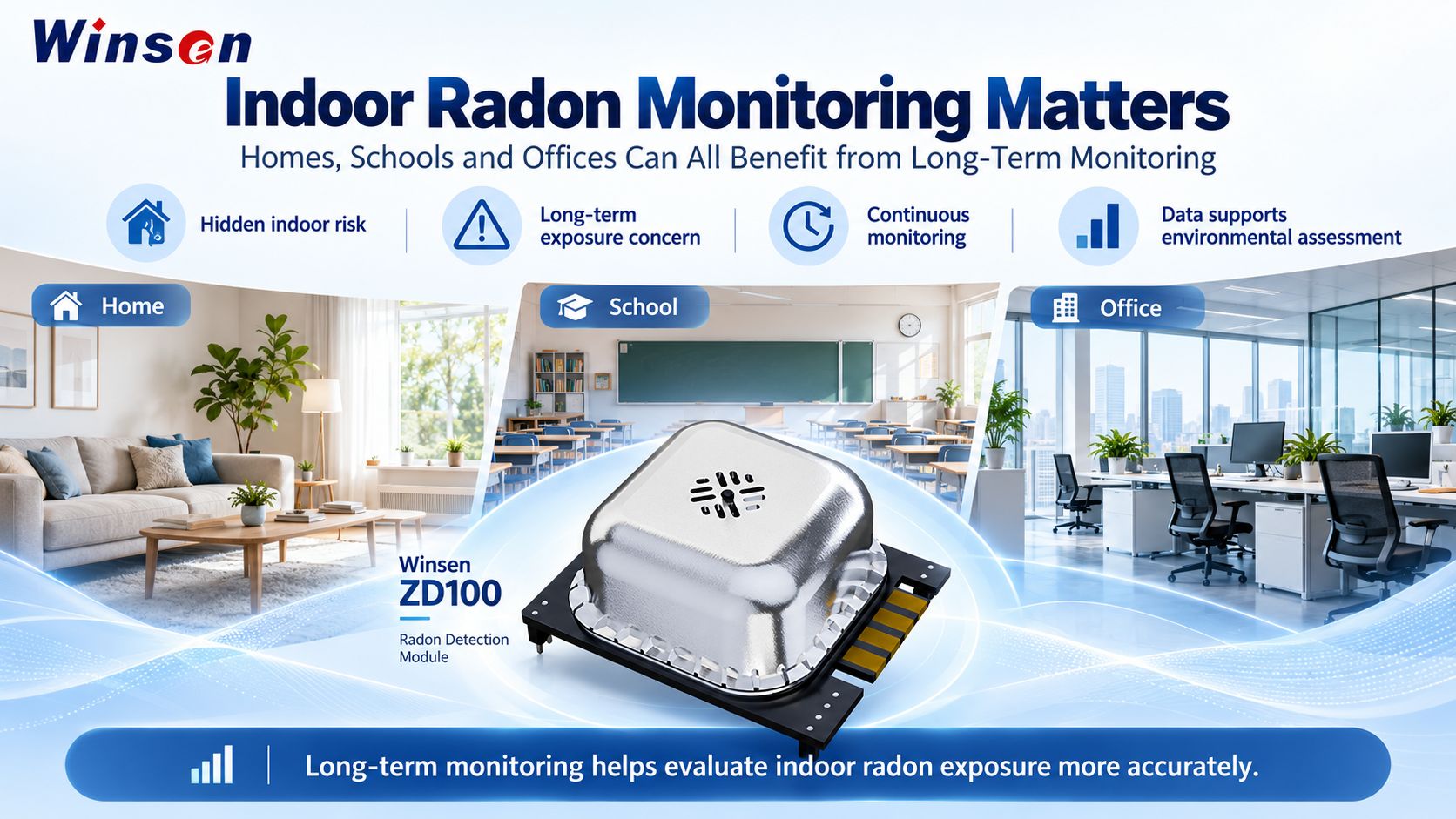
Winsen's ZD100 Radon Detection Module adopts a passive detection approach and utilizes alpha particles generated during radon decay to support indoor radon concentration monitoring. It provides a sensing solution for manufacturers developing fixed radon detection equipment for residential, educational, and commercial environments.
1. Why Is Indoor Radon Monitoring Becoming More Important?
Growing Awareness of Indoor Environmental Health
Radon exposure is not limited to underground spaces or mines. It can also occur in ordinary residential buildings, schools, offices, and other occupied indoor environments.
Radon originates from the natural radioactive decay of uranium in soil and rocks. Depending on geological conditions and building characteristics, radon can migrate from the ground into indoor spaces and accumulate.
Several factors can influence indoor radon concentrations:
- Geological conditions: Soil and rock composition can affect the amount of radon released from the ground.
- Building structure: Cracks in foundations, construction joints, and openings around pipes can provide pathways for radon entry.
- Ventilation conditions: Insufficient air exchange can contribute to radon accumulation indoors.
- Seasonal variations: Indoor radon concentrations may change with temperature, ventilation habits, and environmental conditions.
As awareness of healthy buildings and indoor environmental quality increases, radon monitoring is receiving greater attention in residential environmental assessments and building management.
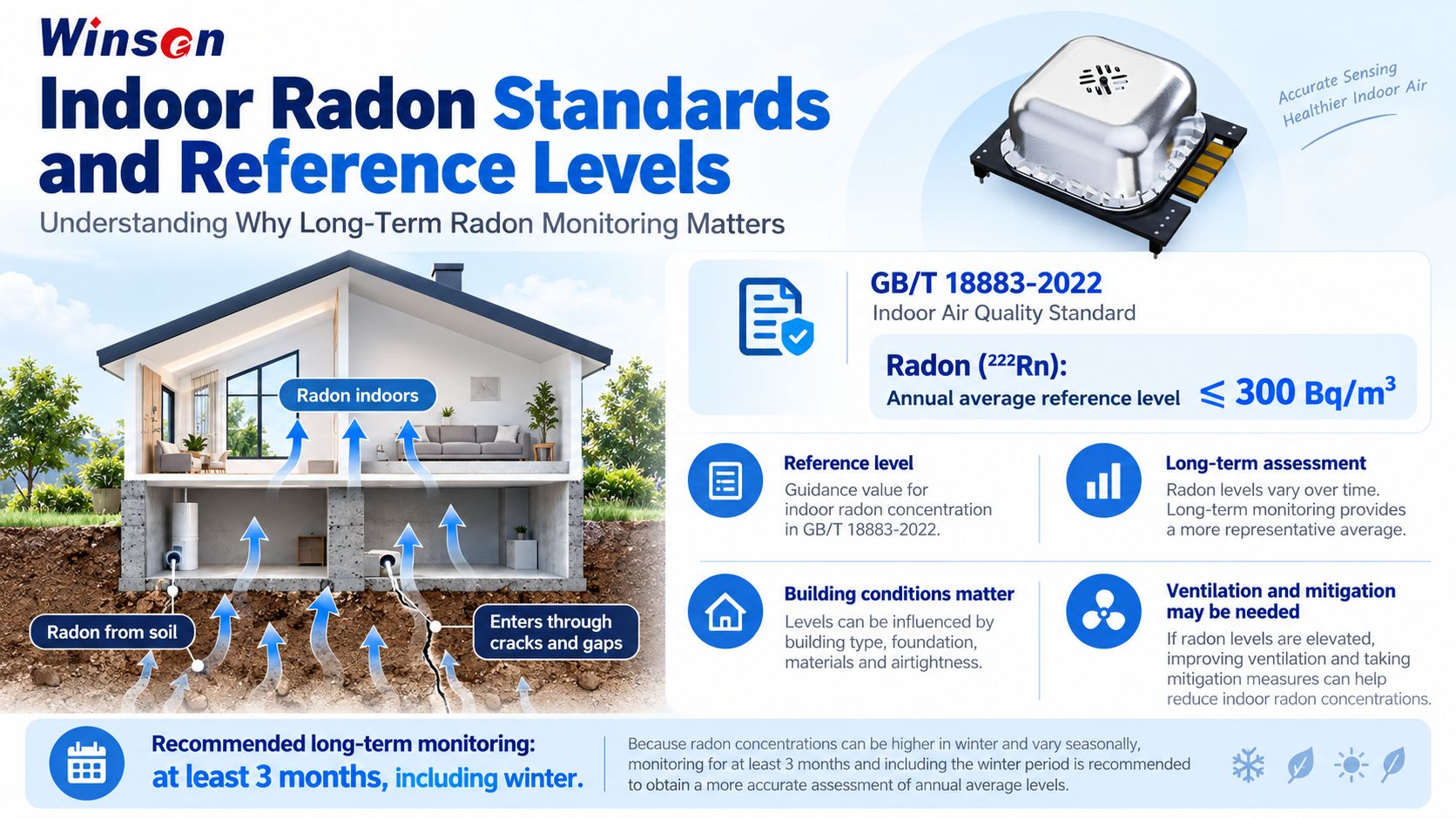
Indoor Radon Standards and Reference Levels
In China, indoor radon control and measurement are addressed by relevant national standards, including:
- GB/T 18883-2022 – Indoor Air Quality Standard
- GB/T 16146-2015 – Requirements for Control of Indoor Radon and Its Progeny
Under GB/T 18883-2022, the annual-average reference level for radon (²²²Rn) in indoor air is 300 Bq/m³.
The standard also specifies a sampling period of at least three months, including winter, to support a more representative assessment of indoor radon concentrations.
This reference level should be understood within the scope of the applicable standard. It is not a boundary between completely safe and dangerous exposure.
When elevated radon concentrations are identified, appropriate measures such as improved ventilation, sealing potential entry pathways, or professional radon mitigation systems may be considered.
2. How Is Radon Detected?
Understanding the Radon Detection Principle
Radon detection relies on identifying physical signals associated with the radioactive decay of radon.
One detection approach utilizes the alpha particles generated during radon decay. By detecting and processing these signals, a radon monitoring system can obtain information about radon concentration.
For indoor environmental monitoring, detection equipment needs to provide practical measurement capabilities while supporting stable operation and convenient integration into monitoring systems.
Winsen ZD100 Radon Detection Module
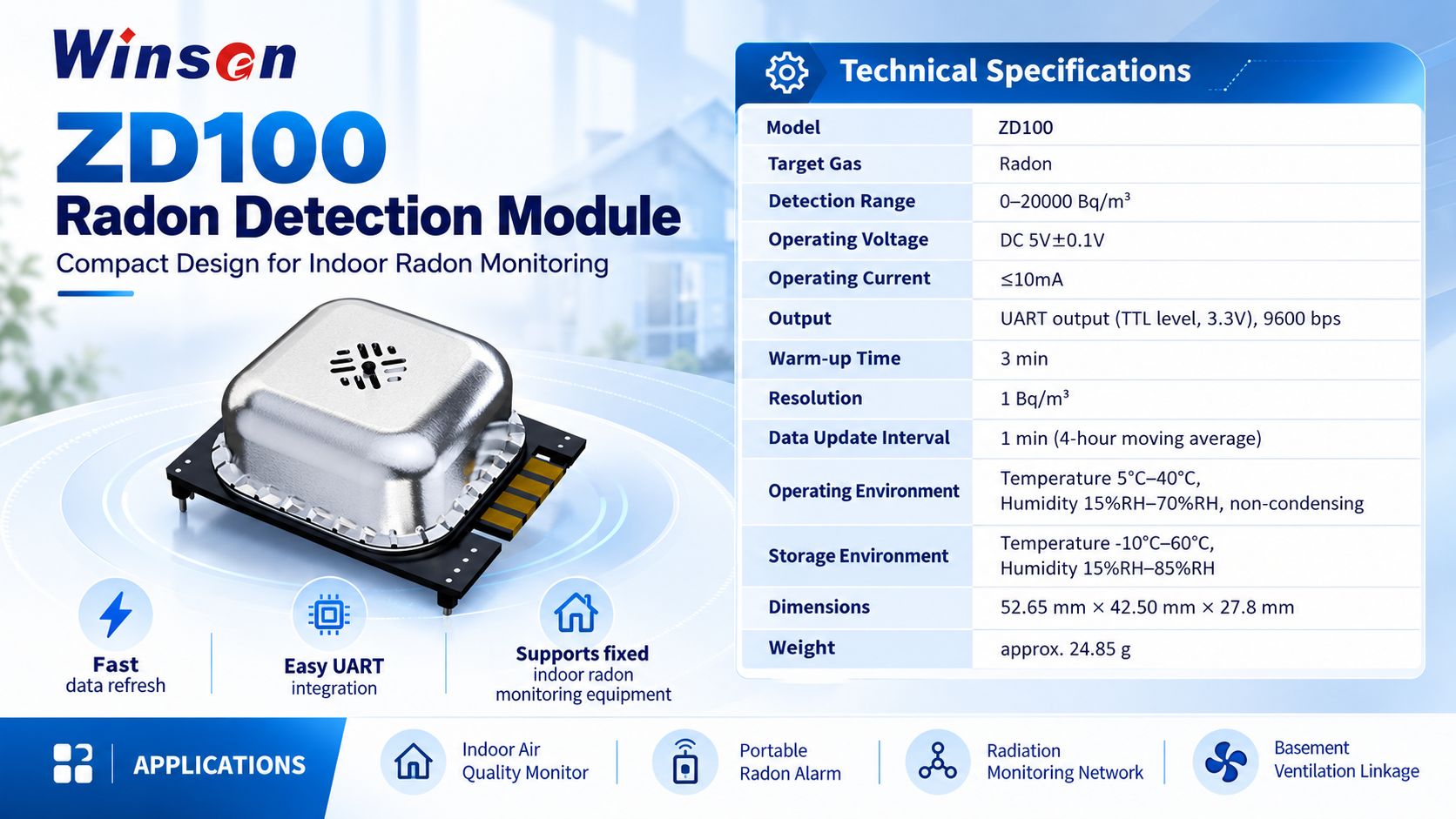
Winsen's ZD100 Radon Detection Module adopts a passive detection approach and utilizes alpha particles generated during radon decay for radon concentration monitoring.
Designed as a sensing component for fixed radon detection equipment, the ZD100 provides a compact solution for developers and manufacturers working on indoor radon monitoring products.
Key product characteristics include:
- Alpha Particle Detection: Utilizes signals associated with radon decay for concentration monitoring.
- High Resolution: Provides a resolution of 1 Bq/m³.
- Compact Design: Facilitates integration into radon monitoring equipment.
- Simple Operation: Supports practical integration into fixed monitoring applications.
- Low Operating Current: Features an operating current of no more than 10 mA.
The module is suitable for equipment designed for large-scale radon surveys and long-term monitoring in homes, schools, offices, and other indoor environments.
3. Why Does Long-Term Radon Monitoring Matter?
A Single Measurement May Not Tell the Whole Story
Indoor radon concentrations are not necessarily constant. They can change with building conditions, ventilation, and environmental variations.
For this reason, a short-term measurement may not accurately represent the long-term radon exposure level experienced by occupants.
Long-term monitoring and data accumulation provide a more comprehensive basis for evaluating indoor radon conditions.
For indoor radon assessment, monitoring over a period of at least three months, including winter, is recommended in accordance with the relevant sampling requirements of GB/T 18883-2022.
Longer monitoring periods can help reveal variations that may not be apparent from a single measurement. The final assessment should consider the applicable standards, sampling conditions, and measurement methods.
Applications Across Different Indoor Environments
The ZD100 is designed to support the development of fixed radon monitoring equipment for various indoor applications.
Residential Buildings
Radon monitoring in homes helps identify potential exposure risks associated with geological conditions, building structures, and indoor environmental conditions.
Schools and Educational Facilities
Classrooms and other occupied educational spaces can benefit from indoor radon monitoring to support healthier learning environments.
Offices and Commercial Buildings
Radon monitoring provides additional environmental information for building management and indoor air quality assessment.
Large-Scale Radon Surveys
Compact detection modules can support the development of monitoring equipment used in broader indoor radon investigations and environmental assessment projects.
4. Supporting Indoor Environmental Monitoring with Winsen
Indoor air quality management requires attention to multiple pollutants and environmental parameters.
While formaldehyde, VOCs, carbon dioxide, and particulate matter are commonly monitored, radon is another important indicator that should not be overlooked.
Winsen continues to develop gas sensing technologies and detection modules for different indoor environmental monitoring requirements.
The ZD100 Radon Detection Module provides a sensing component for equipment manufacturers developing fixed radon monitoring solutions.
By supporting long-term monitoring applications across residential, educational, and commercial environments, Winsen aims to contribute to more comprehensive indoor air quality assessment.
Reliable indoor environmental monitoring starts with identifying the pollutants that cannot be seen or smelled.
Explore Winsen's gas sensing technologies and contact our team to discuss your radon monitoring project and product integration requirements.