Combustible Gas Sensor Technologies: How to Choose the Right Solution for Every Application
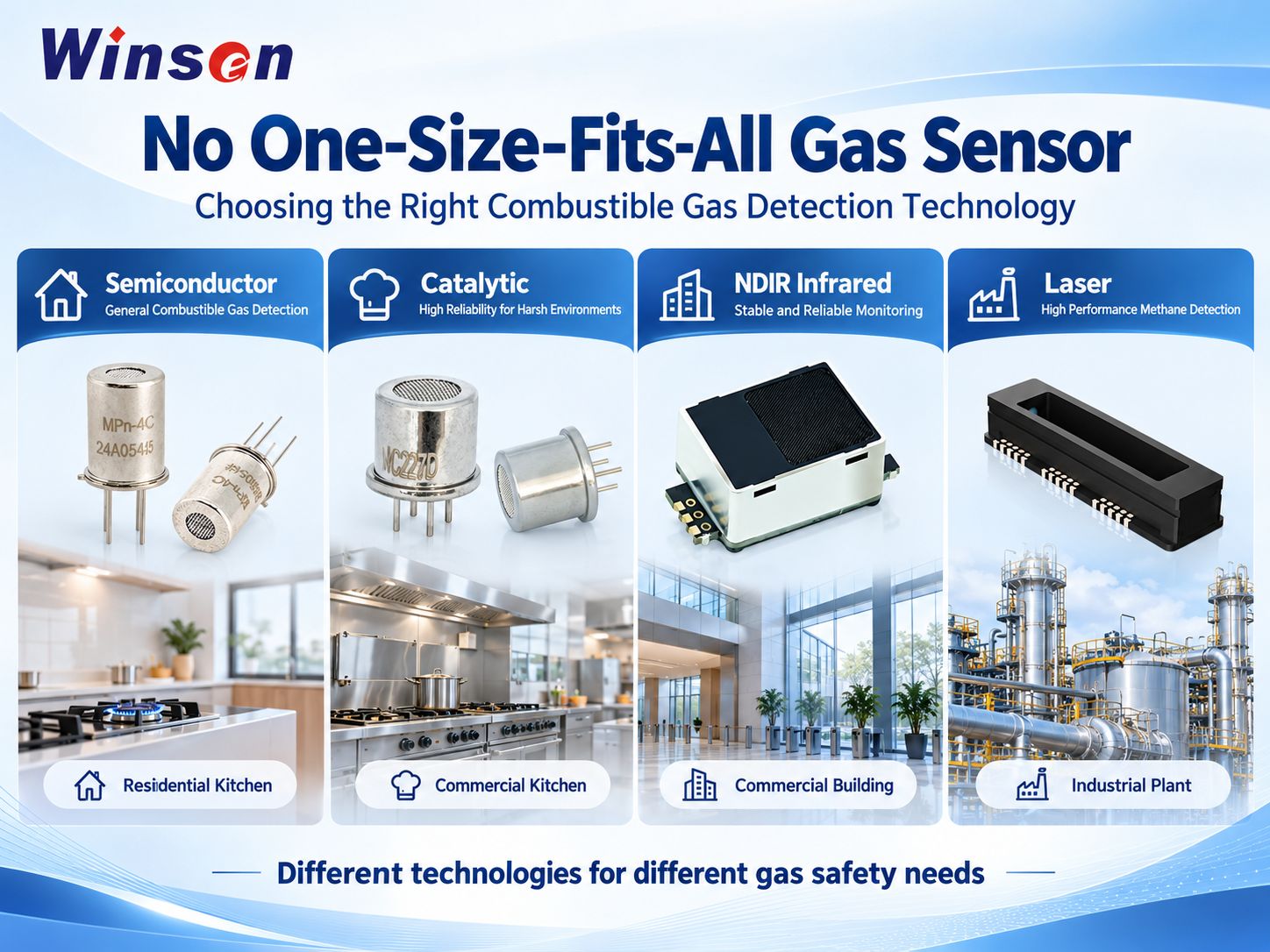
Combustible gas detection is not a matter of choosing the most advanced sensing principle on paper. It is a matter of matching the target gas, operating environment, response requirements and system architecture to the right technology. A natural gas alarm in a home kitchen, an LPG detector in a restaurant and a methane monitoring system in an industrial facility face different engineering challenges.
At the 2026 China International Gas and Heating Technology & Equipment Exhibition in Xi'an, held October 21–23, we exchanged ideas with industry partners on these practical choices. The discussions reinforced a principle that guides our product development at Winsen: there is no single combustible gas sensing technology that is optimal for every application.
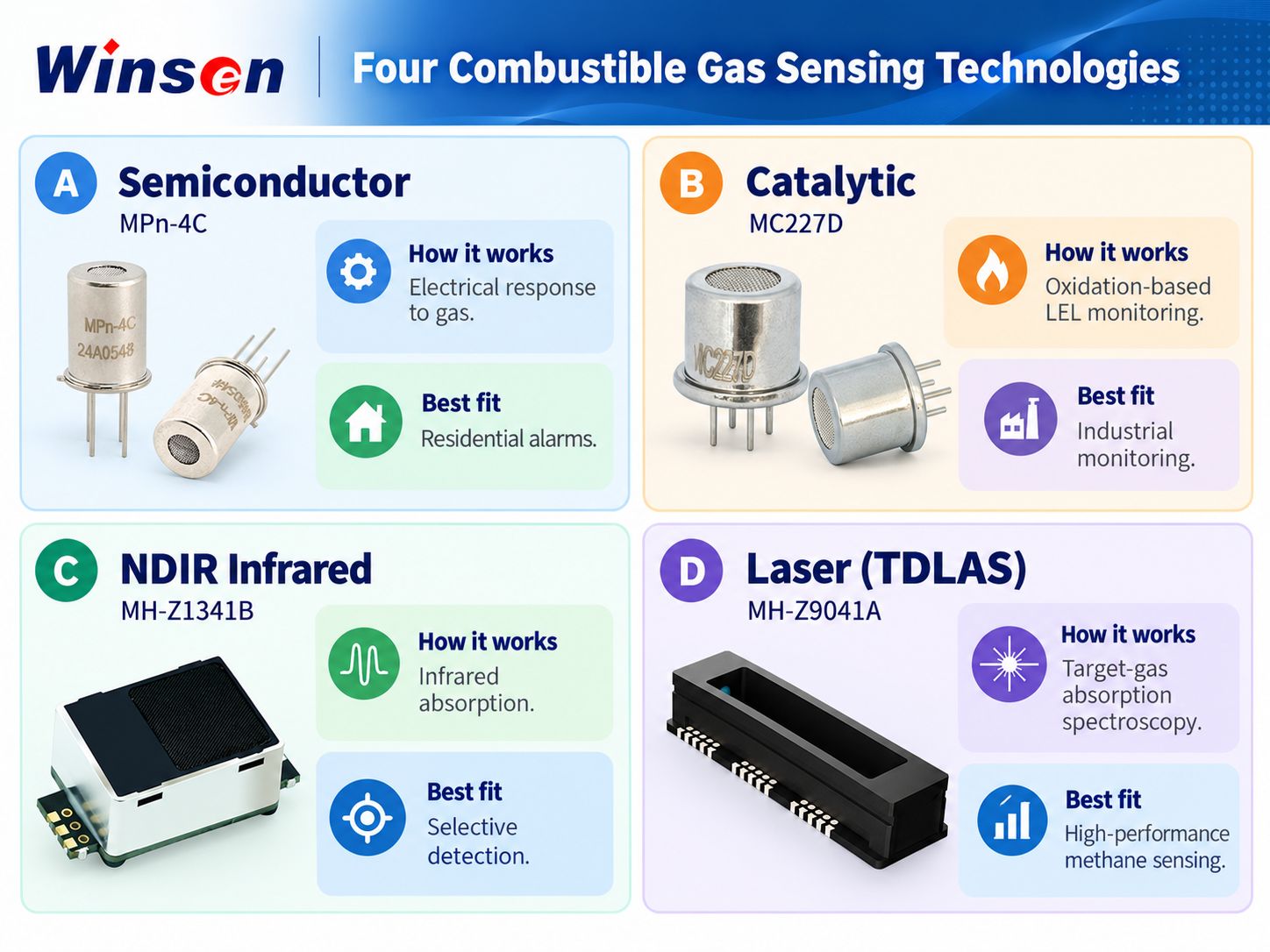
Our sensing portfolio includes metal oxide semiconductor (MOS), catalytic combustion, non-dispersive infrared (NDIR) and tunable diode laser absorption spectroscopy (TDLAS) technologies. Understanding where each one fits helps OEM manufacturers develop dependable and cost-effective gas safety equipment.
Why Combustible Gas Detection Needs Application-Specific Sensor Selection
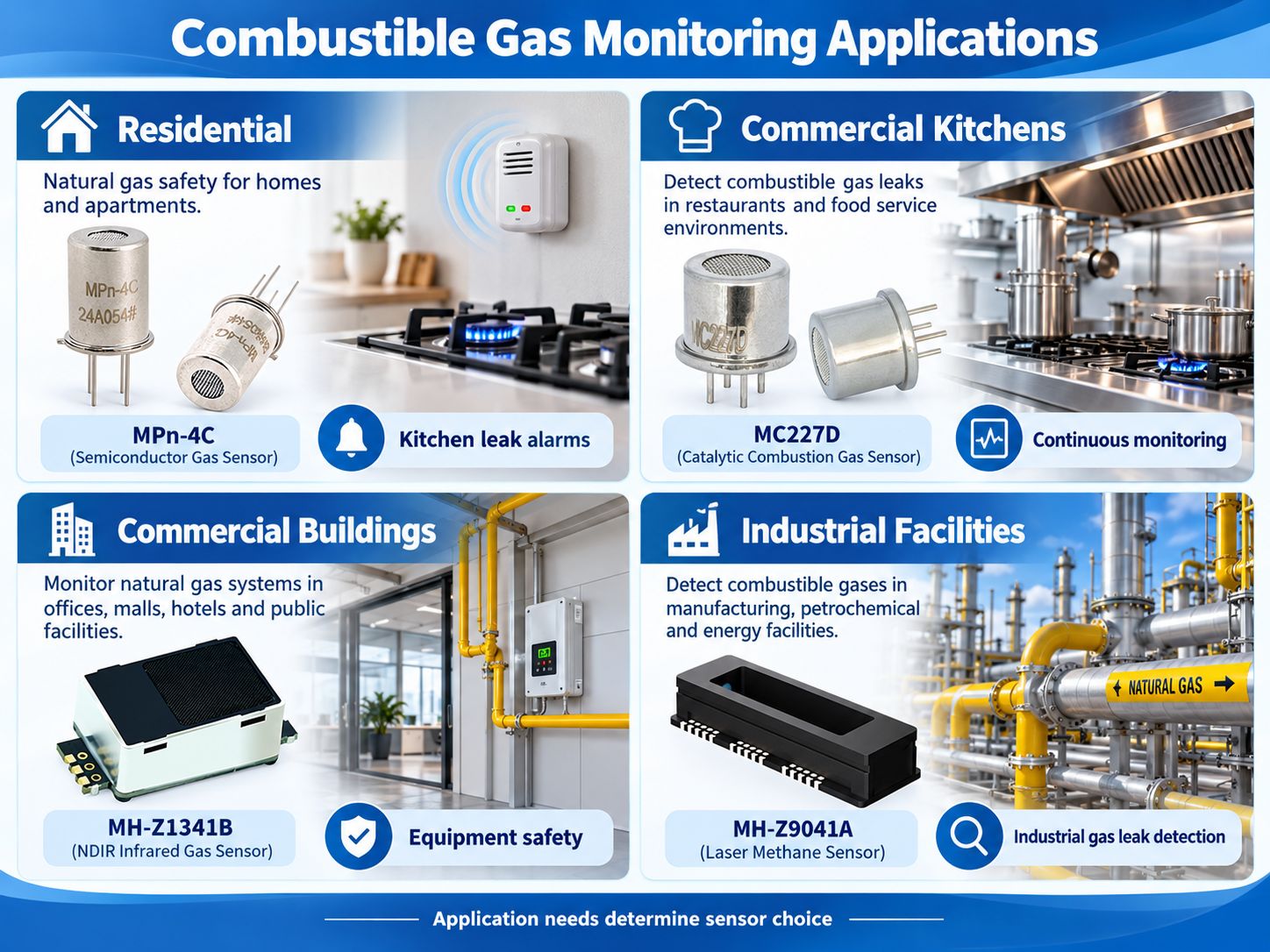
Residential kitchens may expose a sensor to steam, oil mist, alcohol-containing products and frequent temperature changes. In restaurants and other commercial premises, equipment layout, gas consumption and continuous operating schedules add design constraints. Industrial facilities may involve demanding ambient conditions, multiple possible fuels, and additional electrical or hazardous-location requirements.
Even before selecting a technology, engineers should distinguish methane (CH4), the main combustible component of natural gas, from propane (C3H8) and butane (C4H10), commonly found in LPG. A methane-specific optical sensor cannot automatically be used as a propane sensor.
A useful selection process begins with the gas itself and continues through installation, maintenance and whole-device compliance rather than stopping at sensor sensitivity.
Four Combustible Gas Sensing Technologies Explained
1. Semiconductor (MOS) Gas Sensors
Metal oxide semiconductor sensors use a heated gas-sensitive material whose electrical characteristics change when it interacts with target gases. Their compact construction and established manufacturing processes make them suitable for many residential alarms and embedded gas detection products.
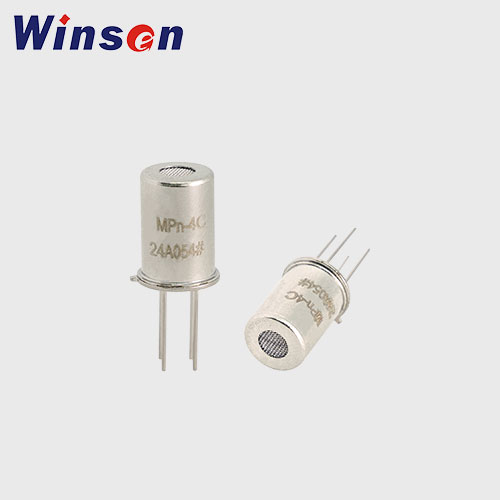
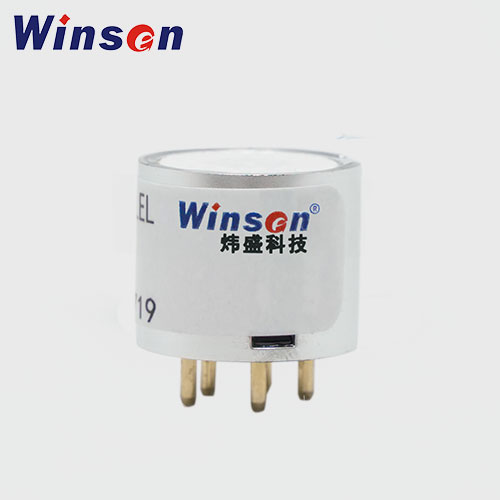
The Winsen MPn-4C semiconductor methane sensor is intended for methane and natural gas detection. It offers high sensitivity to CH4 with anti-interference optimization for its intended applications.
MOS technology may respond to certain non-target gases, while temperature, humidity and aging can influence the signal. Accordingly, sensing material selection, compensation, calibration and alarm logic must be assessed together.
2. Catalytic Combustion Gas Sensors
Catalytic sensors commonly use a heated detection element and a compensating element in a bridge circuit. When an appropriate combustible gas oxidizes on the active element, the resulting temperature and resistance change produces a measurable electrical signal. Catalytic technology is widely used for combustible gas concentration measurement, including applications expressed in percent of the lower explosive limit (%LEL).
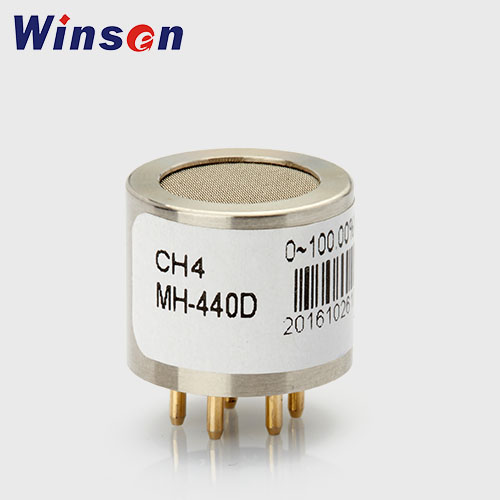
The Winsen MC227D catalytic sensor is designed for combustible gases including natural gas and LPG in public and non-industrial applications. For industrial installations, our ZC101 combustible gas module provides a dedicated catalytic solution intended for industrial use.
Catalytic sensors require sufficient oxygen for their combustion-based response and can be affected by catalyst poisoning or inhibition. Their suitability must be evaluated against the actual gas mixture and expected contaminants.
3. NDIR Infrared Gas Sensors
Non-dispersive infrared sensors measure gas absorption at selected infrared wavelengths. For applicable hydrocarbon gases, this optical method can provide good selectivity and avoids catalytic-bead poisoning mechanisms. Long-term optical cleanliness, the gas absorption spectrum and compensation strategy remain important.
The Winsen MH-Z1341B is a low-power NDIR sensor for methane (CH4), suitable for methane leakage monitoring in supported applications. The target gas should always be checked at the individual model level: an NDIR methane product is not automatically interchangeable with an NDIR propane product.
An important technical limitation is that conventional hydrocarbon-oriented NDIR sensing does not directly detect hydrogen (H2), which lacks the infrared absorption behavior used by these sensors.
4. TDLAS Laser Methane Sensors
TDLAS uses a tunable semiconductor laser to scan a characteristic absorption feature of a target gas. This makes it particularly attractive for methane-specific measurements where selective identification and resistance to many common interfering gases are important. Optical control, laser operation and diagnostic strategies remain part of the system-level reliability design.
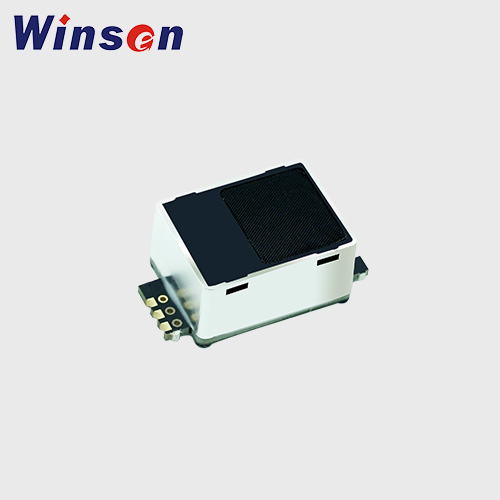
Our MH-Z9041A TDLAS laser methane sensor uses laser absorption technology for CH4 detection and provides a UART output interface for host integration. The model is positioned for home methane alarms; engineers considering other use environments should verify the complete device requirements.
Semiconductor vs Catalytic vs NDIR vs Laser: Technology Comparison
| Selection factor | Semiconductor (MOS) | Catalytic | NDIR Infrared | TDLAS Laser |
|---|---|---|---|---|
| Detection mechanism | Change in sensing-material conductivity | Catalytic oxidation and bridge response | Broadband IR absorption | Tunable laser absorption |
| Typical target | Selected combustible gases, model dependent | Multiple combustible gases, model dependent | IR-active hydrocarbons, model dependent | Specified absorption target, commonly methane |
| Selectivity | Depends on material and compensation | Responds to various oxidizable combustible gases | Typically strong for configured IR-active gases | Typically strong for configured target gas |
| Oxygen dependence | Application and material dependent | Requires sufficient oxygen | Optical measurement does not rely on combustion | Optical measurement does not rely on combustion |
| Key limitations | Cross-sensitivity, drift and environmental effects | Poisoning/inhibition; oxygen-dependent response | Cannot directly detect H2 by conventional NDIR; optical interference | Optical/laser control and diagnostic requirements |
| Representative Winsen model | MPn-4C | MC227D; ZC101 industrial module | MH-Z1341B | MH-Z9041A |
This comparison is a starting point rather than a universal performance ranking. Actual response, power consumption, target coverage and service conditions depend on the specific model and the complete detector design.
Semiconductor (MOS) Combustible Gas Sensors
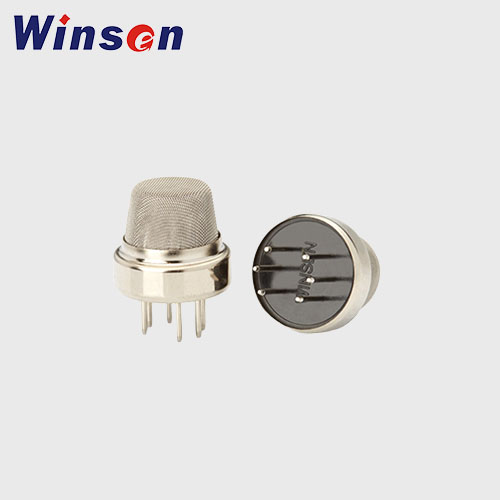
Semiconductor gas sensors for methane, natural gas and propane detection in compatible gas alarm designs.
Catalytic Combustion Gas Sensors
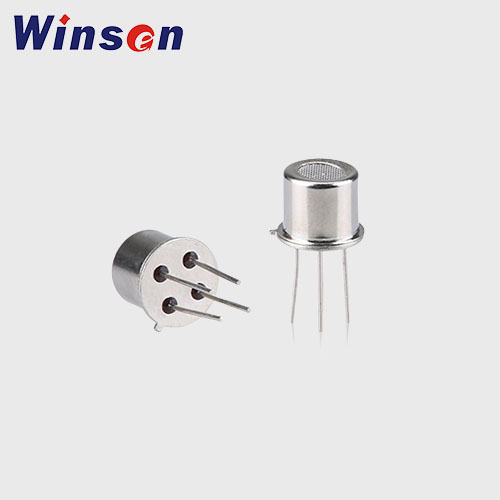
Catalytic sensors and modules for combustible gas monitoring, including non-industrial and industrial solutions.


MC114/MC114C Industrial Catalytic Gas Sensor
- Industrial natural gas, LPG, coal gas, alkanes
- 0-100%LEL
- Read More

NDIR Infrared Combustible Gas Sensors
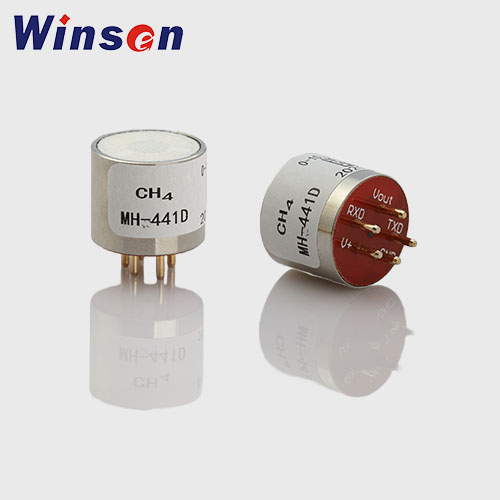
NDIR solutions for methane and supported hydrocarbon combustible gas monitoring, selected by target gas and range.
TDLAS Laser Methane Gas Sensors
Laser methane sensing options for residential gas alarms, industrial monitoring and specialized applications.
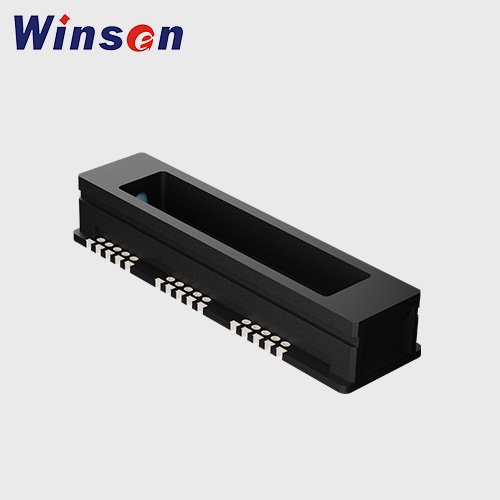


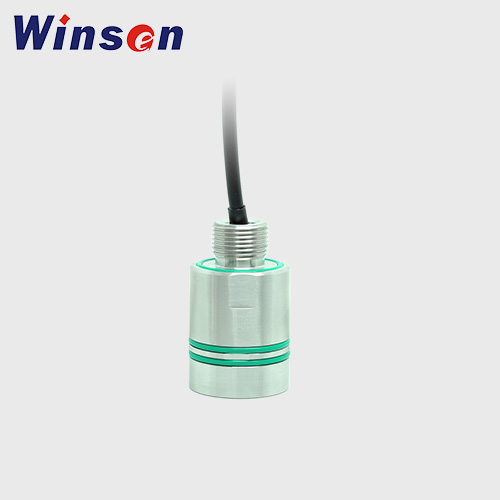
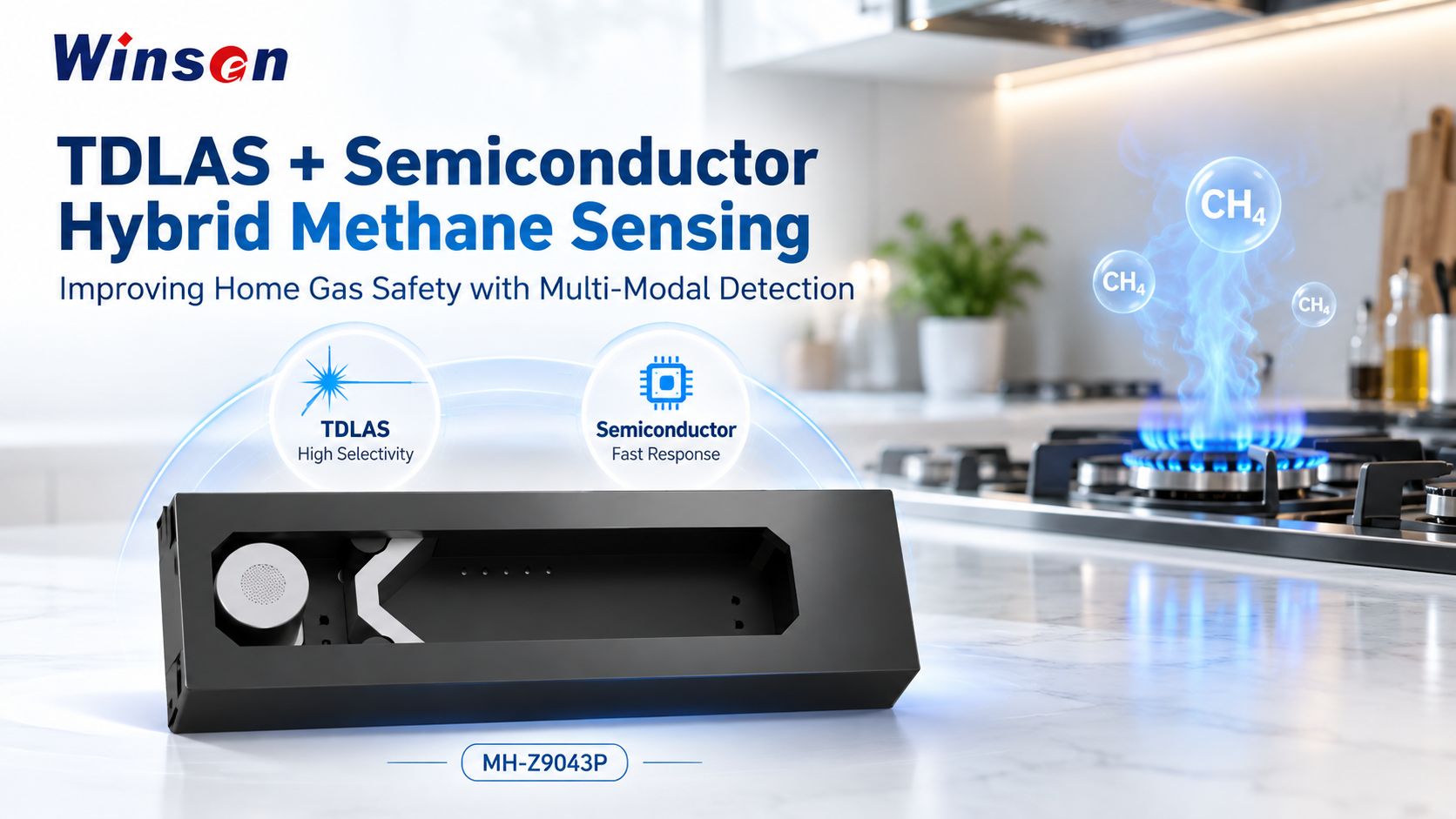
For compact household methane alarm projects, we also offer the MH-Z9043P TDLAS Laser Methane Sensor.
Methane vs Propane: Know the Gas Before Choosing the Sensor
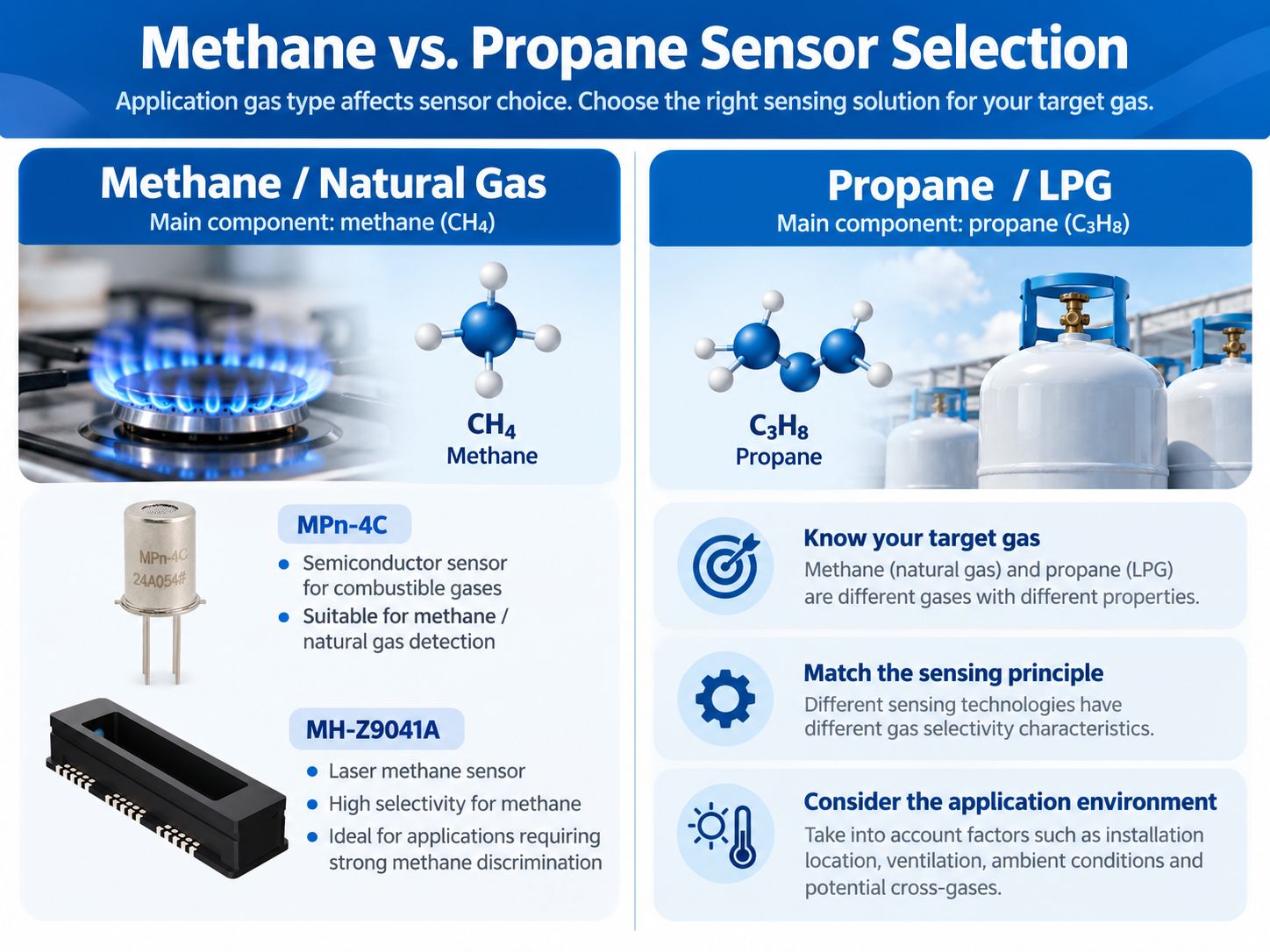
Methane and propane have different physical properties and are commonly used in different fuel systems. They also differ in density relative to air, which influences detector location when considered together with ventilation and gas flow. Methane is generally lighter than air, while propane is heavier than air.
- Natural gas and methane alarms: evaluate methane-specific models such as MPn-4C, MH-Z1341B or MH-Z9041A, according to sensing principle and integration needs.
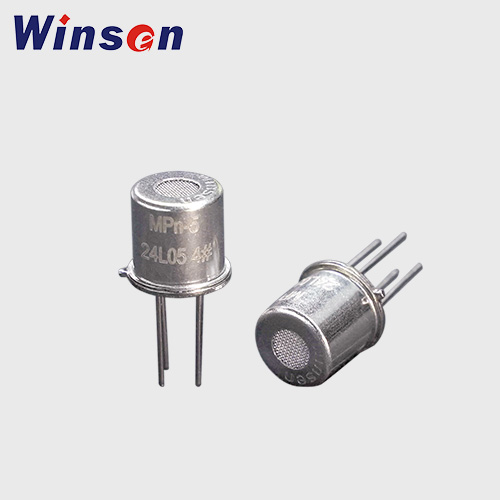
- LPG and propane alarms: select a model whose published target gas and validation cover propane or the intended LPG mixture; the MPn-5 propane sensor is one relevant Winsen option.
- Multiple-gas projects: consider catalytic or other validated multi-gas solutions where the application requires coverage beyond a single fuel.
Sensor position, enclosure design and installation guidance should follow the target gas, equipment manufacturer instructions and applicable local safety requirements.
Matching Sensors to Residential, Commercial and Industrial Applications
Residential Natural Gas and LPG Alarms
Home alarms prioritize dependable long-term operation, appropriate target-gas response, resistance to kitchen interference and compatibility with compact enclosures. Depending on the gas, MOS, NDIR, laser or other qualified sensing technologies can be considered.
Commercial Kitchens and Gas Equipment
Commercial kitchens introduce continuous operating schedules, cleaning agents, steam and high gas-use intensity. An OEM should examine ambient exposure, alarm recovery, enclosure ventilation and maintenance requirements. Catalytic solutions such as MC227D may fit appropriate non-industrial applications, subject to full product validation.
Industrial Plants and Utility Infrastructure
Industrial gas monitoring needs can include fixed installations, equipment interfaces, wide environmental variation and site-specific hazardous-area rules. The ZC101 industrial catalytic module provides one application-oriented option. For methane-focused projects, application-specific infrared or laser products may also be considered where their specifications and installation requirements permit.
In hazardous locations, OEMs must assess explosion protection and system certification of the complete detector. A sensing component should not be represented as suitable for a particular hazardous-area classification without the required evidence.
From Gas Sensing to Monitoring, Alarms and Protective Actions
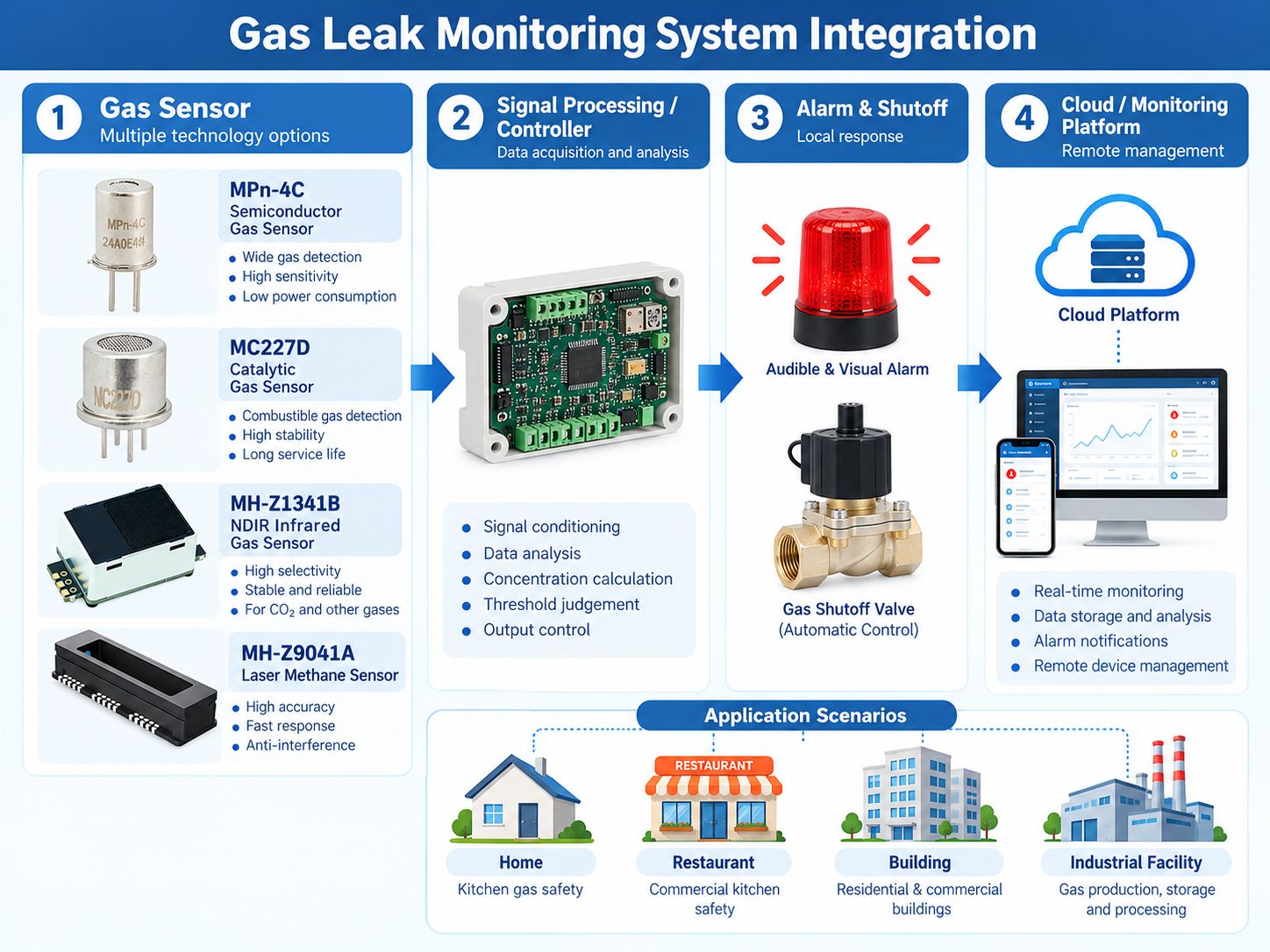
A reliable gas safety product depends on more than the sensing element. The full system typically acquires and validates sensor information, applies alarm logic and triggers an appropriate local response. Connected products may also transmit events to a monitoring platform for diagnostics, trend review or maintenance support.
Gas sensor → signal conditioning & controller → alarm / protective action → optional remote monitoring
For example, a system may activate an audible or visual warning, control an approved gas shutoff valve or report faults according to its intended functions. Communication failures, power interruptions and sensor faults should be evaluated as separate safety cases rather than handled as ordinary gas readings.
Winsen Combustible Gas Sensor Portfolio
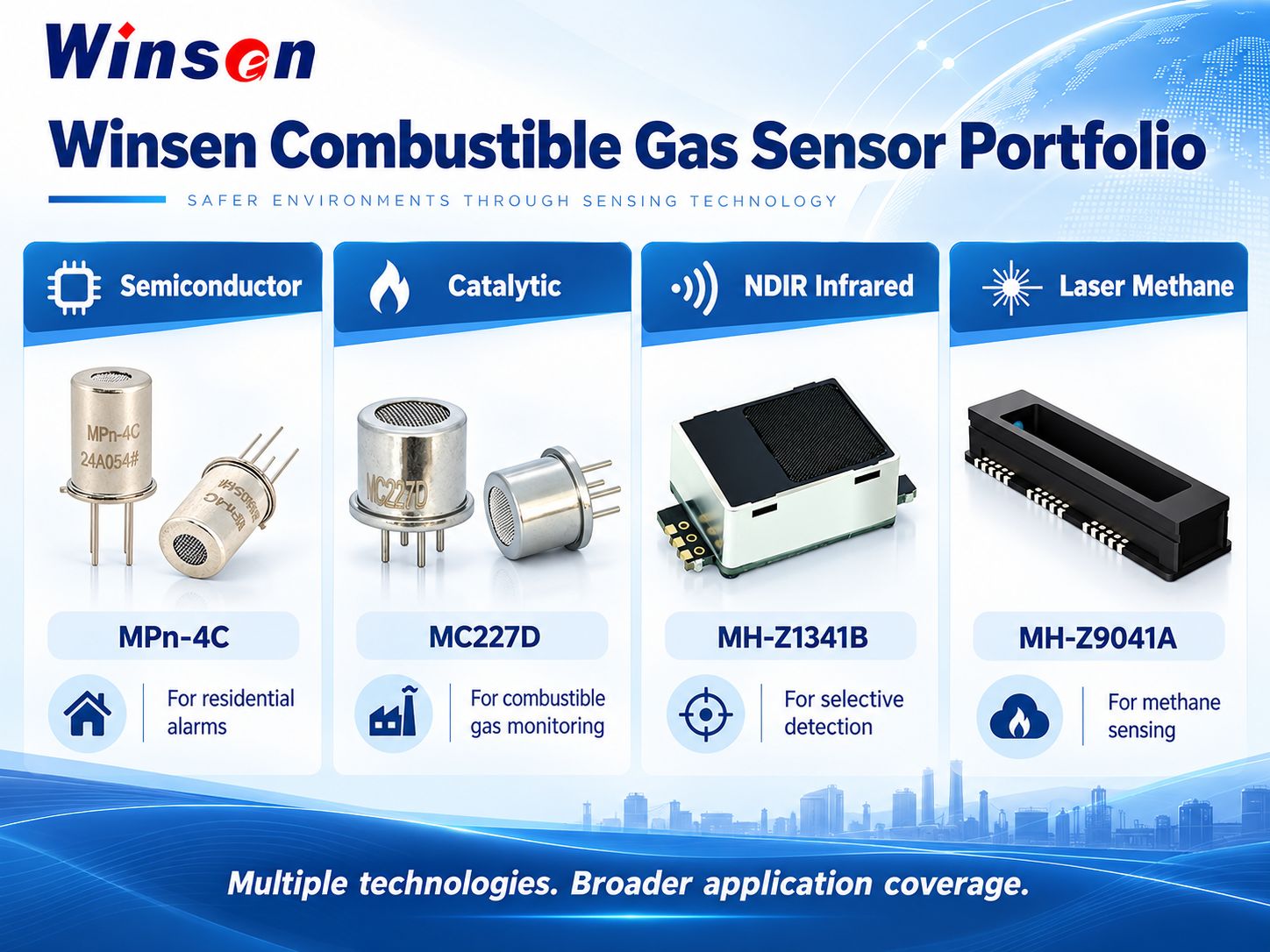
We develop sensor components and modules around different combustible gas measurement principles. This gives OEM customers multiple technology paths instead of forcing every application into a single sensor architecture.
Additional application-specific options include our ZC101 industrial combustible gas module and MPn-5 propane sensor. These products extend the selection beyond the four representative models shown above.
OEM Combustible Gas Sensor Selection Checklist
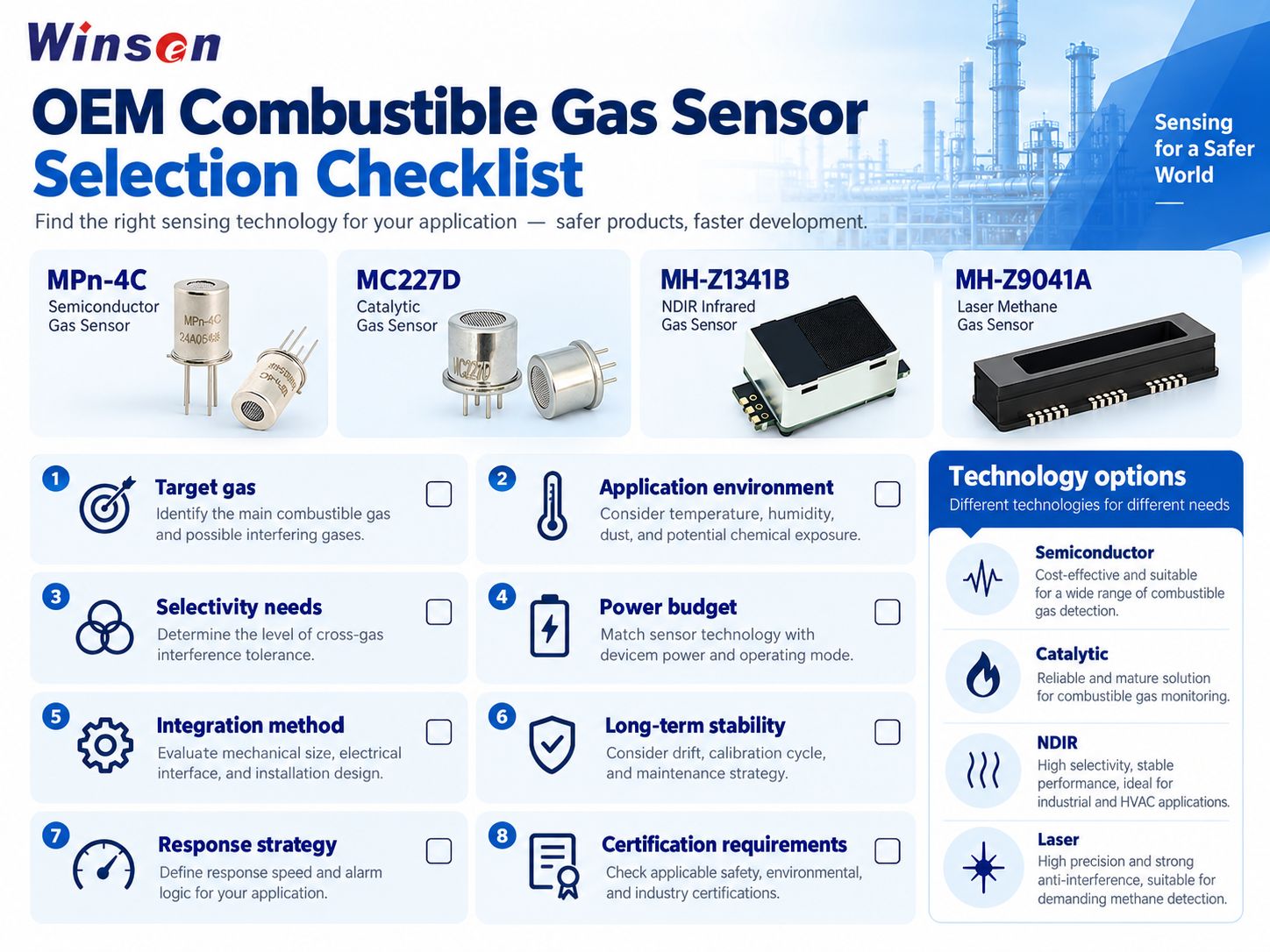
Before evaluating a sample, define the operating envelope of the final product. The following checklist helps avoid common mismatches between sensor specifications and actual use conditions.
- Target gas: natural gas (methane), LPG (propane/butane), hydrogen or another specified combustible mixture.
- Detection range and unit: ppm, %vol or %LEL, based on the product's alarm strategy.
- Operating environment: temperature, humidity, oxygen availability, dust, steam and potential chemical interferents.
- Required selectivity: permitted responses to other combustible gases, cleaning vapors or solvents.
- Power budget: heater demand, measurement duty cycle and supply architecture.
- Integration: package dimensions, mounting location, communication interface and host electronics.
- Reliability and service: warm-up, response/recovery, drift, maintenance, calibration and replacement planning.
- Compliance: target-market gas alarm standards, EMC, electrical safety and hazardous-area rules where applicable.
For additional safety considerations, including %LEL, gas density and detector placement, read our Combustible Gas Safety Guide.
Frequently Asked Questions
Which gas sensor technology is best for home methane alarms?
There is no single best choice for every design. Semiconductor, NDIR and laser methane technologies can all be considered. Match the sensor to target gas, expected interferents, lifetime goals, power consumption and full alarm-system requirements.
Can an NDIR combustible gas sensor detect hydrogen?
Conventional NDIR gas sensing for hydrocarbons cannot directly measure hydrogen because H2 does not provide the relevant infrared absorption signature. Choose a sensor technology validated for hydrogen instead.
Why do catalytic gas sensors need oxygen?
Their sensing response is based on catalytic oxidation of combustible gas on a heated element. Reduced oxygen availability can limit that reaction and affect readings.
Is a methane sensor suitable for propane or LPG?
Not automatically. Methane and propane are different target gases; detection principles, calibration and selectivity must be matched to the intended fuel. Choose a sensor with explicit propane or LPG coverage for those applications.
What is the difference between ppm and %LEL?
ppm describes concentration by volume, while %LEL describes the concentration as a percentage of the lower explosive limit for a specified gas. The relationship depends on the gas and reference definition.
Does a gas sensor component certification cover the final detector?
No. A complete gas alarm or detector must be evaluated against its applicable product requirements, including installation, software or control logic, electrical safety and overall performance.
The Right Sensor for the Right Gas Safety Application
At Winsen, we continue investing in semiconductor, catalytic, infrared and laser sensing technologies so that our customers can develop gas detection equipment around real application requirements. From home natural gas alarms and restaurant safety systems to industrial gas monitoring, our focus is on practical sensing performance, reliable integration and an adaptable product portfolio.
If you are developing a combustible gas detection product, explore our combustible gas sensor portfolio or contact Winsen to discuss the target gas, sensing principle and technical requirements for your project.