Infrared Temperature Sensor for Smart Rice Cookers: A Non-Contact Solution for Precision Temperature Control
As consumer appliances continue to evolve toward smarter, safer and more energy-efficient designs, the role of temperature sensing is becoming increasingly important.
Rice cookers are a good example. They are no longer limited to basic rice cooking. Modern smart rice cookers are expected to support multiple cooking modes such as porridge, stew, soup, slow cooking, baking, keep-warm control and even customized cooking curves.
Behind these functions, accurate temperature control is the key.
For appliance manufacturers, the challenge is clear: how to obtain real-time, accurate and stable temperature feedback inside a compact cooking structure, while reducing system complexity and improving user experience.
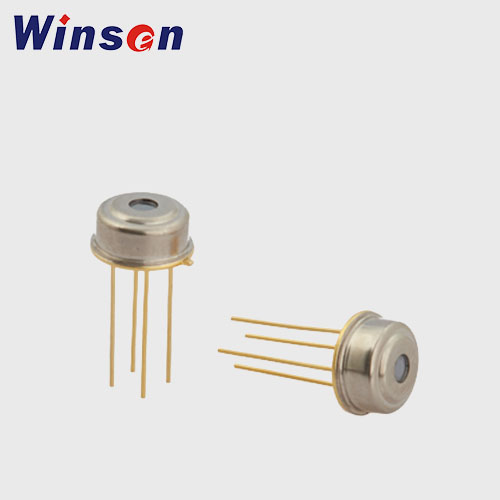
Traditional contact-based temperature sensing methods are becoming increasingly limited in complex cooking scenarios. To support the next generation of intelligent cooking appliances, Winsen provides the RTT-D7211 series infrared temperature sensor, a non-contact temperature sensing solution designed for precision thermal control.
Why Smart Rice Cookers Need Better Temperature Sensing
Temperature control directly affects cooking quality.
In a rice cooker, small temperature differences may influence:
- rice texture
- water absorption
- boiling control
- keep-warm quality
- porridge consistency
- stew and soup performance
- energy efficiency
- anti-overheating protection
Traditional rice cookers usually rely on fixed heating models and contact temperature sensors. This approach can meet basic cooking needs, but it is not always enough for more advanced cooking modes.
Modern appliances need more dynamic control. They need to sense temperature changes quickly and adjust heating power in real time.
That is why non-contact infrared temperature sensing is becoming a valuable solution for smart rice cookers and other precision cooking appliances.
Traditional Contact Sensing vs. Infrared Temperature Sensing
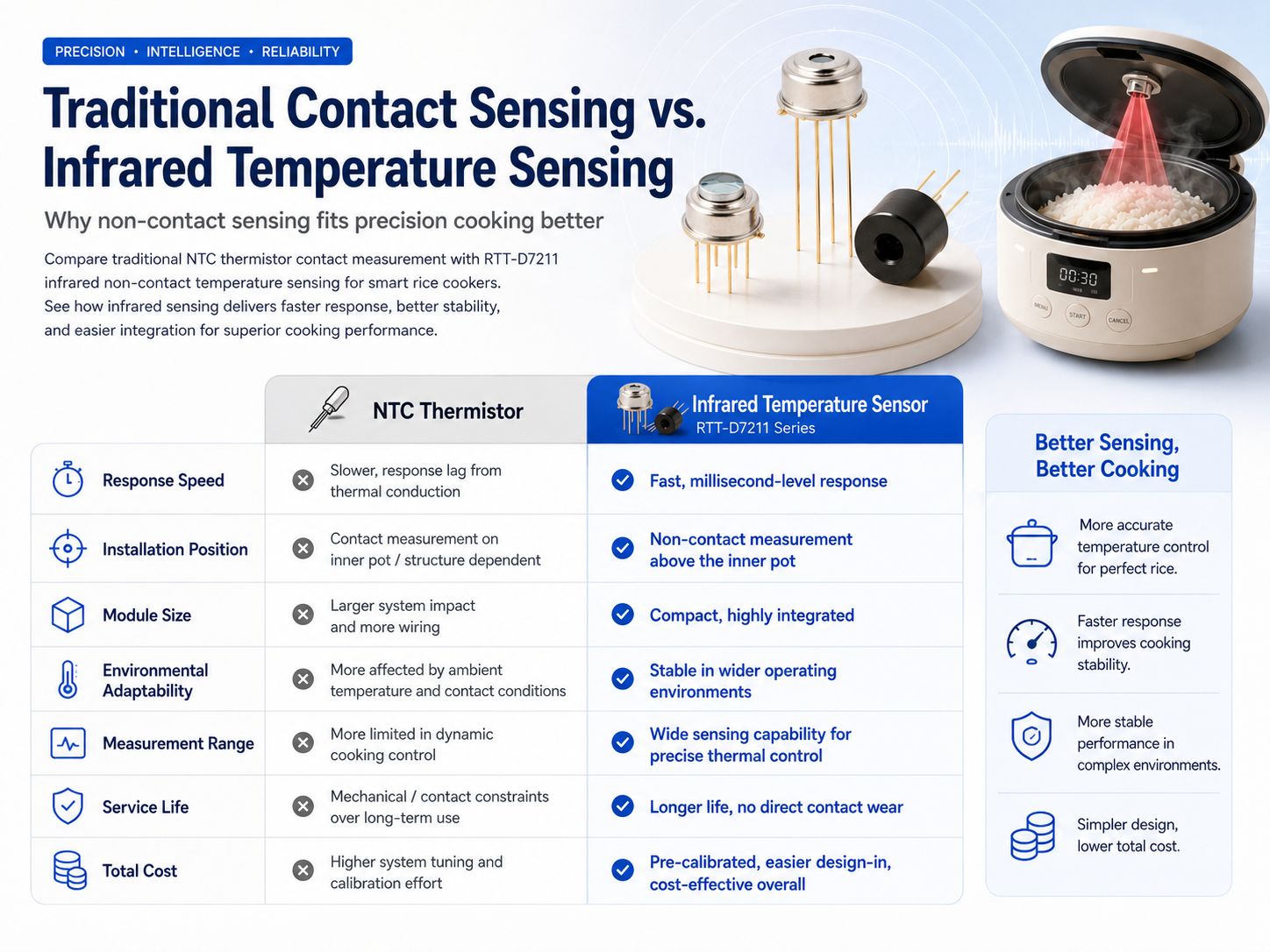
Most conventional rice cookers use contact temperature sensing components such as NTC thermistors. These sensors usually measure temperature through thermal conduction.
This method is simple and widely used, but it may face several limitations in advanced appliance design.
Limitations of Contact-Based Temperature Sensing
Contact sensing depends on heat transfer. The sensor must receive temperature information through physical contact or indirect thermal conduction. This can cause:
- response delay
- temperature lag
- limited measurement position
- influence from installation structure
- reduced accuracy in dynamic cooking processes
- more complex mechanical design
- aging or long-term reliability concerns
For simple heating control, these limitations may be acceptable. But for multifunctional smart cooking appliances, faster and more accurate temperature feedback is needed.
How Infrared Temperature Sensing Works
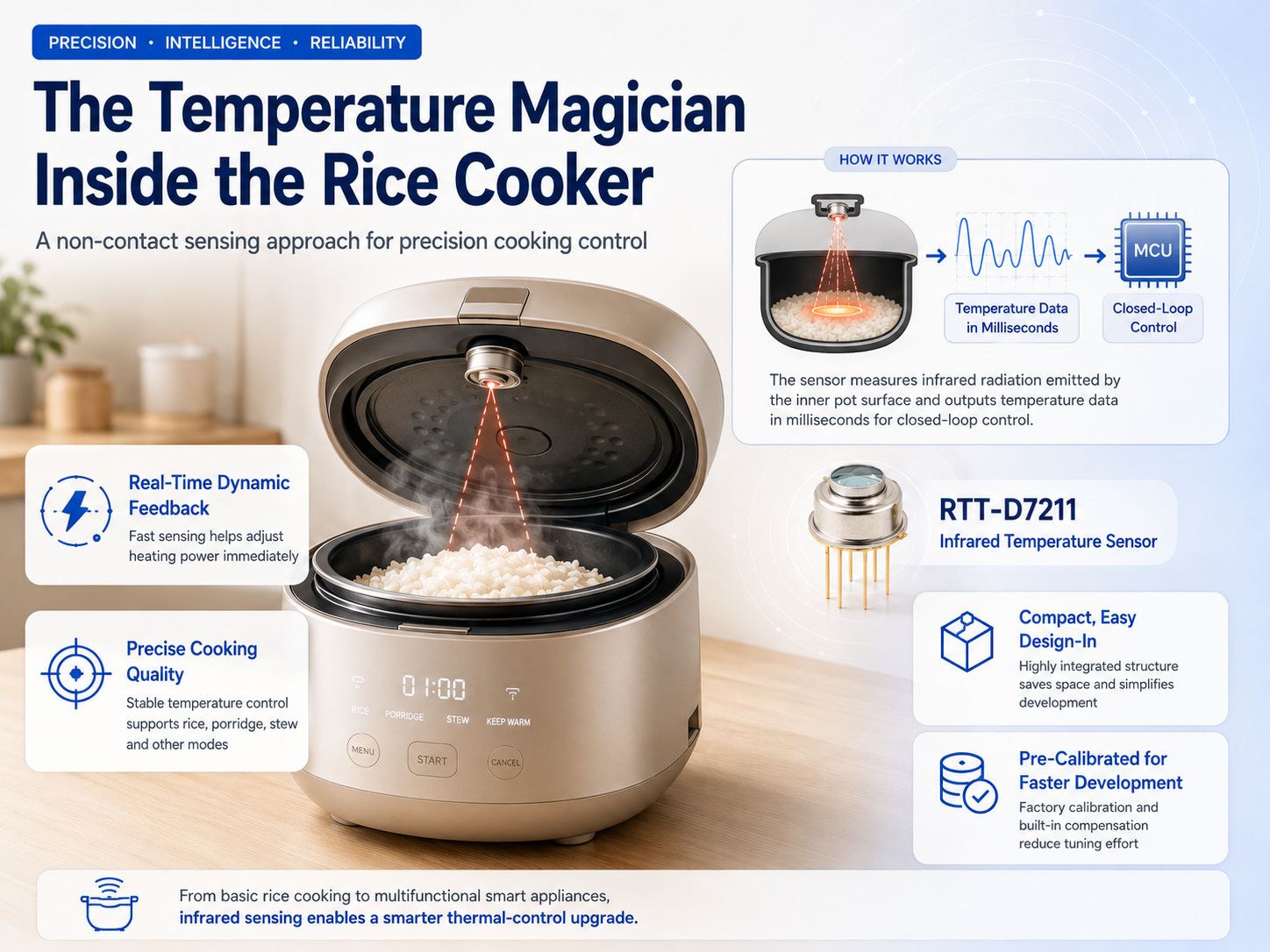
An infrared temperature sensor measures temperature based on infrared radiation emitted by an object.
Every object above absolute zero emits infrared energy. The higher the temperature, the stronger the radiation signal. The sensor collects infrared radiation from the target surface through optical components. The MEMS thermopile chip converts the infrared energy into an electrical signal. After signal conditioning and algorithm compensation, the sensor outputs temperature data.
In a smart rice cooker, the sensor can be installed above the inner pot to detect the temperature of the inner pot surface without direct contact.
In simple terms:
Inner pot emits infrared radiation → sensor detects the signal → signal is converted and compensated → real-time temperature data is output
This enables fast, non-contact and accurate temperature monitoring for closed-loop heating control.
Winsen RTT-D7211 Series: Non-Contact Temperature Sensing for Smart Appliances
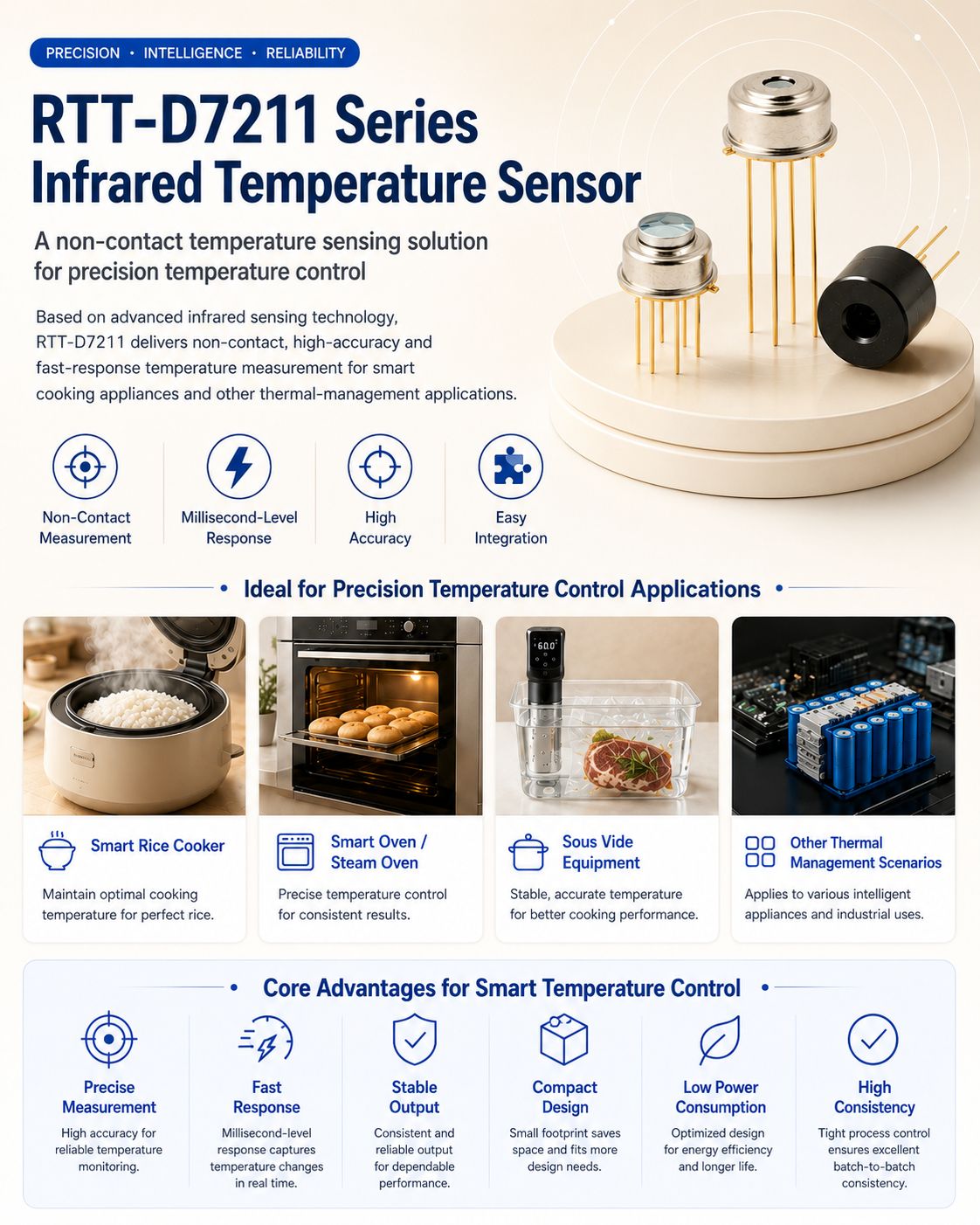
The RTT-D7211 series infrared temperature sensor is developed based on advanced infrared sensing technology. It is designed to provide non-contact, high-accuracy and fast-response temperature measurement for smart cooking appliances and thermal management applications.
For manufacturers developing rice cookers, steam ovens, sous vide devices and other intelligent appliances, RTT-D7211 helps provide reliable temperature feedback while simplifying system integration.
Key Advantages of RTT-D7211 Series
1. Non-Contact Measurement for Safer and Cleaner Design
RTT-D7211 measures temperature without touching the target object.
For rice cookers and cooking appliances, this brings several design benefits:
- no direct contact with food or cooking liquid
- reduced contamination risk
- fewer mechanical contact constraints
- easier internal structure design
- better long-term reliability
- suitable for enclosed or semi-enclosed cooking spaces
The sensor can detect the inner pot surface temperature from a suitable installation position, helping the appliance obtain real-time temperature data without affecting the cooking process.
2. Millisecond-Level Response for Dynamic Temperature Control
Cooking is a dynamic process. Temperature changes rapidly during heating, boiling, simmering and keep-warm stages.
RTT-D7211 supports fast response, allowing the appliance control system to adjust heating power more quickly.
This helps reduce:
- temperature overshoot
- heating delay
- unstable cooking curves
- inconsistent cooking results
For smart rice cookers, fast feedback supports more accurate control of each cooking stage, from water absorption to boiling and final steaming.
3. High Accuracy for Better Cooking Quality
Precise temperature data is the foundation of better cooking results.
RTT-D7211 directly detects infrared radiation from the target surface and provides accurate temperature feedback after signal processing and compensation.
With more accurate temperature sensing, appliance manufacturers can build more refined cooking algorithms for:
- rice cooking
- porridge
- soup
- stew
- baking
- low-temperature cooking
- keep-warm control
This helps improve cooking consistency and user satisfaction.
4. High Integration for Compact Appliance Design
Space inside modern appliances is limited. Sensors must be compact, easy to install and compatible with existing electronic systems.
RTT-D7211 integrates optical filtering, MEMS thermopile sensing, signal processing and compensation functions into a compact structure. This helps reduce peripheral circuit requirements and supports easier installation inside appliances.
For OEM and ODM projects, high integration helps:
- reduce system design complexity
- save PCB space
- simplify assembly
- improve product consistency
- shorten development time
5. Factory Calibration for Easier Customer Development
A temperature sensor must not only be accurate in theory. It must also perform consistently in mass production.
RTT-D7211 is calibrated before delivery and integrates temperature compensation functions. This helps customers reduce additional calibration work and software debugging effort.
For appliance manufacturers, this means:
- faster product development
- easier system design-in
- lower engineering workload
- improved batch consistency
- more predictable production performance
How RTT-D7211 Supports Smart Rice Cooker Control
In a smart rice cooker, the infrared temperature sensor can be installed near the lid or above the inner pot. It detects the inner pot surface temperature and sends real-time data to the main control system.
The control system can then adjust heating power according to the actual cooking condition.
A typical control process may include:
- Sensor detects inner pot surface temperature.
- Temperature data is sent to the main control unit.
- The control algorithm compares real-time data with the target cooking curve.
- Heating power is adjusted dynamically.
- The appliance maintains a more stable and precise cooking process.
This closed-loop control improves temperature accuracy and helps create better cooking results across different modes.
Application Value in Different Cooking Modes
Rice Cooking
Precise temperature control helps manage heating stages such as water absorption, boiling and steaming. This supports better rice texture and more consistent cooking quality.
Porridge and Soup
Long-time cooking requires stable temperature control to avoid overflow, burning or unstable boiling. Infrared sensing provides faster feedback for more reliable control.
Stewing
Stew modes require gentle and stable heating. Accurate temperature feedback helps maintain a suitable cooking environment for better flavor and texture.
Keep-Warm Mode
Keep-warm performance depends on stable temperature control. Infrared temperature sensing helps prevent overheating, dryness or uneven warming.
Baking and Steam Oven Applications
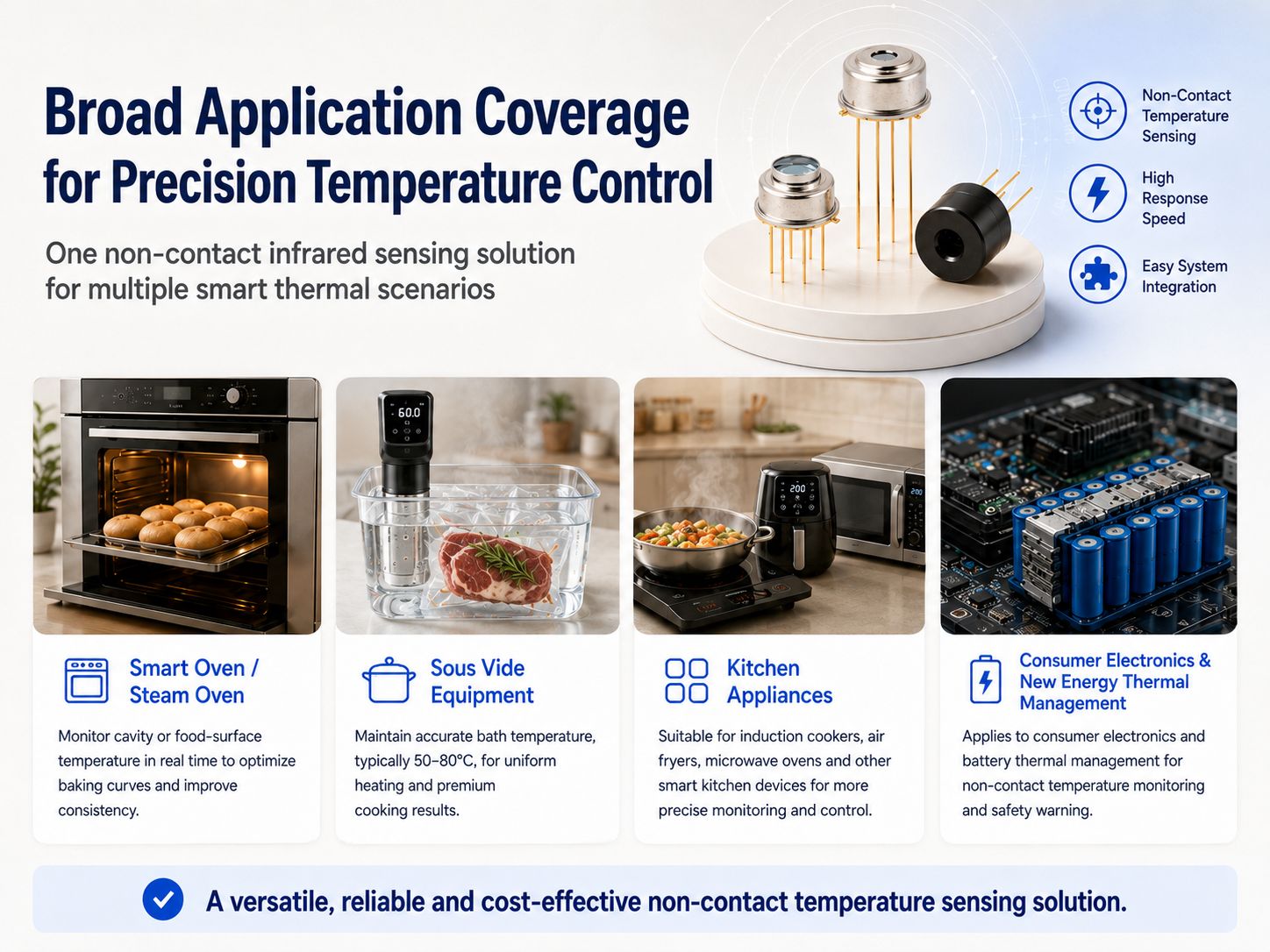
In smart ovens and steam ovens, non-contact temperature sensing can monitor cavity or food-surface temperature to support more accurate thermal control.
Broader Applications Beyond Rice Cookers
RTT-D7211 is not limited to rice cookers. Its non-contact, fast-response and easy-to-integrate characteristics make it suitable for many precision temperature sensing scenarios.
Typical applications include:
- smart rice cookers
- steam ovens
- electric ovens
- air fryers
- microwave ovens
- sous vide equipment
- induction cookers
- baby food warmers
- small kitchen appliances
- consumer electronics thermal management
- battery thermal monitoring
- other smart temperature control systems
For different applications, Winsen can support customers with sensor selection and application design suggestions.
Why Infrared Temperature Sensors Are Suitable for Smart Appliances
Compared with traditional contact sensing, infrared temperature sensing provides several important advantages for modern appliance design.
| Requirement | Infrared Temperature Sensor Value |
|---|---|
| Faster feedback | Millisecond-level response captures temperature changes quickly |
| Non-contact design | No need to touch food, liquid or inner pot surface directly |
| Better structure flexibility | Sensor can be installed in more flexible positions |
| High accuracy | Provides reliable data for precision control |
| Compact integration | Small size supports compact appliance design |
| Reduced development work | Factory calibration and compensation simplify design |
| Longer service potential | No direct contact wear or aging from contact structure |
| Better cooking experience | Supports more stable and intelligent heating control |
Design Considerations for Appliance Manufacturers
To achieve stable performance, manufacturers should consider several factors during product development.
1. Installation Position
The sensor should be placed where it can view the target surface clearly. In a rice cooker, this is usually above the inner pot or near the lid structure.
2. Field of View
The optical field of view should match the target area. A suitable view angle helps the sensor focus on the correct measurement position.
3. Optical Window Design
If a protective window is used, its infrared transmission characteristics must be considered to avoid measurement error.
4. Environmental Conditions
Steam, condensation, oil vapor and temperature gradients may affect measurement. Mechanical design should help protect the sensing path and maintain stable detection conditions.
5. Algorithm Matching
The sensor provides temperature data, while the final cooking effect depends on the control algorithm. Matching sensor feedback with heating logic is important for better results.
Value for OEM and ODM Customers
For appliance OEMs and ODMs, RTT-D7211 provides a practical path to upgrade temperature control without making the system overly complex.
It helps customers achieve:
- smarter cooking control
- improved product differentiation
- faster development cycle
- better temperature consistency
- reduced calibration workload
- compact and flexible mechanical design
- better user experience in multifunctional appliances
As smart kitchen appliances continue to grow, non-contact temperature sensing can become an important technology for product upgrades.
FAQ
What is an infrared temperature sensor?
An infrared temperature sensor measures temperature by detecting infrared radiation emitted by an object. It does not need direct physical contact with the target surface.
Why use infrared temperature sensing in rice cookers?
Infrared sensing can detect the inner pot surface temperature quickly and accurately without contact. This supports closed-loop heating control and helps improve cooking consistency.
How is it different from an NTC thermistor?
An NTC thermistor usually measures temperature through contact or heat conduction, which may cause response delay. Infrared sensing is non-contact and faster, making it better suited for dynamic temperature control.
Can RTT-D7211 be used in appliances other than rice cookers?
Yes. It can be used in steam ovens, smart ovens, sous vide equipment, induction cookers, air fryers, consumer electronics thermal management and other temperature control applications.
Does the sensor require customer calibration?
The RTT-D7211 series is factory calibrated and integrates temperature compensation functions, helping customers reduce additional calibration and debugging work.
What is the main value for appliance manufacturers?
It provides fast, accurate and non-contact temperature feedback, enabling smarter heating control, easier integration and better cooking performance.
Conclusion: A Smarter Temperature Sensing Core for Precision Cooking
As smart kitchen appliances become more multifunctional, temperature control is becoming more important than ever.
Traditional contact-based sensing methods are no longer sufficient for every advanced cooking scenario. Non-contact infrared temperature sensing provides faster response, more flexible installation, higher integration and more accurate feedback for closed-loop control.
The Winsen RTT-D7211 series infrared temperature sensor is designed to support this upgrade. With non-contact measurement, millisecond-level response, high accuracy, compact integration and factory calibration, it provides a reliable and cost-effective temperature sensing solution for smart rice cookers and a wide range of intelligent cooking appliances.
For manufacturers developing next-generation smart cooking products, Winsen is ready to provide professional sensor selection, technical support and application solutions.