Using Generators Safely: CO Detection Is the “Safety Valve”
When storms knock out power, when campsites need light at night, or when remote job sites require continuous electricity, generators become essential. But the convenience comes with a serious hidden risk: carbon monoxide (CO).

CO is odorless and colorless and can cause sudden illness and death.
It is produced when fuels burn—especially under incomplete combustion conditions.
That’s why CO detection has become the real-world “safety valve” for generator use: it moves protection from uncertain human behavior to automatic, measurable, technology-driven safety.
Why Generators Create CO Risk (Even When “Everything Is Normal”)
Generators run on gasoline, diesel, propane, and other fuels. CO can increase when:
- oxygen supply is limited
- fuel/air mixing is poor
- engine temperature is low
- load changes suddenly
- air filters are dirty or fuel quality varies
Because CO’s density is close to air, it can accumulate in poorly ventilated areas—and fumes can drift indoors even if the generator is near doors or windows. Safety guidance commonly recommends operating generators outside and at least ~20 feet from doors, windows, and vents.
Safety Standards Are Pushing “Active Defense”: ANSI/PGMA G300
To reduce injuries and deaths caused by generator misuse indoors, ANSI/PGMA G300 added requirements for automatic CO shutoff technology.
In the G300 CO test acceptance criteria, the generator engine must shut off before:
- CO exceeds 800 ppm, or
- a 10-minute rolling average exceeds 400 ppm
G300 also references UL 2034 tests for the sensing element/control system (e.g., selectivity and dust testing), aligning with recognized CO alarm safety expectations.
PGMA has also announced a revised version (ANSI/PGMA G300-2023) that lowers shutoff thresholds further to reduce injury risk, with an industry compliance timeline described in their release.
Important note: Auto shutoff is a failsafe, not permission to run generators indoors. The safest practice is still “use outdoors only.”
How a CO Sensor Detects Danger (Electrochemical “Fuel-Cell” Principle)
In harsh generator environments—vibration, heat, possible oil mist, and mixed gases—coin-type electrochemical CO sensors are widely used because they provide:
- low power consumption
- high sensitivity and linear output
- stable long-term behavior when properly protected
Electrochemical CO sensing works like a tiny fuel cell: CO and oxygen react on electrodes, generating a current proportional to CO concentration (Faraday’s law). The controller measures the current and determines CO level, enabling alarm logic or engine shutoff.
Why Coin-Type Packaging Matters on Generators
A rugged metal “button” package helps resist:
- continuous vibration and shock
- dust and contamination
- condensation risk (with correct mechanical design)
This improves long-term stability in real generator duty cycles.
Example Sensor for Generator CO Protection: ME2-CO-Φ14×5
Winsen’s ME2-CO-Φ14×5 is a compact electrochemical CO sensor designed for safety detection and OEM integration scenarios. Its product information highlights suitability for CO alarm, industrial CO detection, and small power generators.
Typical reference specs include:
| Parameter | Reference Value |
|---|---|
| Target gas | CO |
| Type | Electrochemical (fuel-cell style) |
| Range | 0–5000 ppm (up to 10000 ppm max) |
| Response | T90 ≤ 30 s |
| Use cases | CO alarm, industrial CO detection, small power generator |


CO Protection Across Different Scenarios
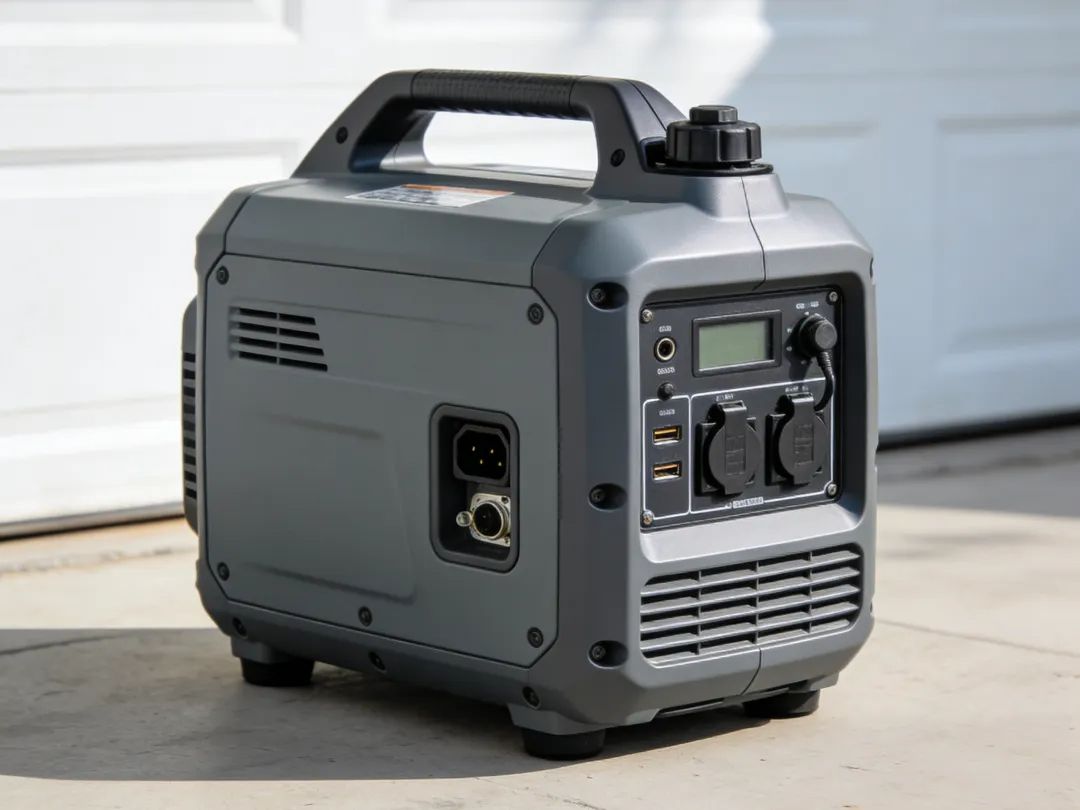
1) Portable generator: built-in shutoff (primary protection)
Sensor + control logic detects accumulating CO and forces shutdown before dangerous levels.
2) Large standby generators (data centers, hospitals): continuous monitoring + combustion diagnosis
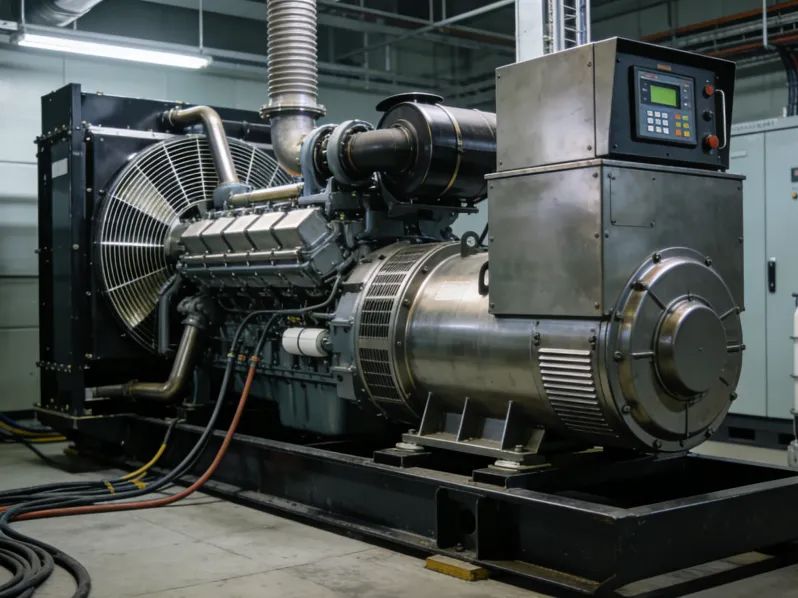
CO sensing supports:
- safety alarms and ventilation control
- combustion efficiency diagnostics (high CO can signal poor combustion)
3) Homes and cabins: independent CO alarms (last line of defense)
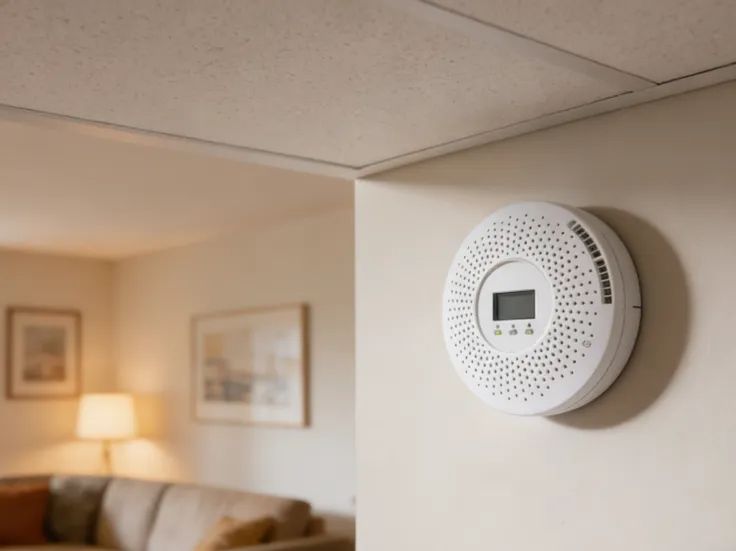
Even if the generator is outdoors, CO can enter through openings. Public health guidance emphasizes CO alarm use and strict outdoor operation practices.
If anyone feels dizzy, weak, or sick while a generator is running: get fresh air immediately and seek emergency help.
FAQ (SEO)
Q1: Can a generator produce CO even if it’s brand new?
Yes. CO is a normal combustion byproduct and can rise with load changes, fuel variation, or ventilation conditions.
Q2: Does opening doors/windows make indoor generator use safe?
No—CO can accumulate quickly. Safety guidance says use generators outdoors and away from openings.
Q3: What does ANSI/PGMA G300 require for CO shutoff?
The standard defines CO test procedures and shutoff acceptance criteria (including 800 ppm and 400 ppm rolling average thresholds).
Q4: Why electrochemical CO sensors for generators?
They’re compact, low-power, and produce a quantitative signal suitable for shutoff algorithms and alarms.
Q5: Is auto shutoff enough?
It’s a failsafe—not a substitute for outdoor use and CO alarms.
Q6: Where should I place the generator?
Operate outdoors and keep distance from doors, windows, and vents (commonly at least ~20 feet).